The Trap: Competing with AI on Execution Speed
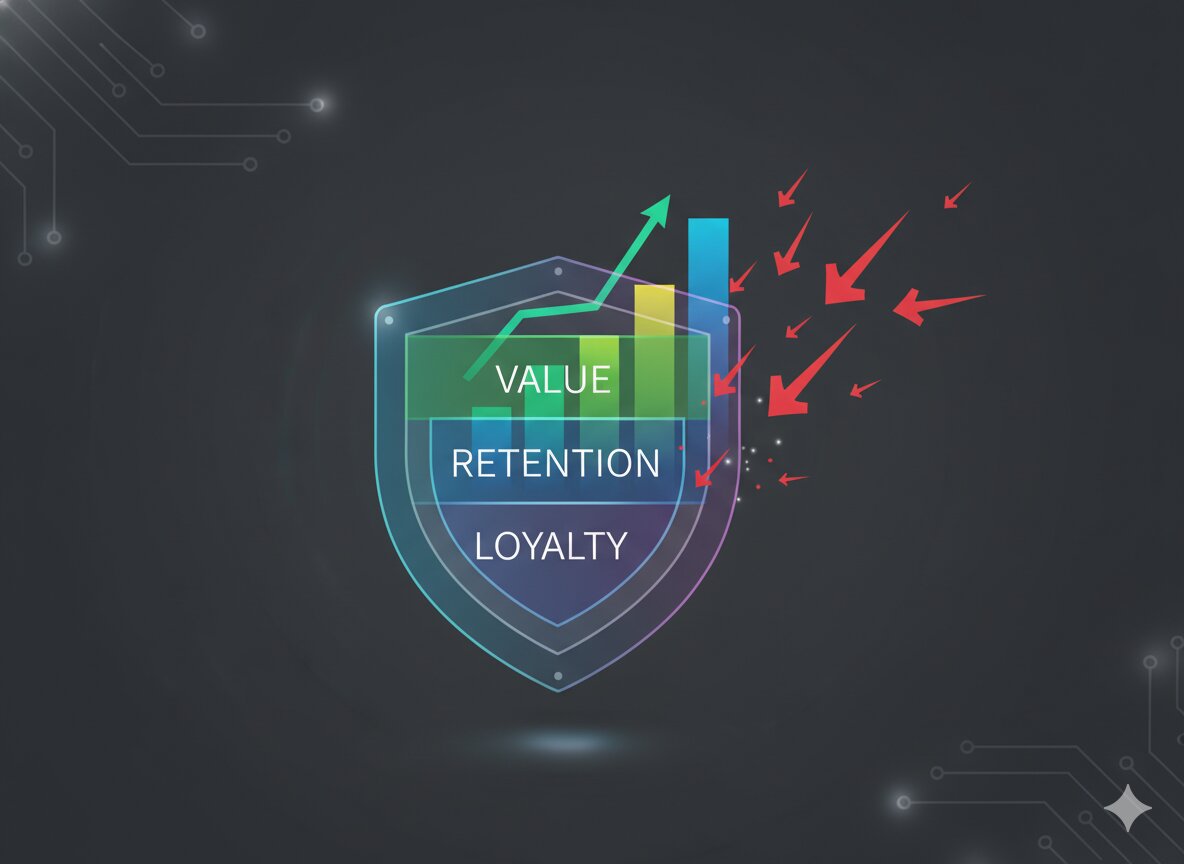
Tech layoffs in 2026 hit 205,832 workers by August—already surpassing all of 2025—and most TPMs are positioning themselves to be next. They list project velocity, roadmap ownership, and delivery metrics on their résumés, which is exactly the work AI project-management agents now automate at zero marginal cost. When your value proposition is "I keep things on track," you are competing with a $47/month SaaS tool that never sleeps, never miscommunicates, and scales infinitely. You will lose that fight.
The brutal calculus is simple: if an AI agent can do 80% of your documented work for 0.01% of your salary, the CFO's spreadsheet says you are redundant. This is not theoretical. AI job postings surged 237% while human roles contracted, and companies are explicitly hiring for AI-augmented orchestration roles—not the execution work most TPMs still claim as their core competency.
Why Most TPMs Position Themselves for Replacement
Look at any mid-level TPM LinkedIn profile or résumé. The bullets read like this: "Managed cross-functional delivery of 12 epics across 4 teams," "Maintained project timelines and stakeholder alignment," "Delivered quarterly roadmap on schedule." Every one of those sentences describes coordination work—the exact labor AI scheduling agents, automated status dashboards, and LLM-powered program assistants now handle at superhuman speed.
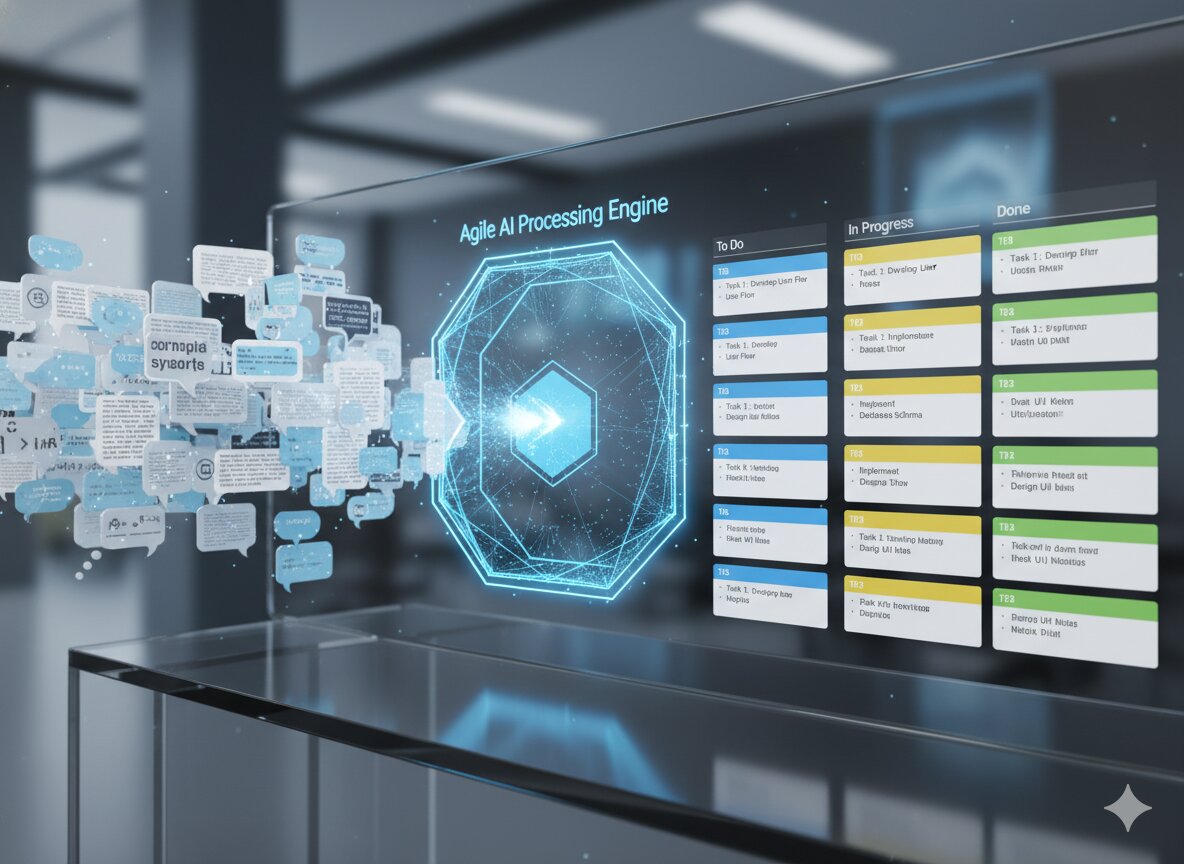
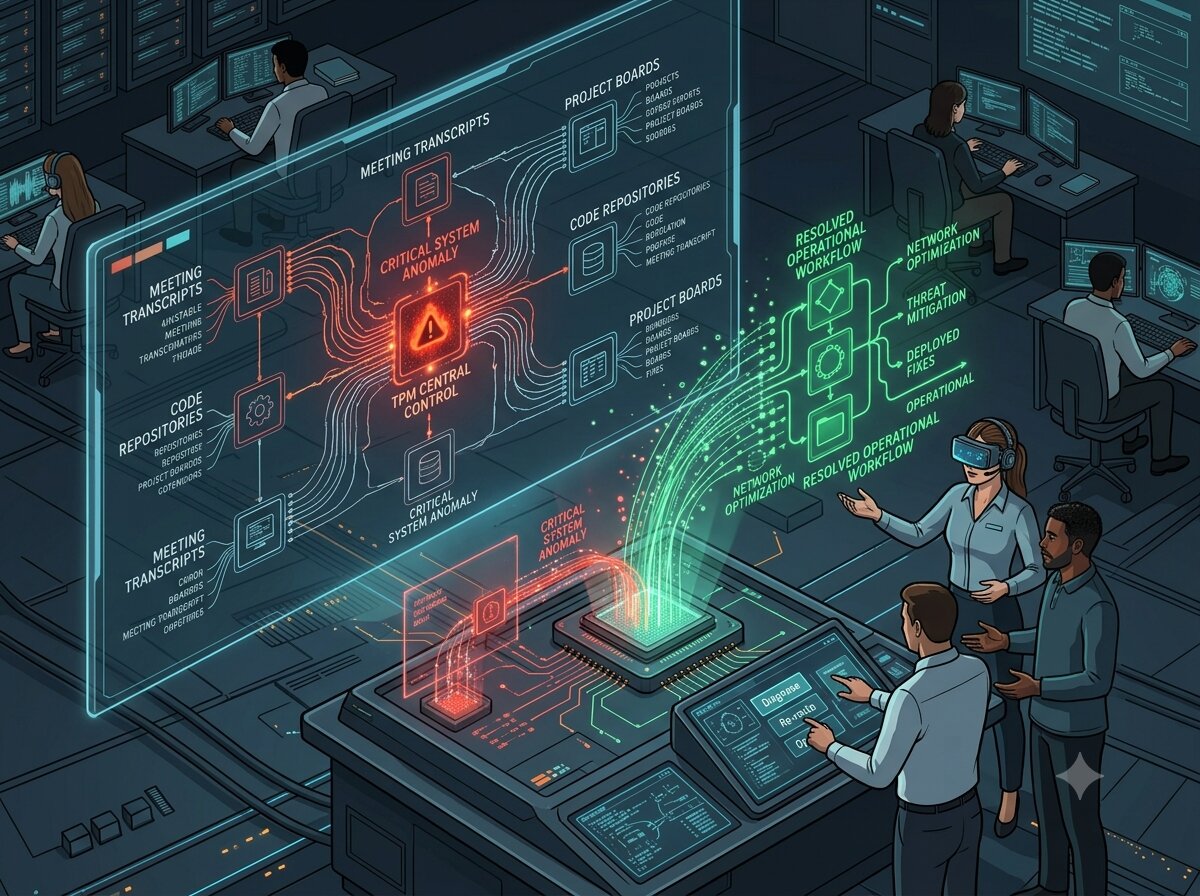
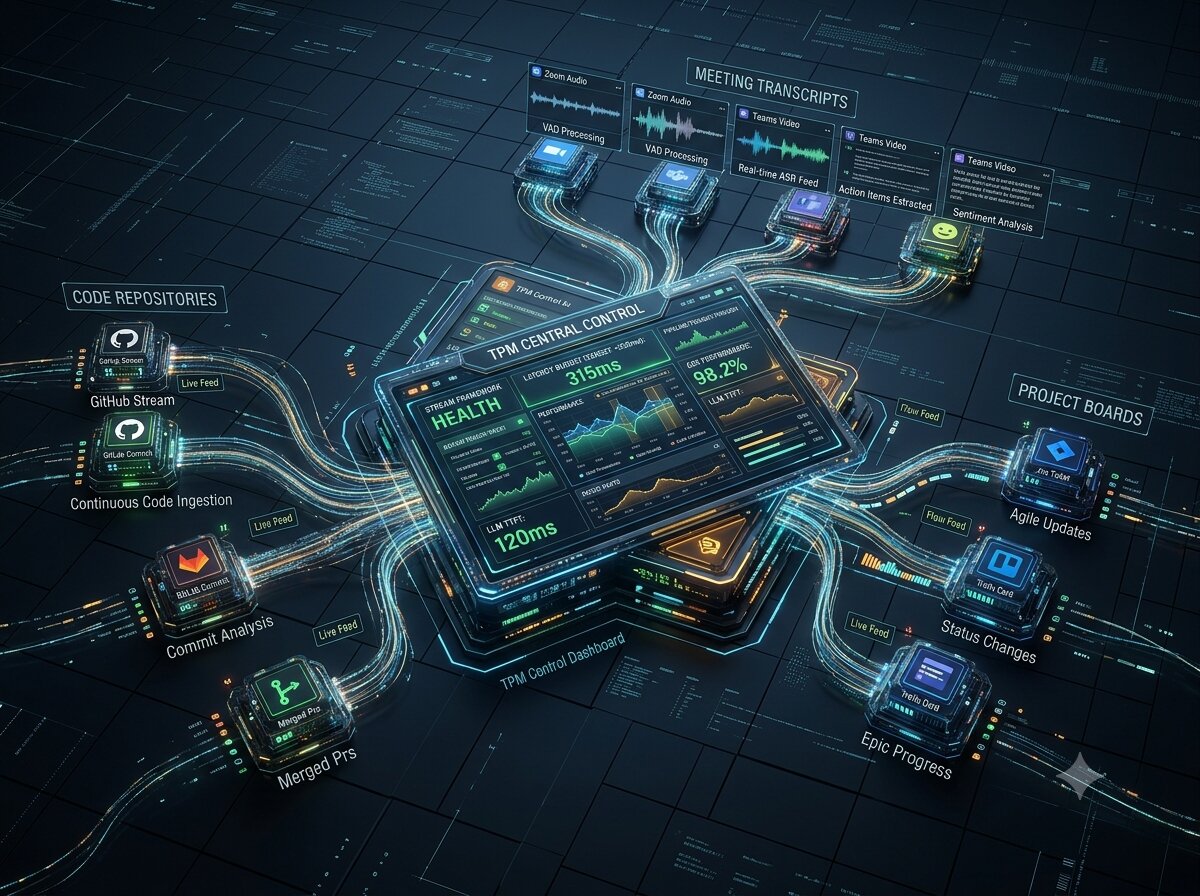
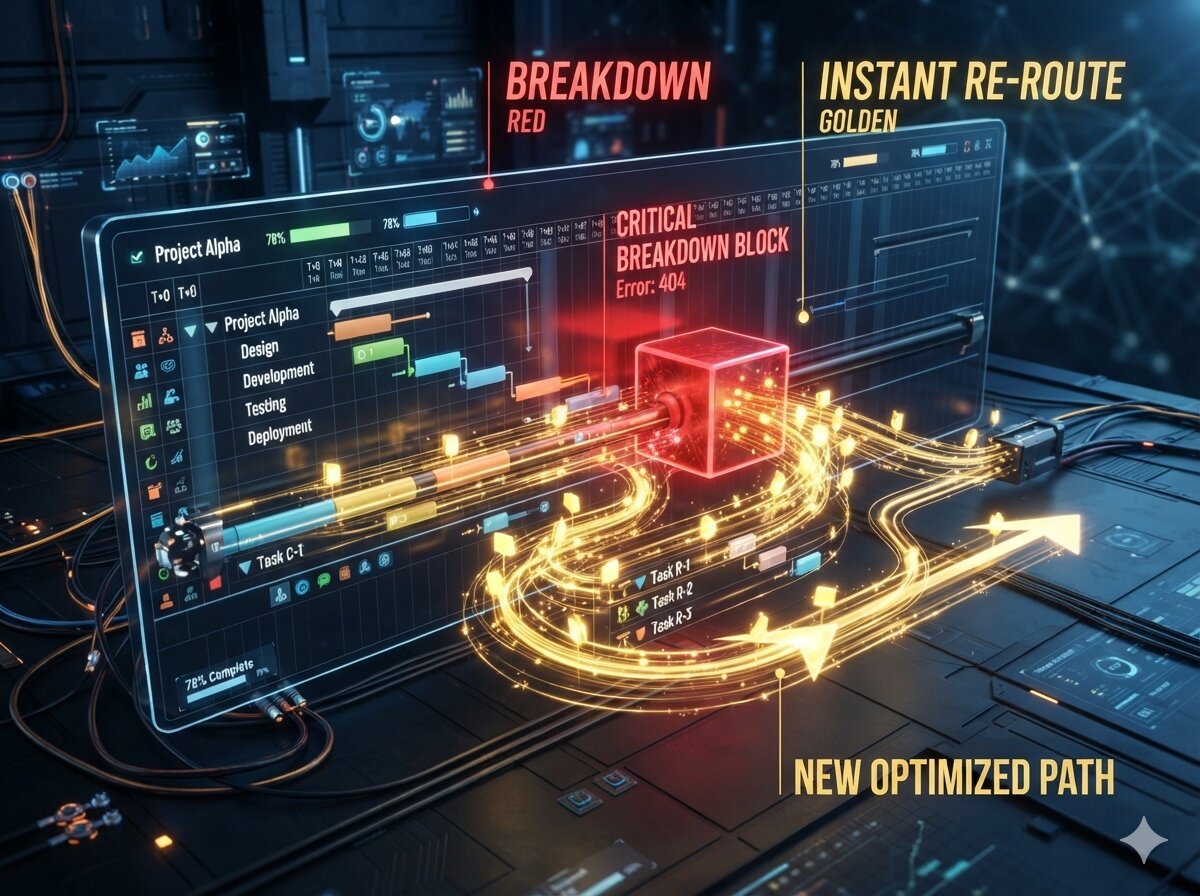
The problem is not that the work was unimportant. The problem is that it was low-judgment execution—work that follows repeatable patterns, relies on information aggregation, and outputs predictable artifacts. AI excels at this. A GPT-4-powered project agent can parse Jira, Slack, and email; generate status updates; identify blockers; and route escalations faster and more accurately than a human ever could. When you position as a human Gantt chart, you are competing on the dimension where AI has the largest advantage.
The TPMs surviving 2026 layoffs are not the ones who run standups fastest. They are the ones who broker three-way tradeoffs between eng, product, and legal when the AI's output violates compliance—then design a fallback architecture that preserves 80% of the value. That sentence contains work no AI can execute because it requires trust, context, and multi-party negotiation under ambiguity. Those are the irreplaceable signals.
What 32.7% Rehire Rate After AI Automation Actually Means
A third of companies that automated roles have already rehired human talent. That statistic is not a vindication of the old TPM playbook—it is a redefinition of what TPMs do. The rehires are not going to people who "manage timelines." They are going to operators who can translate model output into organizational action, navigate the scar tissue AI cannot see, and make judgment calls when the algorithm produces three equally plausible answers with no clear winner.
The roles being recreated are explicitly AI-orchestrator hybrids: TPMs who use AI to surface options, model scenarios, and automate status—then apply the human judgment AI cannot replicate. If your résumé does not show you operating AI as leverage, you will not be in that 32.7%. You will be in the 205,832.
The IRREPLACEABLE-SIGNAL Framework
The IRREPLACEABLE-SIGNAL framework identifies six categories of Technical Program Manager work where human judgment compounds faster than model capabilities. Each category represents a defensible moat—not because AI cannot touch it, but because the work requires contextual trust, multi-stakeholder negotiation, or organizational memory that exists only in human relationships and unwritten systems.
The acronym unpacks as: Influence through trust, Relational translation, Reading organizational terrain, Evaluating tradeoffs under ambiguity, Prioritizing triage when all options are bad, Leading tempo across misaligned incentives, Augmenting AI output with judgment, Context from scar tissue, Escalation brokering, Adaptive negotiation, Building coalition across silos, Leveraging unwritten rules, Executing decisions AI surfaces but cannot force.
The first three—trust, translation, and terrain—are relational moats. The second three—tradeoffs, triage, and tempo—are judgment under ambiguity. Together, they define the work that survives when execution gets automated.
How to Identify the Six Categories of Irreplaceable Work
Goal: Distinguish high-judgment orchestration from low-judgment execution before the market does it for you.
Strategy: Audit every bullet on your résumé and every story in your interview bank. Ask: Could an AI agent with access to Jira, Slack, email, and the codebase execute this without human intervention? If yes, it is execution work. If no, identify which of the six signals made it irreplaceable.
Tactics: Use the two-question test. First: does this work require brokering between parties with misaligned incentives or incomplete trust? Second: does it require navigating unwritten organizational rules, historical context, or political scar tissue? If either answer is yes, you are in irreplaceable territory. If both answers are no, you are describing coordination work that AI will handle by 2027.
Soundbite: "AI can generate the options. Only humans can broker the decision when three directors each have veto power and no one wants their name on the tradeoff."
Why AI Augmentation Beats AI Resistance
Goal: Position as the orchestrator who uses AI as leverage, not the operator competing with it on speed.
Strategy: Reframe every execution task as something AI surfaces or automates, then highlight the human judgment layer you applied on top. The TPMs getting rehired in that 32.7% are not the ones who refused to use AI—they are the ones who used it to 10x their output, then made the calls the model could not.
Tactics: In every résumé bullet and interview story, explicitly name the AI tool or automation you used, then describe the judgment call you made with the output. Example: "Used GPT-4 to model three architecture options, then brokered the eng-product-legal tradeoff that selected option two with a compliance guardrail the model never surfaced." You are not threatened by AI. You are the operator who makes AI output actionable.
Soundbite: "I do not compete with AI. I orchestrate it. The model gives me ten options in ten seconds. I pick the one that will not blow up in six months—and I know that because I have the organizational scar tissue the model will never see."
Signal 1–3: Trust, Translation, and Terrain (Relational Moats)
The first half of IRREPLACEABLE-SIGNAL covers the relational moats—work that depends on human capital accumulated over years, not just technical competence executed in sprints. These three categories survive tech layoffs in 2026 because they require reputation, context, and credibility that AI cannot bootstrap, no matter how good the model gets.
Trust: Building Multi-Year Stakeholder Capital AI Cannot Simulate
Goal: Establish yourself as the operator executives call when the stakes are existential and the blast radius is political, not just technical.
Strategy: Trust is not built in a single program cycle. It compounds when you deliver under ambiguity, take ownership when things break, and protect stakeholders from downstream chaos they never see. The TPMs surviving layoffs are the ones directors personally request by name because they have multi-year proof they will not throw anyone under the bus, will not sandbag timelines, and will not surprise leadership in a board-level review.
Tactics: Audit your interview stories for moments where you absorbed political risk, brokered a truce between warring teams, or took the fall for a decision that was technically correct but organizationally explosive. If your stories are all about hitting deadlines and shipping features, you are describing execution work AI will automate. If your stories are about convincing a VP to kill their pet project or getting two directors who hate each other to co-sign a single roadmap, you are describing trust work that survives.
Soundbite: AI can send the status update. It cannot convince the VP of Infrastructure to delay their launch so the VP of Product does not get fired—that requires trust I built over eighteen months.
Translation: Converting Technical Complexity into Executive Action
Goal: Become the operator who turns messy technical reality into decisions executives can make with confidence, not the one who escalates complexity upward.
Strategy: AI can summarize a 40-page technical design doc. It cannot tell the CEO which two sentences matter and which three questions will expose whether the team is actually ready to ship. Translation is not dumbing down—it is encoding technical risk into business language so non-technical leaders can make the right call without needing a CS degree.
Tactics: In every résumé bullet and interview story, show the moment you translated up—when you took a gnarly technical dependency, three competing architectures, or a six-month eng debate and turned it into a single-page exec summary with a clear recommendation and two contingency options. The TPMs getting rehired are the ones who make executives smarter, not busier.
Soundbite: The model gave me a technically correct answer. I gave the executive the answer that would not destroy the roadmap when the dependency shipped four months late.
Terrain: Navigating Unwritten Org Rules and Historical Scar Tissue
Goal: Master the unwritten rules—who actually holds veto power, which projects failed three years ago and why, which teams refuse to work together, and which acronyms mean your proposal is already dead.
Strategy: AI has no memory of the last time your company tried to consolidate authentication and it blew up because Security and Eng reported to different SVPs who were in a succession fight. Terrain navigation is organizational scar tissue work—knowing what not to propose, who to loop early, and which battles to avoid because they have nothing to do with the technical problem and everything to do with politics from two reorgs ago.
Tactics: Your interview stories must show you reading the room the model cannot see. Name a time you killed a project before kickoff because you knew it would get killed in review. Name a time you structured a proposal to give two execs credit so neither one blocked it. Name a time you avoided a dependency because the team on the other side was about to get reorganized and you heard it in a hallway conversation.
Soundbite: AI reads the org chart. I read the org—and I knew that if we routed this through the VP of Eng instead of the CTO directly, it would die in committee.
Signal 4–6: Tradeoffs, Triage, and Tempo (Judgment Under Ambiguity)
If signals one through three are about reading the organization, signals four through six are about acting when the organization cannot tell you what to do. AI can generate options. It cannot choose between two executives who both believe they are right, decide which production incident gets the war room, or set the cadence for a program no one has run before. This is judgment under ambiguity—the work that separates TPMs who get promoted from those who get automated.
Tradeoffs: Choosing Between Conflicting Executive Priorities
Goal: Become the operator who brokers real tradeoffs between senior leaders when their goals genuinely conflict, not the one who escalates the decision upward and waits for someone else to choose.
Strategy: AI can list pros and cons. It cannot call the VP of Product and explain why her roadmap feature is getting delayed two quarters so the VP of Eng can pay down the technical debt that will otherwise collapse the platform in Q4. Tradeoff work requires multi-party negotiation where you absorb the conflict—you take the heat, frame the options so both sides see the constraints, and guide them toward a decision they can both defend to their teams. The TPMs surviving layoffs are the ones executives trust to make the call when consensus is impossible.
Tactics: Your résumé and interview stories must show the moment you forced the tradeoff decision. Name the two competing priorities, the executives who owned them, the data you used to frame the choice, and the recommendation you made when neither side would budge. Do not describe facilitation—describe decision-forcing. The best version includes a sentence like: I told both VPs we could not do both, walked them through the dependency math, and recommended we delay the feature because the platform risk was existential.
Soundbite: The model gave me five options. I killed three, ranked two, and told the executive which one I would choose and why—so she could make the call in the room, not schedule another meeting.
Triage: Real-Time Severity Calls with Incomplete Information
Goal: Master the split-second severity call—deciding in real time whether an incident gets the war room or a ticket, whether a bug blocks launch or ships with a workaround, and whether you wake up the VP at midnight or let it wait until morning.
Strategy: AI can classify incidents by keyword. It cannot assess blast radius in context—whether this payment failure affects ten users or ten million, whether this data sync issue will cascade into compliance exposure by morning, or whether this deploy rollback means you miss the Super Bowl launch window and the CEO has already committed to the press. Triage is judgment formed by scar tissue—you have seen what happens when you under-call and when you over-escalate, and you have built the instinct for which one this is.
Tactics: Interview stories must show the triage call and the consequence. Name the incomplete information you had, the decision you made in the moment, and whether you were right. The strongest stories include a near-miss: I called the SEV-1 at 11pm based on error rate alone before we confirmed user impact, and by the time we had full data, we were already thirty minutes into mitigation—which saved us from a two-hour outage. Do not sanitize the ambiguity. That is the signal.
Soundbite: I had ten minutes and three conflicting Slack threads. I called the war room, paged eng leadership, and we were mitigating before monitoring caught up—because I recognized the pattern from an incident eight months earlier.
Tempo: Setting Cross-Functional Cadence When No Playbook Exists
Goal: Become the TPM who sets the operating rhythm for programs no one has run before—who decides whether this is a daily standup or a weekly steering committee, whether decisions happen in Slack or in review docs, and whether you run this like a product launch or an infrastructure migration.
Strategy: AI can propose meeting schedules. It cannot read the room and realize this program needs forcing-function urgency because three teams are slow-walking it, or recognize that over-structured process will kill velocity because the tech lead hates ceremonies and will disengage. Tempo-setting is organizational feel—you sense whether the team needs more structure or less, whether the exec sponsor needs weekly updates or monthly milestones, and whether you tighten cadence to create momentum or loosen it to let the team build.
Tactics: Résumé bullets and stories must show you designing the operating model, not just running the one you inherited. Name the cadence you set, why you chose it, and what happened when you adjusted it mid-program. The strongest signal is when you intentionally changed tempo: I started with weekly syncs, realized we were ceremony-heavy and decision-light, killed two meetings, moved decisions into async doc reviews, and cut time-to-decision from nine days to three.
Soundbite: There was no playbook for a six-team AI infrastructure migration. I set the cadence—daily eng syncs, weekly exec updates, decision docs with 48-hour SLA—and we shipped in four months instead of the eight-month estimate.
How to Reposition Your Résumé, Profile, and Interviews
Positioning is not puffery. It is the deliberate framing of real work to make irreplaceable judgment visible. Most TPMs describe what they delivered. Layoff-resistant TPMs describe how they orchestrated humans and tools to deliver what no single actor could. The difference is not accomplishment—it is legibility of the work AI cannot do.
You are not inventing new stories. You are reframing the ones you already have to foreground trust-building, ambiguity resolution, and cross-functional negotiation—the high-judgment orchestration work that compounds faster than model capabilities. If your current résumé reads like a project status report, you are positioned as exactly the role companies are automating.
Reframing Past Work: From 'I Shipped' to 'I Orchestrated AI + Humans'
Weak bullet: Led cross-functional team to deliver Q3 roadmap on time, coordinating five engineering teams and tracking dependencies in Jira. This is coordination theater—pure execution work now handled by AI agents that parse ticket graphs and auto-generate status updates. You have positioned yourself as a human dashboard.
Strong bullet: Brokered three-way architecture tradeoff between eng, legal, and product when ML model output violated data residency requirements; designed hybrid approach that preserved 70% of feature value while satisfying compliance—decision required reading room dynamics across functions and mapping unstated constraints no model surfaced. This bullet shows you translating between stakeholders, navigating organizational terrain, and applying judgment under ambiguity. It also shows you using a model (the ML output) while orchestrating the human response when the model created a problem it could not solve.
The reframe is surgical: name the judgment call, the conflicting constraints, the stakeholders involved, and the outcome. If AI tools were part of your process—Copilot for draft PRDs, GPT for summarizing research, automated monitoring that surfaced the issue—say so. You want to be seen using AI as leverage, not competing with it on execution speed.
The One-Line LinkedIn Summary Change That Signals Layoff Resistance
Before: Technical Program Manager | Driving cross-functional delivery and stakeholder alignment. Generic, execution-focused, automatable. You sound like every laid-off TPM whose role was absorbed by Monday.com plus a Slack bot.
After: TPM specializing in high-ambiguity programs where AI surfaces options and I broker the multi-stakeholder tradeoffs that turn them into shippable strategy. Specific, judgment-forward, AI-positioned. You have named the irreplaceable work and framed AI as your toolset, not your replacement.
The single-line rewrite is not cosmetic. Recruiters and hiring managers scanning for layoff-resistant roles are looking for explicit signals that you operate above the automation layer. If your summary does not contain the words judgment, ambiguity, tradeoff, or orchestration, you are invisible to that search.
Interview Soundbite: 'I Use AI to Scale My Judgment, Not Replace It'
When asked How do you see AI changing the TPM role?—and in 2026, you will be asked—most candidates either dismiss AI (denial) or nervously claim they are learning prompt engineering (desperation). Neither inspires confidence. The layoff-resistant answer names the shift and positions you on the winning side of it.
Soundbite: I use AI to scale the low-judgment work—summarizing docs, drafting comms, surfacing dependency conflicts—so I can spend more cycles on what it can't do: reading the room when three execs have conflicting priorities, deciding whether to escalate or de-escalate when monitoring is ambiguous, and building the trust that lets me broker tradeoffs across teams. AI makes me faster at the orchestration work that was always the highest-leverage part of the role.
This answer does three things: it shows you already use AI, it names the irreplaceable judgment work with specificity, and it frames the future of the role as more valuable, not less. You are not threatened by automation—you are the operator who orchestrates it. That is the candidate companies rehire after the AI experiment fails to replace human judgment at scale.
If your résumé, LinkedIn, and interview answers do not explicitly show you operating AI as leverage, you are positioned as the person it replaces. The IRREPLACEABLE-SIGNAL framework gives you the map. Reframing your evidence makes that positioning legible. Do it now, before the next wave of tech layoffs in 2026 decides for you.
FAQ
Why are tech layoffs in 2026 hitting TPMs harder than other roles?
TPMs who position themselves as execution coordinators—managing timelines, aggregating status, maintaining alignment—are competing directly with AI agents that perform the same work at $47/month with zero errors and infinite scale. The 205,832 layoffs by August 2026 disproportionately hit roles where 80% of documented work follows repeatable patterns AI now automates. The survivors are TPMs who broker multi-stakeholder tradeoffs, navigate organizational scar tissue, and apply judgment where AI produces three equally valid options with no clear winner.
What does the 32.7% rehire rate after AI automation actually tell us?
Companies are not rehiring the same roles they automated. The 32.7% rehire rate represents a redefinition: organizations discovered that AI can generate options and automate coordination, but cannot translate model output into organizational action or make judgment calls when three directors each have veto power. The rehires are AI-orchestrator hybrids—TPMs who use automation to 10x their output, then apply the human judgment layer AI cannot replicate. If your résumé shows only execution work and no AI leverage, you will not be in that minority.
How do I prove I am irreplaceable in a TPM interview when AI can handle most coordination work?
Use the two-question test on every interview story: does this work require brokering between parties with misaligned incentives or incomplete trust, and does it require navigating unwritten organizational rules or political scar tissue? If both answers are no, you are describing coordination work AI will automate by 2027. Reframe every story to explicitly name the AI tool you used, then describe the judgment call you made with the output—like using GPT-4 to model three architecture options, then brokering the eng-product-legal tradeoff that selected one with a compliance guardrail the model never surfaced.
What is the difference between execution work and irreplaceable TPM work in 2026?
Execution work follows repeatable patterns, relies on information aggregation, and outputs predictable artifacts—exactly what AI scheduling agents and LLM-powered program assistants now handle at superhuman speed. Irreplaceable work requires contextual trust, multi-stakeholder negotiation under ambiguity, or organizational memory that exists only in human relationships and unwritten systems. The IRREPLACEABLE-SIGNAL framework identifies six categories where human judgment compounds faster than model capabilities: trust, translation, terrain-reading, tradeoff evaluation, triage prioritization, and tempo leadership. AI can generate the options; only humans can broker the decision when no one wants their name on the tradeoff.
If you are preparing for TPM interviews in 2026 and need to position yourself as an AI-orchestrator hybrid instead of an execution coordinator, the KRACD TPM Prep Kit includes 47 irreplaceable-signal stories, the two-question audit framework, and the exact résumé rewrites that convert coordination bullets into judgment narratives. Stop competing with AI on speed. Start proving you are the operator who makes AI output actionable.
FAQ
What percentage of tech layoffs in 2026 were caused by AI automation replacing TPM execution work?
The article does not attribute a specific percentage of the 205,832 tech layoffs by August 2026 directly to AI automation. However, it highlights that AI job postings surged 237% while human roles contracted, and companies are explicitly hiring for AI-augmented orchestration roles rather than traditional execution-focused TPM positions. The core driver is that AI project-management agents now automate coordination work—status updates, timeline management, stakeholder alignment—at zero marginal cost, making TPMs who position solely on execution speed redundant against $47/month SaaS tools.
What does the 32.7% rehire rate after AI automation actually mean for TPMs?
The 32.7% rehire rate represents companies bringing back human talent after automating roles, but not for the same execution work. Rehires go to TPMs who operate as AI-orchestrator hybrids: operators who use AI to surface options and automate status, then apply irreplaceable human judgment to translate model output into organizational action, navigate political scar tissue, and broker multi-stakeholder tradeoffs under ambiguity. If your résumé does not demonstrate you orchestrating AI as leverage—not competing with it on speed—you will not be in that 32.7%.
How do I know if my TPM work is execution that AI will automate or irreplaceable judgment?
Use the two-question test from the IRREPLACEABLE-SIGNAL framework. First: does this work require brokering between parties with misaligned incentives or incomplete trust? Second: does it require navigating unwritten organizational rules, historical context, or political scar tissue? If either answer is yes, you are doing irreplaceable work. If both answers are no, you are describing coordination work—parsing Jira, generating status updates, maintaining timelines—that AI scheduling agents and LLM-powered assistants will handle by 2027. Audit every résumé bullet with this test.
What is the IRREPLACEABLE-SIGNAL framework and why does it matter for surviving 2026 layoffs?
IRREPLACEABLE-SIGNAL identifies six categories of TPM work where human judgment compounds faster than AI model capabilities: Influence through trust, Relational translation, Reading organizational terrain, Evaluating tradeoffs under ambiguity, Prioritizing triage when all options are bad, Leading tempo across misaligned incentives, Augmenting AI output with judgment, Context from scar tissue, Escalation brokering, Adaptive negotiation, Building coalition across silos, Leveraging unwritten rules, and Executing decisions AI surfaces but cannot force. These represent defensible moats because they require contextual trust, multi-stakeholder negotiation, and organizational memory that exist only in human relationships—work that survives when execution gets automated.
Reposition before the next wave. The TPM Prep Kit includes résumé teardowns, 47 behavioral frameworks, and AI-augmentation case prompts that teach you to surface irreplaceable judgment in every story—so you interview as the orchestrator who brokers tradeoffs, not the coordinator competing with a $47 SaaS tool.














.jpg)