Introduction
The VP of AI Infrastructure opens the architecture review with a critical budget and system throughput challenge: "We are spending $2.5M per month serving a 400-billion-parameter frontier model via external APIs for our customer support, SQL generation, and document extraction microservices. The responses are slow, API rate limits are throttling our throughput, and sensitive customer data is crossing third-party boundaries. How do you design an end-to-end, enterprise-grade fine-tuning and model distillation platform to train a 7B–14B open-weights model that matches frontier performance at 1/10th the inference cost, while establishing data generation, training, and deployment guardrails?"
This is where candidates fall into the "Naive Fine-Tuning" trap.
They offer basic, unoptimized answers: "We'll just collect 1,000 prompts, run standard full-parameter fine-tuning on a single GPU, and deploy the model on an EC2 instance."
Stop suggesting full-parameter fine-tuning and naive data collection for enterprise AI platforms. Full-parameter fine-tuning of multi-billion parameter models is computationally prohibitive, highly prone to Catastrophic Forgetting, and completely inefficient for specific task adaptation. In elite FAANG AI Product Management and TPM system design loops, panels evaluate your grasp of Teacher-Student Distillation, Parameter-Efficient Fine-Tuning (PEFT/LoRA/QLoRA), Dataset Filtering & Synthetic Data Generation, Direct Preference Optimization (DPO), and Distributed Model Serving (vLLM/TensorRT-LLM).
To pass this advanced GenAI infrastructure and model-tier optimization round, you need an enterprise-grade execution framework: the ADAPT-MODEL method.
The Core Framework: The "ADAPT-MODEL" Method
Elite AI platform leaders do not view fine-tuning as just "training a model." They build continuous dataset curation, parameter-efficient adaptation, alignment, and low-latency serving pipelines.
                  [ Frontier Model (Teacher) / Uncurated Logs ]
                                       │
                                       ▼
       ┌────────────────────────────────────────────────────────────────┐
       │             A-SSEMBLY OF SYNTHETIC & CURATED DATASETS          │
       │  * Teacher distillation, Deduplication, Quality Scoring        │
       └───────────────────────────────┬────────────────────────────────┘
                                       │
                                       ▼
       ┌────────────────────────────────────────────────────────────────┐
       │             D-ISTILLATION & QUANTIZED PARAMETER EFFICIENCY     │
       │  * LoRA / QLoRA Adapters, Rank (r) & Alpha Selection           │
       └───────────────────────────────┬────────────────────────────────┘
                                       │
                                       ▼
       ┌────────────────────────────────────────────────────────────────┐
       │             A-LIGNMENT VIA PREFERENCE OPTIMIZATION             │
       │  * DPO / ORPO over complex RLHF, Refusal & Tone Alignment      │
       └───────────────────────────────┬────────────────────────────────┘
                                       │
                                       ▼
       ┌────────────────────────────────────────────────────────────────┐
       │             P-REVENTING CATASTROPHIC FORGETTING                │
       │  * Replay Buffers, Multi-Task Mixture Datasets                 │
       └───────────────────────────────┬────────────────────────────────┘
                                       │
                                       ▼
       ┌────────────────────────────────────────────────────────────────┐
       │             T-ARGETED LOW-LATENCY SERVING & INFRASTRUCTURE     │
       │  * PagedAttention (vLLM), AWQ/GPTQ Quantization, Multi-LoRA    │
       └───────────────────────────────┬────────────────────────────────┘
                                       │
                                       ▼
                 [ 1/10th Cost, High-Throughput Task-Specific LLM ]
1. A-ssembly of Synthetic & Curated Datasets
Quality beats quantity every time in task-specific fine-tuning.
- The Strategy: Do not dump raw user logs into training datasets. Use a high-capability "Teacher Model" (e.g., frontier API) to generate high-quality synthetic instruction-response pairs. Filter dataset quality using strict heuristics: semantic deduplication, length filtering, and quality scoring (using an LLM judge to reject low-quality generations).
- Interview Script: "First, we build a high-precision dataset through Teacher-Student Distillation. We leverage a frontier model to generate 50,000 high-reasoning synthetic task completions, then run semantic deduplication and quality filtering to ensure the dataset contains only high-signal instruction-response pairs."
2. D-istillation & Quantized Parameter Efficiency (PEFT / LoRA / QLoRA)
Fine-tune efficiently without modifying all base model weights.
- The Strategy: Instead of full-parameter fine-tuning (which requires massive GPU memory clusters and risks breaking base capabilities), use Low-Rank Adaptation (LoRA) or QLoRA (Quantized LoRA). Freeze the base model weights (e.g., in 4-bit precision) and inject trainable rank decomposition matrices ($r=8$ or $16$) into the attention layers ($\mathbf{W}_{q}, \mathbf{W}_{v}$).
- Interview Script: "To minimize training hardware requirements and prevent base model degradation, we utilize QLoRA. We freeze the 8-bit or 4-bit quantized base model weights and train parameter-efficient adapter matrices with rank $r=16$ and $\alpha=32$ injected into key attention projection layers, reducing VRAM footprint by up to 75%."
3. A-lignment via Preference Optimization (DPO over RLHF)
Align model responses to match target tone, formatting, and safety rules.
- The Strategy: Avoid the operational overhead and instability of training a separate Reward Model and running Reinforcement Learning from Human Feedback (PPO/RLHF). Instead, apply Direct Preference Optimization (DPO) or Odds Ratio Preference Optimization (ORPO) directly on pairwise comparison datasets (
chosenvs.rejectedoutputs) to align output style, strict JSON adherence, and refusal boundaries. - Interview Script: "After Supervised Fine-Tuning (SFT), we apply Direct Preference Optimization (DPO). Using pairs of preferred vs. rejected outputs, DPO mathematically optimizes model preferences directly without needing a separate reward model or complex PPO actor-critic loop."
4. P-reventing Catastrophic Forgetting
Ensure the adapted model does not lose general language understanding or safety controls.
- The Strategy: Fine-tuning on a narrow task can destroy the model's general reasoning capabilities or safety guardrails. Implement a Replay Buffer or Multi-Task Mixture Dataset during training: blend 80% task-specific distillation data with 20% general instruction/reasoning data (e.g., SlimPajama or UltraFeedback samples).
- Interview Script: "To prevent Catastrophic Forgetting, we train on a multi-task dataset mixture. We blend our 80% specialized domain data with a 20% anchor dataset of general instruction and safety samples, ensuring the model maintains general reasoning while mastering the target capability."
5. T-argeted Low-Latency Serving & Infrastructure (vLLM / Multi-LoRA)
Maximize inference throughput and serve multiple adapters on shared GPU infrastructure.
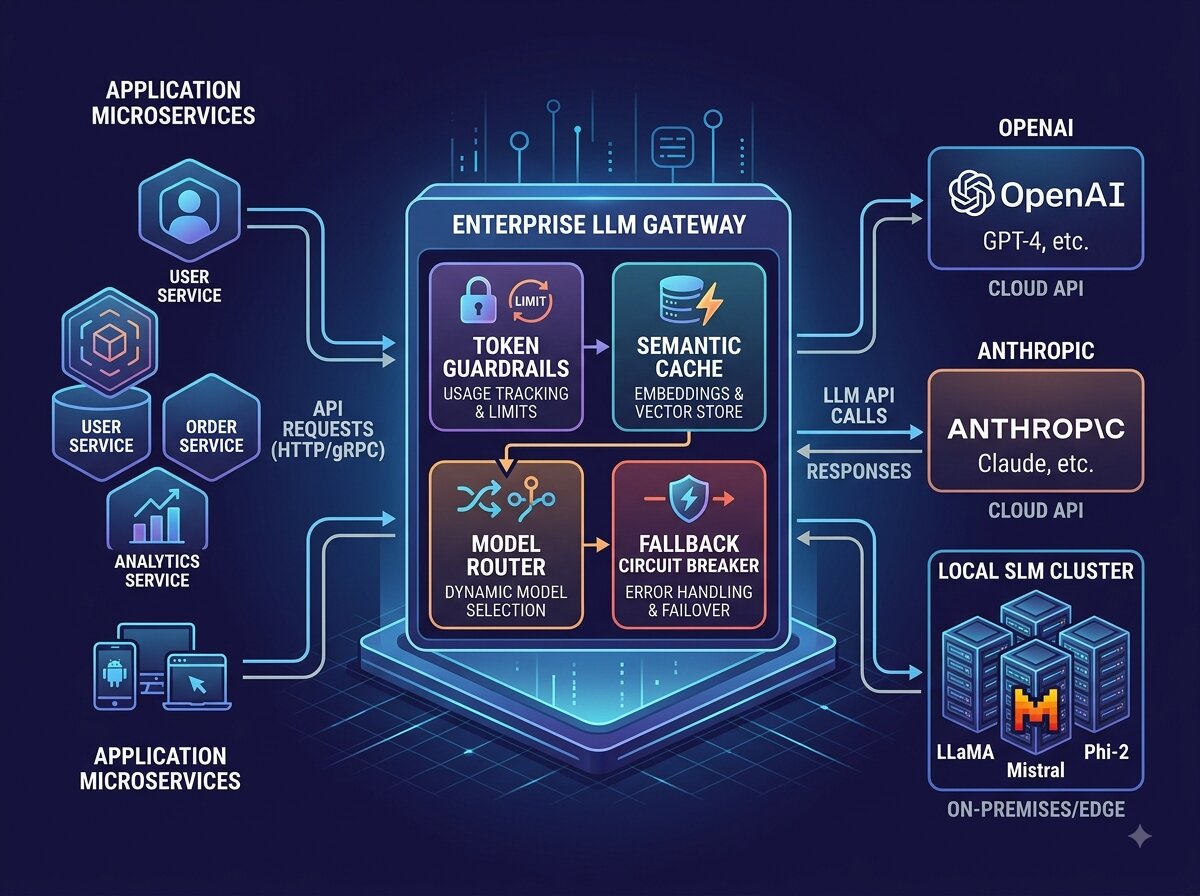
- The Strategy: Deploy the fine-tuned adapter on an optimized serving engine like vLLM or TensorRT-LLM. Utilize PagedAttention to eliminate memory fragmentation in Key-Value (KV) caching. If serving multiple specialized tasks (e.g., Support Agent + SQL Writer), use Dynamic Multi-LoRA Serving—loading a single shared base model into GPU VRAM and swapping lightweight LoRA adapters on the fly per incoming request.
- Interview Script: "For production serving, we deploy via vLLM using PagedAttention and AWQ 4-bit quantization. If supporting multiple distinct internal tasks, we utilize Dynamic Multi-LoRA serving to route requests to specific adapter heads loaded on a single shared base model instance, reducing our unit serving costs by 90%."
The Comparison: Bad vs. Good
Bad Answer (Naive Fine-Tuning)Good Answer (ADAPT-MODEL Framework)"We will collect raw user chat logs, run full-parameter fine-tuning on a base model, and host it on a standard server instance.""I will implement the ADAPT-MODEL framework. I will distill synthetic data from a frontier model, apply QLoRA to train lightweight adapters, align via DPO, mix in general datasets to prevent forgetting, and serve via vLLM Multi-LoRA.""If the fine-tuned model starts giving weird or unsafe answers, we'll just gather more training data and retrain it from scratch.""We prevent failure modes systematically. We mitigate catastrophic forgetting using a 20% general replay buffer, align output constraints via DPO, and enforce schema guardrails during inference."
The Pitch/Transition
Transitioning enterprise AI workloads from expensive frontier APIs to task-specific, fine-tuned open-weights models is the single highest-leverage unit economics optimization in Generative AI. The ADAPT-MODEL framework provides a complete architectural path to match frontier capabilities while reducing latency and inference costs by 90%.
In executive FAANG AI Product Management and TPM system design interviews, hiring managers actively look for leaders who understand both the algorithmic nuances (PEFT, DPO) and backend infrastructure operations (vLLM, dynamic adapter routing) of ML platforms.
Prepare with production-validated AI frameworks, enterprise system design blueprints, and authoritative infrastructure vocabulary:
- Command your AI product strategy, unit economics, and platform architecture rounds with the comprehensive PM Prep Guide.
- Dominate your system design, model serving infrastructure, and platform execution loops with the tactical TPM Prep Kit.
FAQs
Q: When should you use Fine-Tuning vs. RAG?
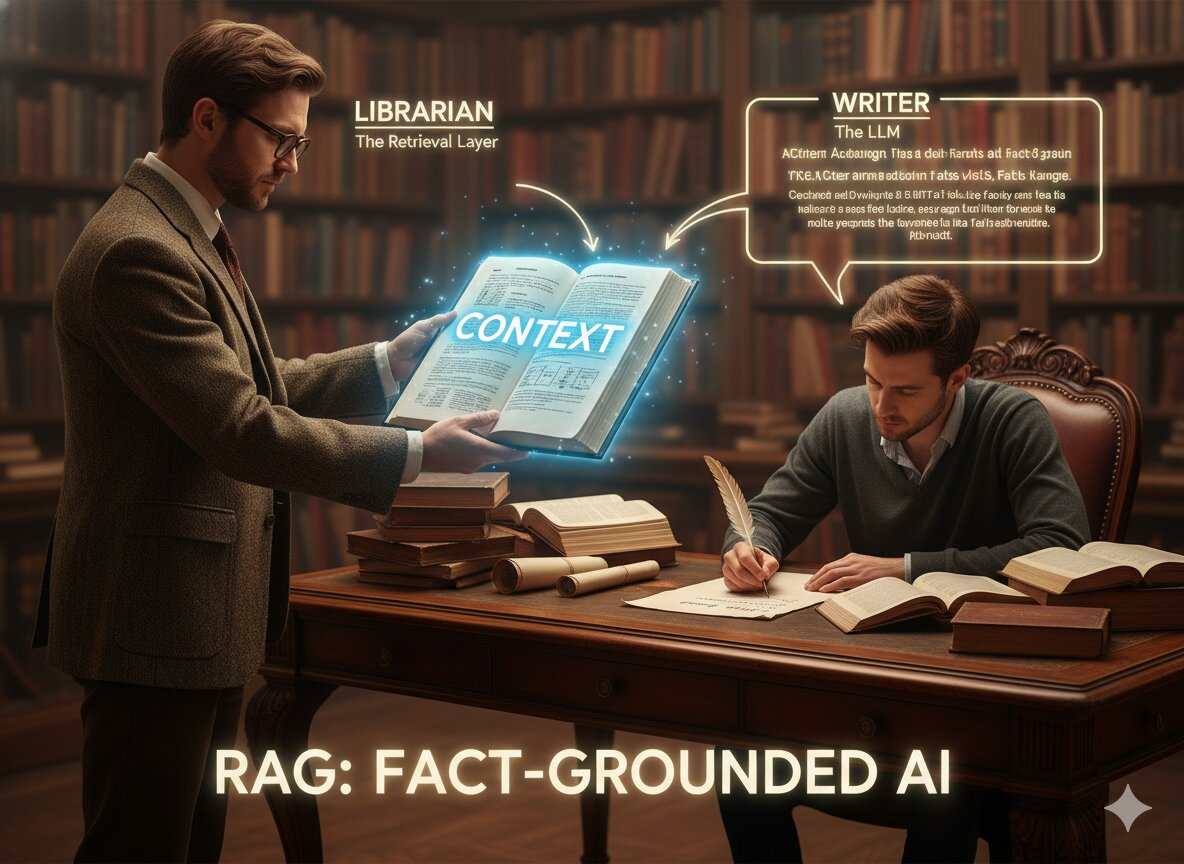
A: Use RAG when the model needs access to dynamic, frequently updated data (e.g., daily news, internal company documentation) and requires explicit source citation. Use Fine-Tuning when the model needs to learn specific behaviors, formatting (e.g., strict JSON schema), domain language/tone, or when distilling a large model into a smaller, cheaper base model for low latency. The ideal production system is often Hybrid: a fine-tuned small model running inside a RAG pipeline.
Q: What is the difference between LoRA and QLoRA?
A:
- LoRA (Low-Rank Adaptation): Freezes the pre-trained model weights (typically 16-bit float) and inserts trainable rank decomposition matrices into Transformer layers.
- QLoRA (Quantized LoRA): Quantizes the frozen base model down to 4-bit NormalFloat (NF4) precision while using double quantization and paged optimizers. This drastically cuts VRAM usage during training (e.g., fine-tuning a 70B model on a single 48GB GPU) with virtually zero loss in post-training model accuracy.
Q: How does Direct Preference Optimization (DPO) simplify model alignment compared to RLHF?
A: Traditional RLHF (PPO) requires training three separate models simultaneously: the base Generator LLM, a Reward Model, and a Value Model. It is notoriously sensitive to hyperparameter tuning and unstable during training. DPO eliminates the need for a separate Reward Model and reinforcement learning loop by reparameterizing the reward function directly within the policy loss equation, allowing direct alignment tuning on pairwise (chosen vs. rejected) datasets with standard classification-like loss stability.















.jpg)