How to Diagnose and Fix a Dropping Metric: The PM & TPM "METRIC-TRIAGE" Framework

Master the "METRIC-TRIAGE" framework to systematically diagnose, segment, and fix dropping metrics in FAANG product management (PM) and technical program management (TPM) interviews. Learn how to isolate root causes without data panic.

The Interview Trap: The "Data Panic" Tailspin

The interviewer blindsides you with a sudden data crisis: "You are the Product Manager for a major global ridesharing app. On Tuesday morning, your executive dashboard shows that week-over-week (WoW) completed rides have suddenly dropped by 8% in your primary metropolitan market. The executive team is panicking, demanding immediate answers, and threatening to pause new feature rollouts. How do you isolate the root cause and resolve this drop?"

Most candidates tank this technical execution round by offering a chaotic, unorganized laundry list of guesses: "I would immediately check if the servers went down, then ask the engineering team if they deployed any buggy code last night, and maybe run a marketing promotion to boost the numbers back up." Stop. Jumping straight to solutions or listing random hypotheses signals to a FAANG interview panel that you lack a structured, repeatable analytical process. Senior product leaders and technical program directors don’t panic—they isolate variables systematically. They deploy an exhaustive root-cause engine to rule out data pipeline glitches, environmental factors, and upstream user journey breaks before touching a single line of code.

The Core Framework: The "METRIC-TRIAGE" Method

Elite PMs and TPMs treat a dropping metric exactly like an emergency room doctor treats a critical patient: they stabilize the data, isolate the specific anatomical break, and then execute a precise surgical intervention.

1. M-etric Definition and Data Integrity Validation

Before guessing why user behavior changed, ensure the data tracking itself isn't broken.

  • The Strategy: Rule out instrumentation failures, logging bugs, and reporting latency anomalies first.
  • The Script: "Before formulating hypotheses about user behavior, I must first validate the integrity of the data stream. I will verify with our Data Engineering squad that our event logging pipelines are healthy, that no tracking schemas were corrupted in a recent deployment, and that this 8% drop isn't simply an artifact of an incomplete data processing pipeline or reporting delay."

2. E-nvironmental and Macro Factor Assessment

Isolate the dropping metric from external global events that are entirely outside your product’s software ecosystem.

  • The Strategy: Check for seasonality, major holidays, severe regional weather anomalies, macro-economic shifts, or massive competitor marketing campaigns.
  • The Script: "Next, I need to separate product behavior from macro-environmental variables. Was there an unseasonal extreme weather event or a major transit strike in that specific metropolitan market? Is this a predictable holiday seasonality dip? Are our competitors running aggressive, subsidized pricing campaigns in that specific region?"

3. T-emporal and Velocity Analysis

Pinpoint the exact speed and pattern of the decline to determine whether you are dealing with a sudden system break or a slow, structural decay.

  • The Strategy: Analyze whether the drop occurred as a sharp, instantaneous cliff or a gradual, compounding downward slope over several weeks.
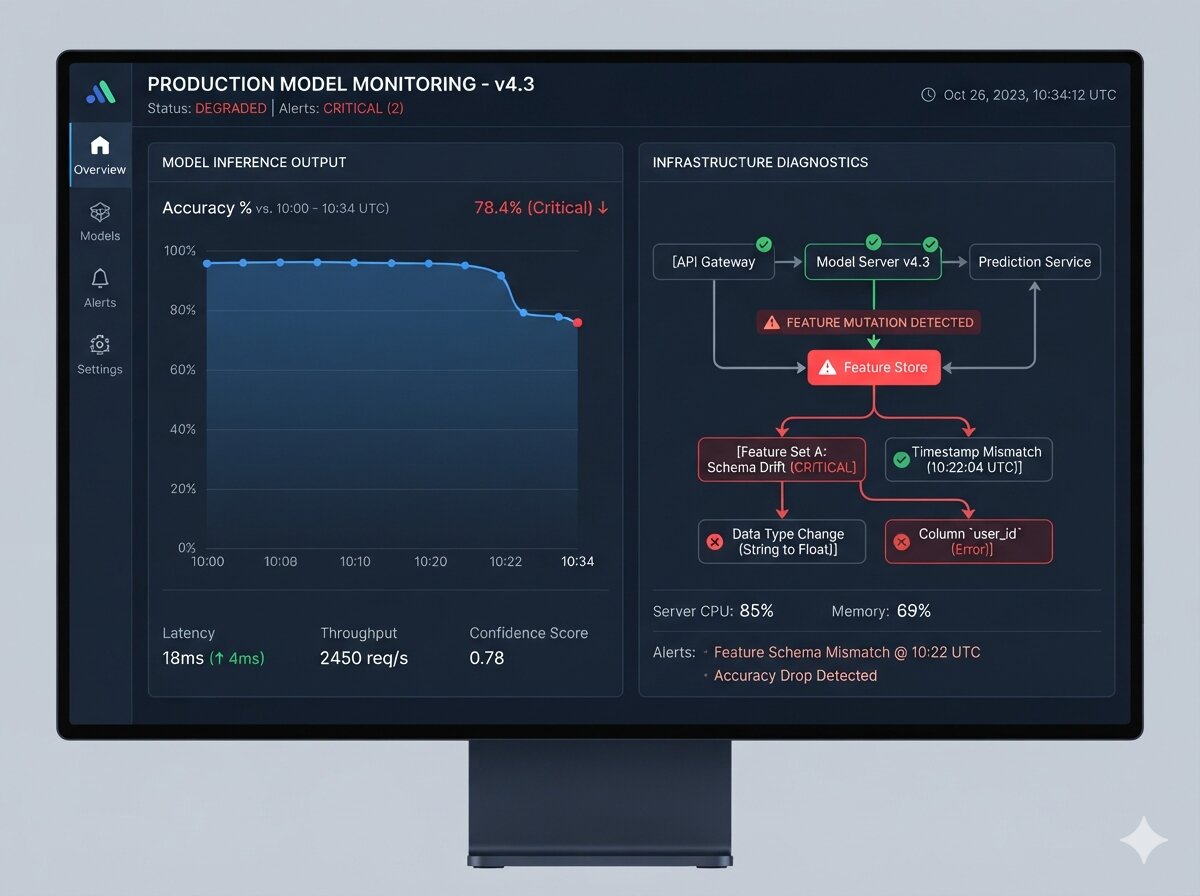
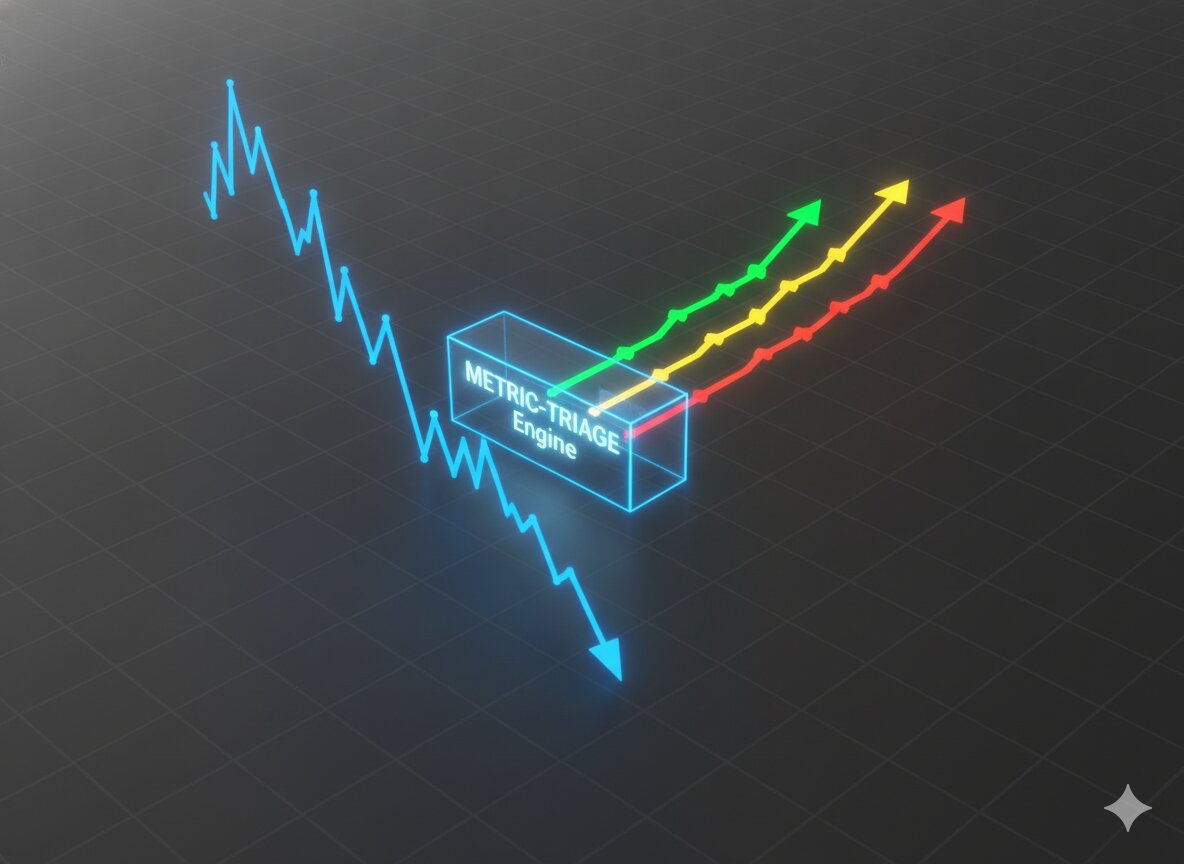
  • The Script: "I will analyze the velocity of the drop. Did the 8% decline happen instantly overnight on a specific day, or has it been compounding gradually over the last 14 days? An instantaneous cliff indicates a breaking technical deployment or infrastructure failure; a gradual slope suggests a shifting user sentiment or a progressive degradation in system performance."

4. R-egional and Segment Categorization

Slice the aggregate data by user demographics, technical platforms, and operational cohorts to isolate the specific infected variable.

  • The Strategy: Break down the 8% aggregate drop into distinct sub-segments: iOS vs. Android, new users vs. power users, or specific geographic sub-regions.
  • The Script: "I will segment the aggregate metric to find the specific pocket of failure. Is the 8% drop distributed evenly across all users, or is it heavily isolated to Android devices running a specific OS version? Is it localized to new sign-ups while our power-user retention remains completely flat?"

5. I-nbound Funnel Component Decomposition

Map out the exact user journey chronologically to find the exact drop-off step where the transaction funnel is leaking.

  • The Strategy: Deconstruct the metric into its mathematical upstream components. For a ridesharing app, Completed Rides = App Opens x Ride Searches x Ride Requests x Driver Matches x Completed Trips.
  • The Play: "A metric drop is always the mathematical result of an upstream conversion failure. By mapping out our user journey step-by-step, we discover that App Opens and Ride Searches are perfectly flat, but Ride Requests have plummeted by 22%. This instantly narrows our target surface area down to the specific screen where users select their ride options and view pricing."

6. C-orrelative Engineering and Architecture Audit

Match the isolated funnel leak directly to internal system changes, release logs, and microservice dependencies.

  • The Strategy: Audit recent service-level deployments, API changes, core database latencies, or third-party payment gateway performance metrics within the isolated window.
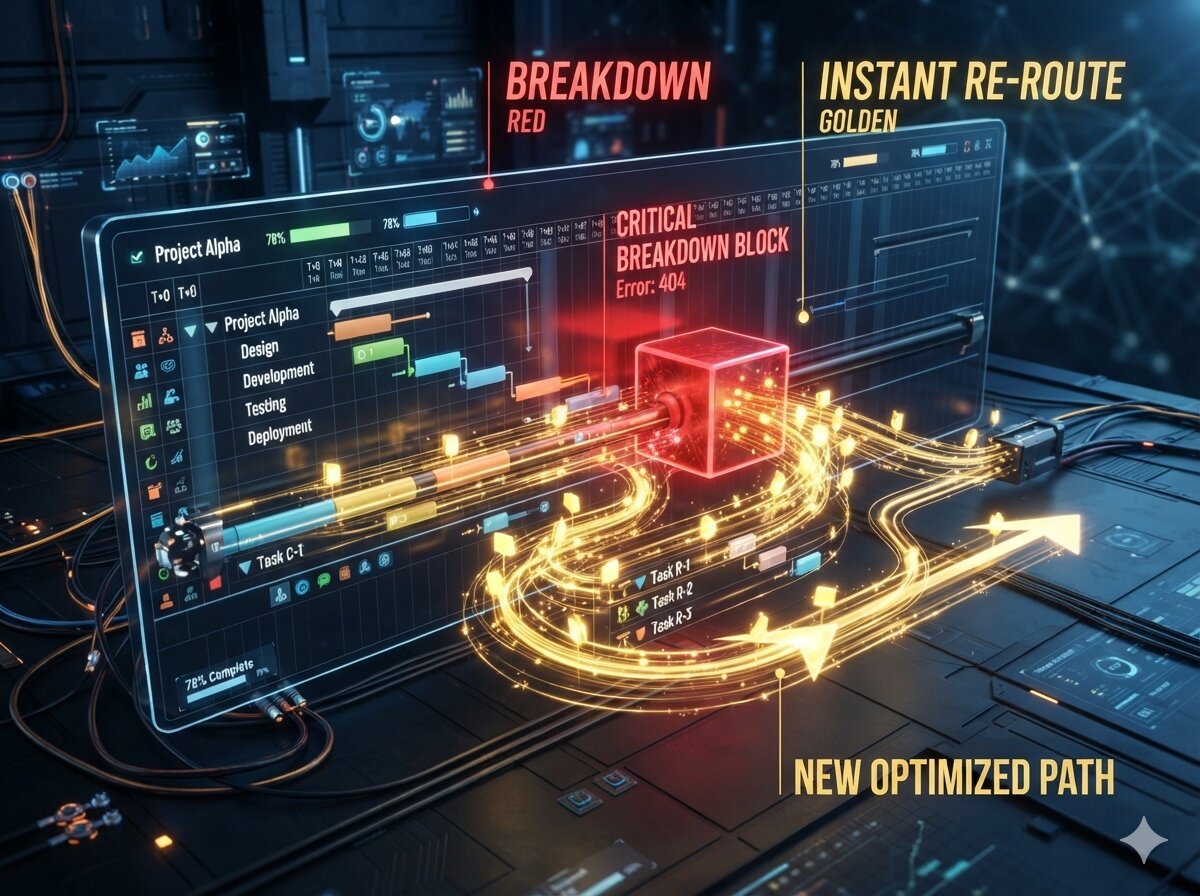
  • The Play: "Now that the leak is isolated to the pricing screen, I cross-reference our release logs. We discover that a microservice deployment on Monday evening introduced an API latency spike in our localized currency conversion engine. This delay caused our pricing screen to timeout for 22% of users, silently forcing them to abandon the app."

The Comparison: Bad vs. Good

Bad Answer (Reactive Panic)Good Answer (METRIC-TRIAGE Framework)"I think it’s probably a bug, so I would tell the engineers to rollback the entire app release immediately to fix the numbers.""I will systematically validate our data integrity, rule out macro-seasonal noise, and segment the metric by platform and region before altering our code baseline.""I would brainstorm a list of potential reasons with my team and run a promotional discount code to incentivize users to come back.""I will deconstruct the metric into its upstream mathematical inputs to pinpoint the exact funnel step where conversion breaks."Focuses on guessing, immediate patching, and emotional assumptions.Focuses on methodical isolation, data segmentation, and systemic root-cause identification.

The Pitch: Move Beyond the Data Trap

Commanding a metric crisis with absolute technical precision separates junior feature shippers from elite platform leaders. If you crumble or start guessing when an interviewer throws a data anomaly at you, you will not survive a FAANG product loop.

This framework is just the tip of the iceberg. Inside our comprehensive execution vaults, we break down every core product execution archetype—from marketplace liquidity crises to cloud system engagement drops—with absolute, step-by-step clarity.

👉 Master data execution and analytical strategy: PM Prep Guide

👉 Master infrastructure telemetry and system scalability loops: TPM Prep Kit

FAQs

Q1: What if the data engineering team confirms there is absolutely no data logging glitch?

A: Excellent. That means step one of your triage is complete, and you have successfully eliminated instrumentation error as a variable. You can now confidently inform the interviewer that because data integrity is verified, you are shifting 100% of your analytical focus to external macro variables and internal behavioral funnel segments.

Q2: How do I handle a situation where multiple metrics are dropping simultaneously?

A: Do not try to solve them all independently. Find the leading indicator. Use funnel decomposition to establish the chronological order of the metrics. For instance, if both "Add to Cart" and "Checkout Completed" are dropping, the core breakdown almost certainly resides at or before the "Add to Cart" stage. Fix the top of the funnel leak first.

Q3: Should I suggest a user research survey during a metric triage interview?

A: Only as a lagging validation mechanism for slow, gradual trends. For a sudden, acute 8% drop that happened overnight, user surveys are far too slow and qualitative. Lean heavily on systemic telemetry, engineering logs, and behavioral data segmentation to solve immediate, high-velocity crises.
Read more blogs

How to Diagnose and Fix a Dropping Metric: The PM & TPM "METRIC-TRIAGE" Framework
How to Optimize Cloud Infrastructure Unit Economics: The PM & TPM "FIN-SCALE" Framework
How to Manage Technical Debt and Refactoring Backlogs: The PM & TPM "PAY-DOWN" Framework
How to Coordinate Multi-Region Cloud Failovers: The PM & TPM "ZONE-DEFENSE" Framework
How to Orchestrate Massive API Deprecations Without Breaking Ecosystems: The PM & TPM "DECOUPLE-FLOW" Framework
How to Lead Large-Scale Corporate AI Transformations: The PM & TPM "CORE-INTEGRATE" Framework
How to Scale Infrastructure Upgrades Without Downtime: The PM & TPM "LIVE-MIGRATE" Framework
How to Architect an AI-Powered Quality Assurance & Release Engine: The PM & TPM "BUG-SHIELD" Framework
How to Formulate the Ultimate "Product-to-Engineering" Spec Engine: The PM & TPM "TECH-TRANSLATE" Framework
How to Leverage AI for Cross-Functional Product Alignment: The PM & TPM "SYNCHRONIZE" Framework
How to Build a Complete AI-Powered Agile Workflow: The PM & TPM "CORE-VELOCITY" Framework
How to Automate High-Friction Dependency Mapping and Jira Tracking: The "AUTO-TRACK" TPM Workflow
How to Handle a Critical API Rate Limiting and Service Degradation Crisis: The "THROTTLE-GUARD" Resilience Framework
How to Handle a High-Scale Database Crash During Peak Traffic: The "FAILOVER-SHIELD" Recovery Framework
How to Handle an Algorithmic Model Bias Crisis: The "ETHICAL-AUDIT" ML Governance Framework
How to Handle a Major Cloud Migration Failure: The "CLOUD-SAFETY" Rollback Framework
How to Handle a Major Technical Program Delay: The "RE-BASELINE" Schedule Recovery Framework
How to Handle a Database Sharding Migration: The "DATA-BALANCE" Scale Framework
How to Handle a Critical Third-Party API Sunset: The "DEPENDENCY-BUFFER" Integration Framework
How to Handle a Pricing Tier Change: The "PRICING-SHIELD" Revenue Framework
next How to Handle a Post-Launch Crisis: The "ROLL-BACK" Incident Management Framework
How to Handle a Critical API Migration: The "DECOUPLE-SAFE" Architecture Framework
How to Handle a Major System Outage: The "TRIAGE-SCALE" Technical Execution Framework
How to Resolve Cross-Functional Gridlock: The "BRIDGE-ALIGN" Trade-off Framework
How to Handle a Dropping Metric: The "DIG-DEEP" Root Cause Framework
How to Master the Behavioral Interview: The "STAR-GROWTH" Method
How to Lead a Product Launch: The "GTM-VELOCITY" Framework
How to Design a Product for the Next Billion Users: The "ADAPT-LIGHT" Framework
How to Negotiate Your Senior Tech Offer: The "VALUE-ANCHOR" Method
How to Master the Behavioral Interview: The "STAR-GROWTH" Method
How to Lead a Product Launch: The "GTM-VELOCITY" Framework
How to Design a Product from Scratch: The "EMPATHY-SCALE" Framework
How to Prioritize Features: The "RICE-VALUE" Framework
How to Design for the Next Billion Users: The "ADAPT-LIGHT" Framework
How to Build an AI-First Feature: The "RAG-EVAL" Framework
Move from a Monolith to Microservices: The "STRANGLE-SHIELD" Framework
How Do You Decide When to Build vs. Buy?: The "MOAT-LEVER" Framework
How Do You Handle a Conflict Between Engineering and Design?: The "TRIANGLE-TRADE" Framework
How Do You Manage a Delayed Project?: The "REALIGN-RECOVER" Framework
How Do You Design an API?: The "CONTRACT-FIRST" Framework
How Do You Prioritise a Roadmap?: The "ROI-ALIGN" Framework
How to Answer "Tell Me About a Time You Failed": The "PIVOT-OWN" Framework
How to Handle a Dropping Metric: The "SEGMENT-DRILL" Framework
The "Incentive-Alignment" Framework: Building in Web3
The "Value-Tradeoff" Framework: Mastering the Art of "No"
The "Cycle-Velocity" Framework: Building Viral Loops
The "Agentic-Utility" Framework: Building AI-First Features
The "Proxy-Experience" Framework: Mastering the Career Pivot
The "Throughput-Engine" Framework: Elite Productivity
The "Pause-Pivot" Framework: Leading the Room
The "Curated-Authority" Framework: Building Your Tech Brand
The "Throughput-First" Framework: Managing the Sprint
The "Segment-Drill" Framework: Winning with Data
The "Identity-Loop" Framework: Building the Community Moat
The "TTV" Framework: Mastering the First 5 Minutes
The "Red-Team" Framework: Building Ethical AI
The "Extensibility-First" Framework: Building the Ecosystem
The "Glocalization" Framework: Scaling Across Borders
The "PQL-Conversion" Framework: From User to Revenue
The "Phased-Velocity" Framework: Mastering the GTM
The "Win-Loss" Framework: Closing the Product-Market Gap
The "Post-Mortem" Framework: Institutionalizing Failure
The "Cognitive-Utility" Framework: Building AI-First
The "Product Health-Check" Framework: The First 30 Days
The "Moat-Mapping" Framework: Defending the Castle
The "Growth-Loop" Framework: Beyond the Marketing Funnel
The "Radical Clarity" Framework: Managing Underperformance
The "Proof of Work" Framework: Building a Career Magnet
The "Insight-Mining" Framework: High-Impact User Interviews
The "Executive-Pulse" Framework: High-Stakes Communication
The "Technical-Empathy" Framework: The Art of the 1:1
The "Elastic-Scale" Framework: Scaling from 1 to 100
The "Venture-Validation" Framework: Building from 0 to 1
The "Anchor & Lever" Framework: Negotiating $400k+ Total Comp (TC)

The "Asynchronous-First" Framework: Leading Distributed Teams
The "Value-Bridge" Framework: From Specialist to Strategist
The "Value-First AI" Framework: Integrating Intelligence Without the Gimmicks
The FAANG Interview Mastery Checklist: 10 Frameworks to Rule the Loop
The "Blueprint" Framework: Designing Scalable Systems
The "Recovery & Transparency" Framework: Handling a Slipping Project
The "Translate-to-Value" Framework: Simplifying the Complex
The "Box-In" Framework: Solving the Impossible Estimate
The "Strategic Evolution" Framework: Improving Mature Products
The "Inclusive Design" Framework: Solving Complex UX Problems
The "Objective Filter" Framework: Mastering Roadmap Prioritisation
The "Gatekeeper" Framework: Deciding to Enter a New Market
The "Bridge-Builder" Framework: Resolving Technical Deadlock
Tell Me About a Time You Failed: The Post-Mortem Framework
My Metric Dropped 10%: The Rapid Diagnosis Framework for PMs and TPMs
YouTube Watch Time Dropped 10%. Why?": How to Ace the Root Cause Analysis Interview
"How Do You Manage a Team That Doesn't Report to You?": Mastering Influence Without Authority
"You Have 10 Features and Bandwidth for 3. How Do You Decide?": Mastering the Art of Ruthless Prioritization
"Tell Me About a Time You Failed": How to Turn Your Worst Moments into Your Best Interview Answers
"Design Instagram": How to Ace the System Design Interview Without Writing a Single Line of Code
"Analysis Paralysis" is Killing Your Program: How to Master 'Bias for Action' in Interviews and Real Life
What's Your Favorite Product?": Why Saying "The iPhone" Will Fail You (And What to Say Instead)
"How Would You Manage a Data Center Migration?": The 6-Step Framework for Acing the Program Sense Interview
"How Would You Measure the Success of Spotify's Discover Weekly?": Mastering the Metrics Interview with the GAME Framework
"How Many Gas Stations Are in the US?": The Introvert's Guide to Cracking Estimation Questions
"Design TikTok": A 5-Step Framework for Acing the System Design Interview (Even if You Don't Code)

Transform Your Career with Our Complete Learning Solutions

Discover our diverse offerings, including expert-led courses, free training sessions, and personalized consultation services designed to help you master project management and advance your career with confidence.

FREE Training

Crack your next TPM Interview

From unravelling the intricacies of TPM/PM interview structures to mastering system design to discover the keys to navigating cross-functional collaboration, decoding top interview questions, and fine-tuning your resume and LinkedIn profile, including negotiation frameworks, networking strategies, and much more!

Register Now

Trusted by over 9,600 students

Course

30-Day TPM Masterclass

Expect early technical assessments, followed by a focus on strategic thinking, leadership capabilities, and a thorough evaluation of program management proficiency. From engaging self-guided exercises to comprehensive guides, frameworks, and sample answers, our TPM interview preparation covers it all, including practice lessons, updated content, and mock interviews.

Learn More

Trusted by over 9,600 students

Interview Prep Kit

Ultimate TPM Interview Prep Kit

Master TPM interview skills with this comprehensive guide covering system design, program management, and cross-functional collaboration.

Includes real-world scenarios, sample questions, and expert tips for success.

Learn More

Trusted by over 9,600 students

Interview Prep Guide

Complete PM Interview Guide

Master product design, strategy, and leadership with this all-in-one guide for Product Management interviews.

Gain confidence with actionable advice, real-world examples, and tailored mock questions to secure your next PM role.

Learn More

Trusted by over 9,600 students

Consulting

1-on-1 Interview Prep

1-on-1 Interview PreparationGet personalized guidance to ace your next interview with confidence. Our 1-on-1 interview preparation sessions focus on your unique strengths and areas for improvement. From tailored practice questions and feedback to mastering behavioral and technical responses, we ensure you're fully prepared to impress and secure your dream role.

Book a call

Trusted by over 9,600 students

Free Training

Unlock  Free Training

Get access to free training that reveals "How To crack your next TPM INTERVIEW In Just 30 Days!"

Gain exclusive access to expert-led training sessions designed to equip you with the skills, strategies, and confidence to excel in Technical Program Management.

Enroll now

Trusted by over 9,600 students