Introduction
The VP of Search & Intelligence leans over the table during a technical architecture round: "We are scaling an enterprise Retrieval-Augmented Generation (RAG) platform over 50 million internal technical documents, handling 5,000 concurrent queries per second. Our users complain that semantic search misses exact technical term matches, key information gets lost in long context windows, and our vector database costs are exploding. How do you design an end-to-end retrieval, indexing, and reranking architecture to optimize for high precision, sub-second latency, and cost-effective scaling?"
This is where candidates fall into the "Naive RAG" trap.
They suggest standard textbook setups: "We chunk text into 500-token blocks, embed them into a vector database, run cosine similarity search, and pass the top 10 chunks to the LLM."
Stop relying on basic Naive RAG for enterprise-scale workloads. Basic vector search frequently fails on exact keyword matching (e.g., part numbers, error codes), suffers from the "Lost in the Middle" context degradation problem, and rapidly runs into memory and vector indexing cost bottlenecks at scale. In elite FAANG AI Product Management and TPM architecture loops, panels evaluate your grasp of Hybrid Search Topologies (Dense + Sparse Retrieval), Contextual Chunking & Parent-Document Retrieval, Cross-Encoder Reranking, Vector Quantization (PQ/HNSW), and Query Decomposition.
To pass this advanced GenAI infrastructure and technical design loop, you need an enterprise-grade retrieval framework: the VECTOR-FLOW method.
The Core Framework: The "VECTOR-FLOW" Method
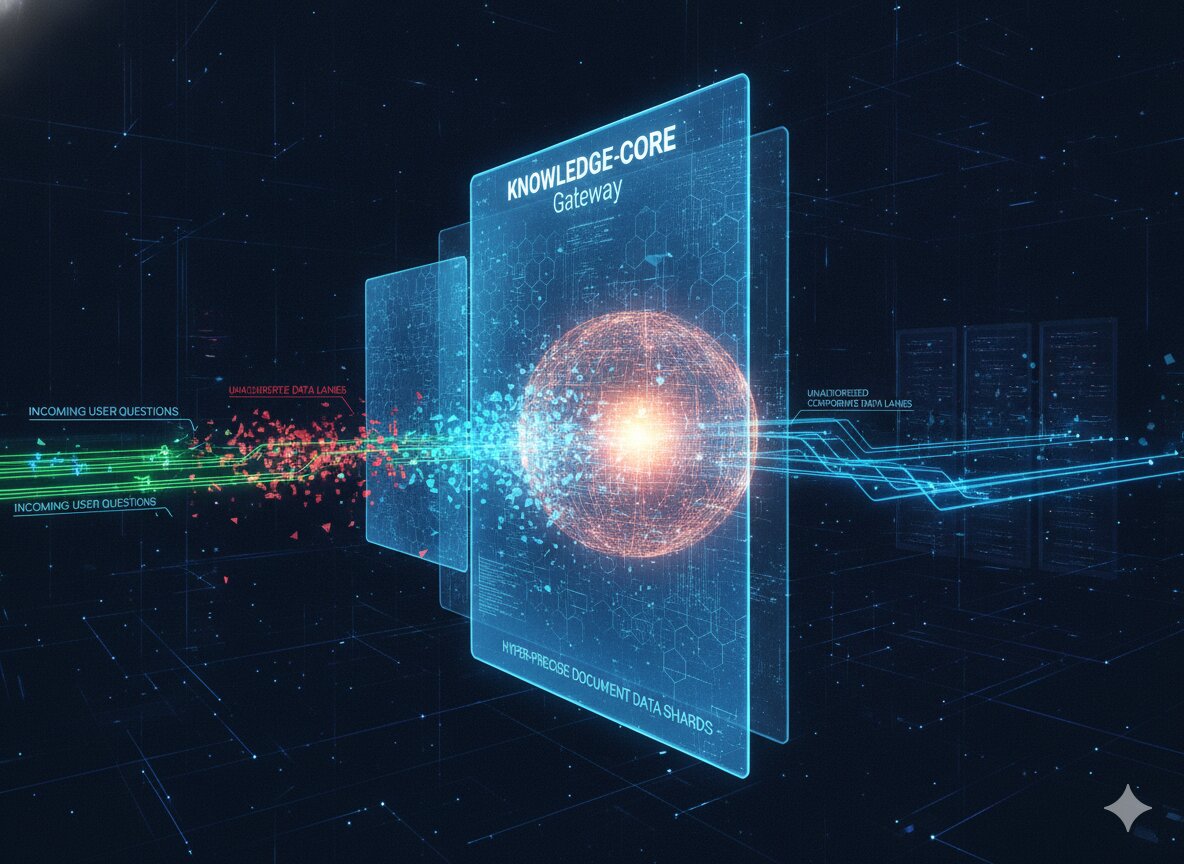
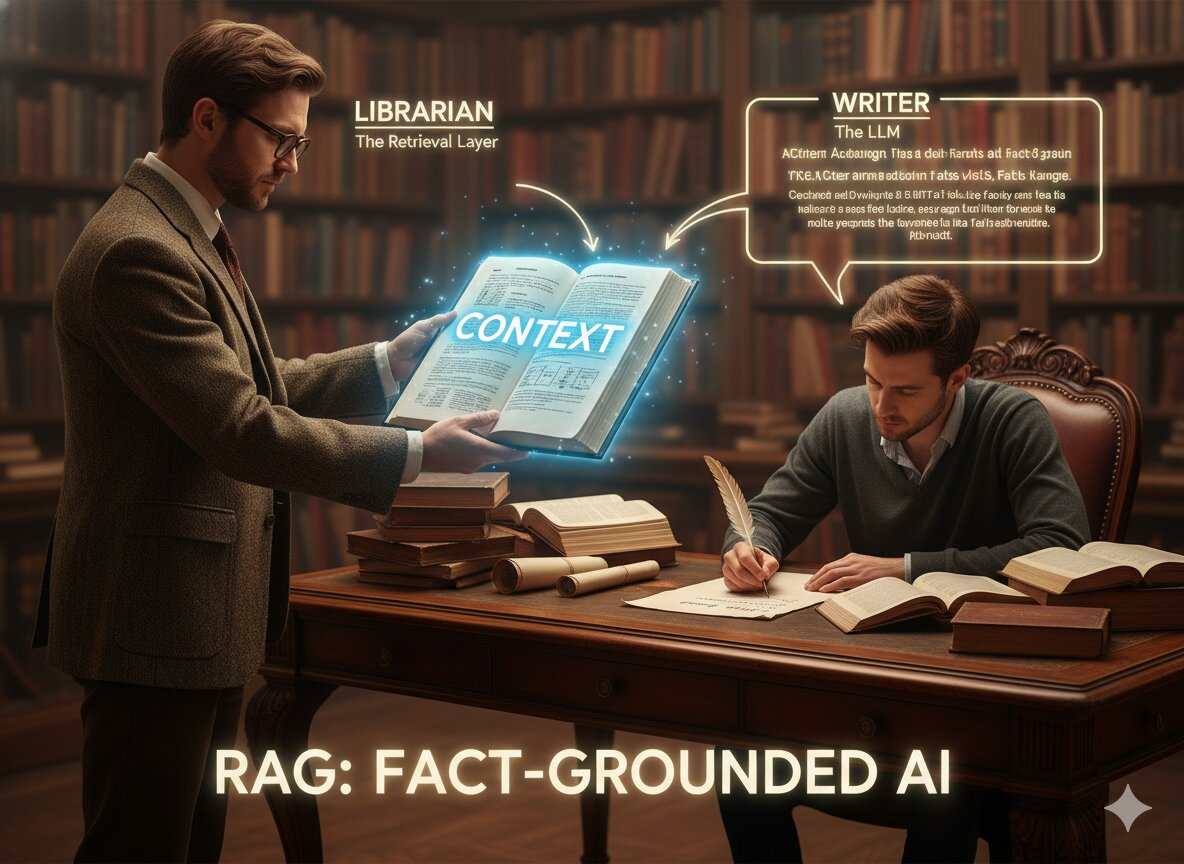
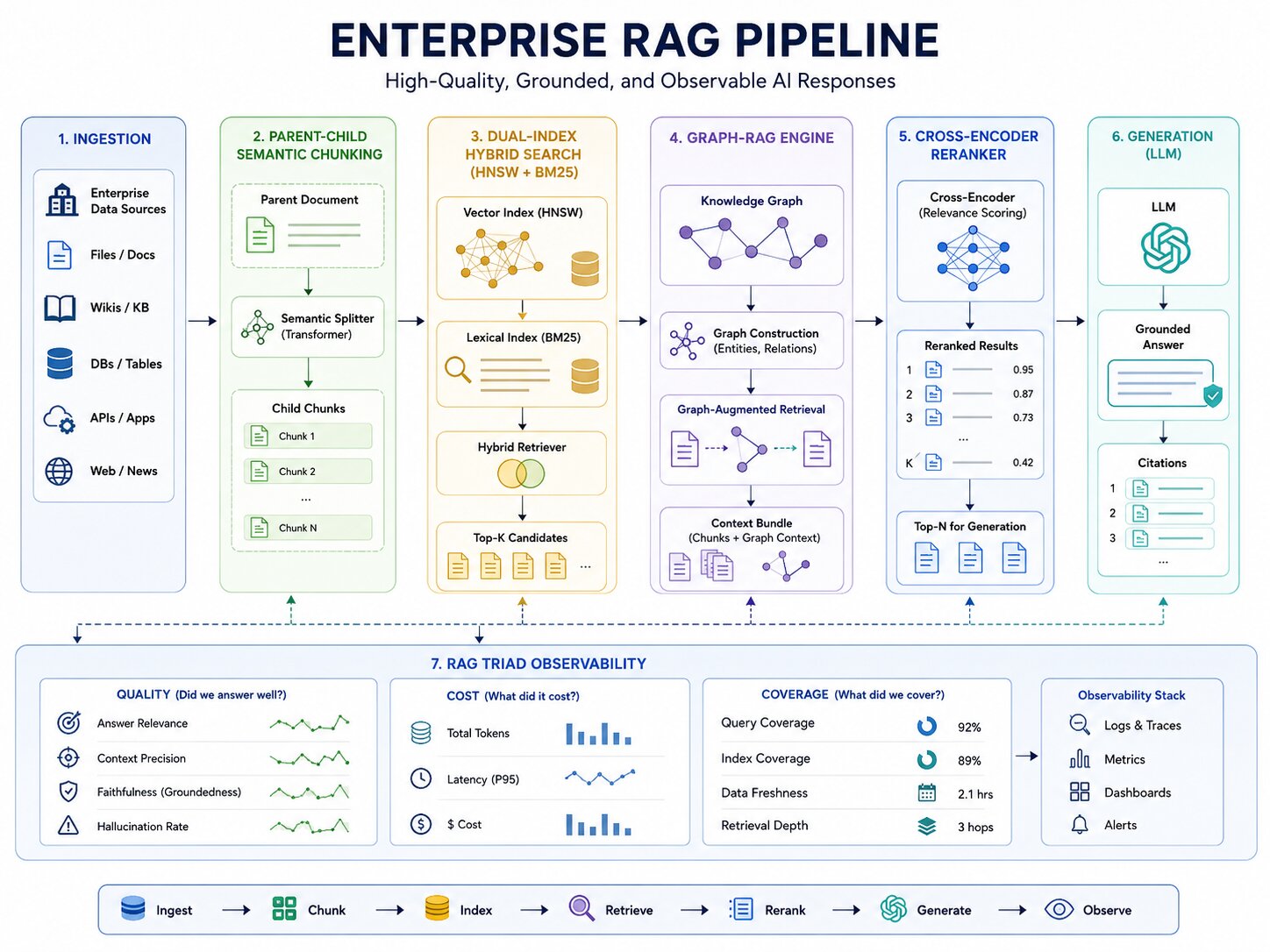
Elite AI platform leaders don't rely solely on vector embeddings. They build multi-stage retrieval pipelines that combine keyword accuracy with deep semantic understanding before passing data to the LLM.
                   [ Raw User Query / Complex Prompt ]
                                   │
                                   ▼
       ┌────────────────────────────────────────────────────────┐
       │             V-ARIANT QUERY EXPANSION & ROUTING         │
       │  * Multi-query expansion, Sub-question decomposition   │
       └───────────────────────────┬────────────────────────────┘
                                   │
                                   ▼
       ┌────────────────────────────────────────────────────────┐
       │             E-NTERPRISE HYBRID RETRIEVAL               │
       │  * Dense Embeddings (HNSW) + Sparse Search (BM25)      │
       └───────────────────────────┬────────────────────────────┘
       │                                                        │
       ▼                                                        ▼
[ Vector Search: Semantic ]                        [ Sparse Search: Exact Terms ]
       │                                                        │
       └───────────────────────────┬────────────────────────────┘
                                   │
                                   ▼
       ┌────────────────────────────────────────────────────────┐
       │             C-ROSS-ENCODER RERANKING & FILTERING       │
       │  * Reciprocal Rank Fusion (RRF) + Cross-Encoder Scoring│
       └───────────────────────────┬────────────────────────────┘
                                   │
                                   ▼
       ┌────────────────────────────────────────────────────────┐
       │             T-ERSED CONTEXT & PARENT RECONSTRUCTION    │
       │  * Sentence windowing, Parent-child chunk expansion    │
       └───────────────────────────┬────────────────────────────┘
                                   │
                                   ▼
       ┌────────────────────────────────────────────────────────┐
       │             O-PTIMIZED VECTOR STORAGE & QUANTIZATION   │
       │  * Scalar / Product Quantization (PQ) for RAM reduction│
       └───────────────────────────┬────────────────────────────┘
                                   │
                                   ▼
              [ Optimized Context Payload -> LLM Generation ]
1. V-ariant Query Expansion & Routing
Transform imprecise user questions into high-yield search queries.
- The Strategy: Raw user queries are often vague or multi-faceted. Use a fast, lightweight LLM step to generate multiple query variants, extract domain-specific metadata filters (e.g., date ranges, product categories), or break complex questions down into parallel sub-queries.
- Interview Script: "First, we apply Query Expansion and Routing. Before querying our indexes, a lightweight router generates 3 parallel query rephrasings and extracts structured metadata filters. For multi-part queries, it breaks the request into distinct sub-questions executed in parallel."
2. E-nterprise Hybrid Retrieval (Dense + Sparse)
Combine deep semantic understanding with exact keyword precision.
- The Strategy: Pure vector search misses exact terms like error codes (
ERR-9042), part numbers, or exact proper names. Use a Hybrid Search architecture:- Dense Retrieval (Semantic): Bi-encoder embeddings indexed with HNSW for conceptual match.
- Sparse Retrieval (Lexical): BM25 / SPLADE index for exact term matches.
- Interview Script: "To ensure we capture both semantic intent and exact technical terms, we run Hybrid Search. We query a dense vector index (HNSW graph) and a sparse lexical index (BM25) simultaneously, guaranteeing that exact error codes and niche nomenclature aren't missed."
3. C-ross-Encoder Reranking & Filtering
Refine candidates using high-precision scoring models.
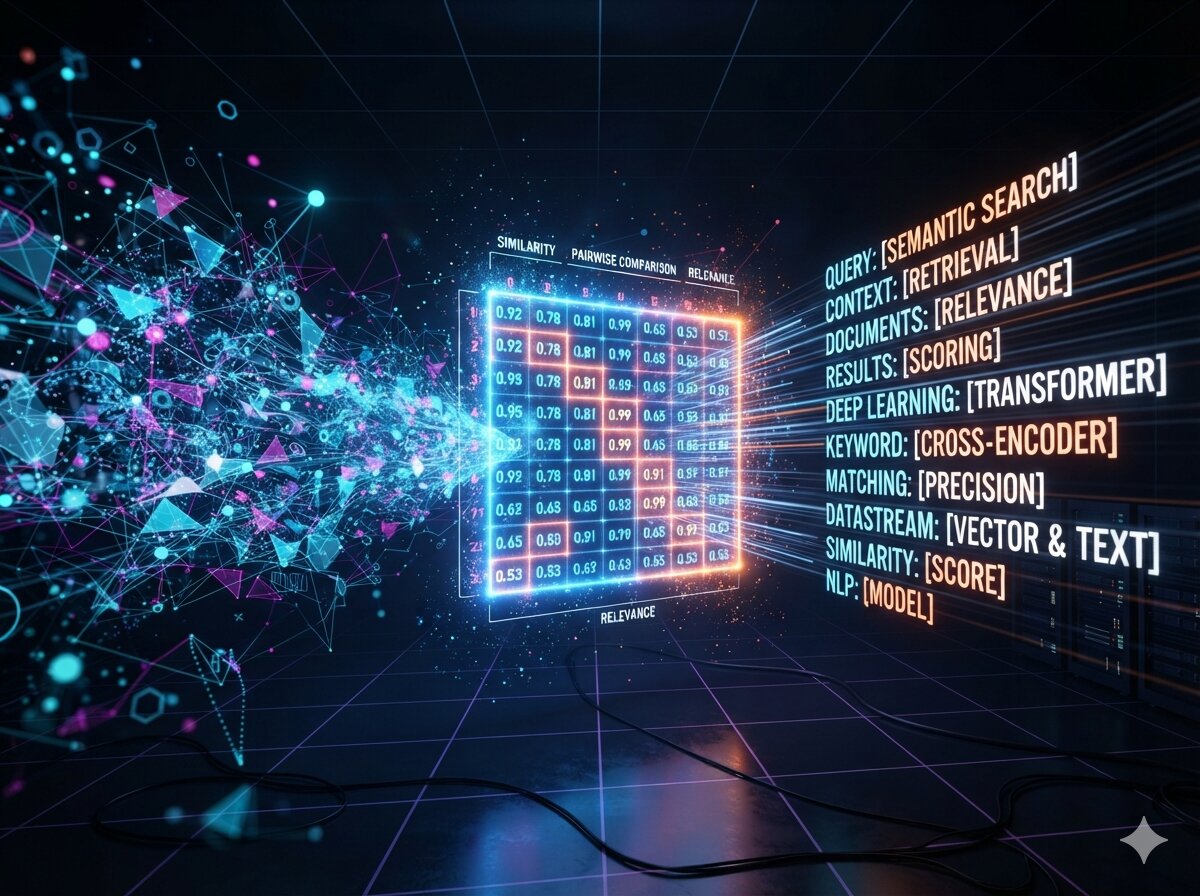
- The Strategy: Merge candidates from dense and sparse queries using Reciprocal Rank Fusion (RRF). Then, pass the top 50–100 candidate chunks through a Cross-Encoder Reranker (e.g., Cohere Rerank or BGE-Reranker). Cross-encoders compute joint attention across query and document pairs, providing far higher precision than cosine similarity alone.
- Interview Script: "We unify our hybrid search candidate pools using Reciprocal Rank Fusion, then route the top 50 results to a Cross-Encoder Reranker. The cross-encoder evaluates deep token-level interactions between the query and each chunk, trimming our set down to the top 5–10 most relevant passages."
4. T-ersed Context & Parent Reconstruction
Solve the "Lost in the Middle" problem and maximize context window value.
- The Strategy: Avoid feeding massive, arbitrary 1,000-token chunks into the reranker. Instead, use Parent-Document Retrieval or Sentence-Window Retrieval: search on small, highly specific child chunks (e.g., 128 tokens) for maximum semantic precision, but pass the broader parent document section (e.g., 1,000 tokens) to the final LLM prompt so it retains surrounding context.
- Interview Script: "To maximize retrieval precision while maintaining full context, we employ Parent-Document Indexing. We search over granular 128-token child chunks for exact matching, but dynamically swap in the larger 1,000-token parent document section when populating the final LLM prompt context."
5. O-ptimized Vector Storage & Quantization
Scale vector index memory footprint and query latency cost-effectively.
- The Strategy: Uncompressed high-dimensional vectors (e.g., 1536 dimensions at 32-bit float) consume massive RAM at 50M+ scale. Apply Product Quantization (PQ) or Scalar Quantization (SQ8) to compress vector sizes by 75–90% with minimal loss in recall, paired with disk-backed ANN indexing (e.g., DiskANN).
- Interview Script: "To scale our vector database to 50M documents cost-effectively, we implement Scalar Quantization (SQ8) and HNSW indexing. This reduces our RAM footprint by over 75% while maintaining sub-50ms search latency across high-concurrency workloads."
The Comparison: Bad vs. Good
Bad Answer (Naive RAG)Good Answer (VECTOR-FLOW Framework)"We will chunk documents into 500-token blocks, generate OpenAI embeddings, store them in a vector database, and run vector similarity search to find the top results.""I will implement the VECTOR-FLOW framework. I will run Query Expansion, execute Hybrid Search (Dense + Sparse BM25), rerank using a Cross-Encoder, apply Parent-Document retrieval, and compress indices with Scalar Quantization.""If the search misses technical terms or part numbers, we can just decrease the chunk size or use a larger LLM with a bigger context window.""Decreasing chunk size doesn't solve exact keyword matching. We solve this by combining BM25 sparse search with HNSW dense retrieval, ensuring exact technical terms are retrieved regardless of vector embedding distance."
The Pitch/Transition
Scaling enterprise RAG systems to millions of documents requires moving beyond basic vector databases toward multi-stage hybrid retrieval, precise reranking, and optimized vector index memory management. The VECTOR-FLOW framework delivers an enterprise-grade pattern for high-accuracy, low-latency search infrastructure.
In executive FAANG AI Product Management and TPM architecture loops, hiring panels look for leaders who understand the deep infrastructure trade-offs in search, vector storage, and context optimization.
Prepare with production-validated AI frameworks, enterprise system design blueprints, and authoritative infrastructure vocabulary:
- Command your AI product strategy, search metrics, and architecture rounds with the comprehensive PM Prep Guide.
- Dominate your system design, vector database infrastructure, and platform execution loops with the tactical TPM Prep Kit.
FAQs
Q: Why is Hybrid Search (Dense + Sparse) superior to pure Vector Search?
A: Dense vector search relies on high-level semantic similarity, which often smooths over specific, rare tokens. Sparse search (like BM25 or SPLADE) excels at matching exact string terms, such as product serial numbers, legal case IDs, or code syntax. Combining both ensures high recall for conceptual queries while preserving 100% precision for exact keyword lookups.
Q: What is the difference between a Bi-Encoder and a Cross-Encoder in retrieval?
A:
- Bi-Encoder: Encodes query and document into separate vector embeddings independently. Search is extremely fast ($O(\log N)$ with HNSW), making it ideal for retrieving an initial broad candidate pool (e.g., top 100).
- Cross-Encoder: Processes query and document together through full cross-attention layers. It is much slower, but provides far higher scoring accuracy, making it ideal for reranking a smaller candidate pool (e.g., top 50 down to top 5).
Q: How does Vector Quantization reduce vector database infrastructure costs?
A: Standard embeddings store each vector dimension as a 32-bit floating-point number (4 bytes). For a 1,536-dimensional vector, that requires ~6 KB per vector in uncompressed RAM. Scalar Quantization (SQ8) compresses 32-bit floats into 8-bit integers, cutting memory usage by 75%. Product Quantization (PQ) breaks vectors into smaller sub-vectors and quantizes them into codebooks, achieving up to 90%+ RAM reduction with minimal loss in retrieval accuracy.





















.jpg)