Introduction
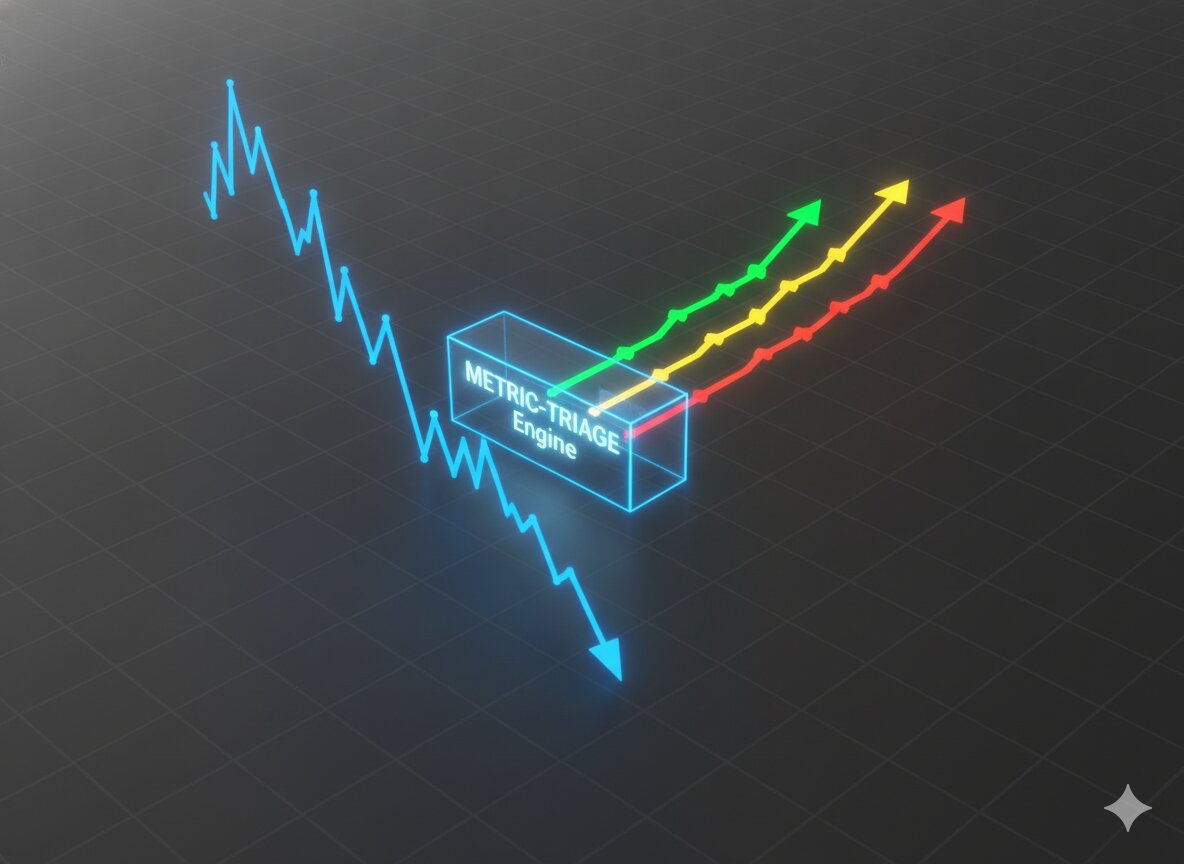
The interviewer leans in, locks eyes with you, and drops the ultimate product health bombshell: "You wake up on a Tuesday morning, check your metrics dashboard, and realize that daily active users ($DAU$) for our core messaging app dropped by 15% over the last week. The trend is holding steady. What do you do?"
Your stomach drops. This is where average candidates fall into the "Panic-Fixing" trap.
They start guessing randomly: "I would immediately call the engineering team to check if the servers are down," or "I would launch a marketing campaign to win back users."
Stop guessing. Blurt-out solutions without a structured diagnostic process is an interview killer. In elite FAANG PM and TPM execution loops, panels are not looking for immediate fixes. They are evaluating your ability to systematically isolate variables, validate data integrity, and separate external noise from internal product failures.
To pass this core metrics round, you need an airtight, step-by-step diagnostic framework. You need the ROOT-CAUSE method.
The Core Framework: The "ROOT-CAUSE" Method
Elite product leaders do not guess; they isolate. They treat a dropping metric like a medical diagnosis—verifying the equipment before cutting open the patient.
1. R-egistry & Data Integrity Validation
Never trust a dashboard blindly. Verify that the tracking pipeline itself isn't broken.
- The Strategy: Check if the tracking infrastructure, data pipelines, or logging mechanisms failed. Look to see if it's a reporting bug rather than an actual change in user behavior.
- Interview Script: "First, I will not assume this is a behavioral shift. I will validate data integrity by checking with our data engineering team to see if there was a logging bug, a broken telemetry pipeline, or a delayed data ingestion cron job that caused a artificial drop in our dashboard reporting."
2. O-perational Segment Isolation
Break the metric down by dimensions to pinpoint exactly where the bleeding is happening.
- The Strategy: Slice the data by geographic region, device platform (iOS, Android, Web), app version, and user cohorts (new vs. power users).
- Interview Script: "If the data is accurate, I will isolate the drop by segmenting the metric. Is this 15% drop concentrated on iOS or Android? Is it specific to a single region like North America, or is it global? This helps me determine if the issue is a localized technical bug or a widespread ecosystem shift."
3. O-utbound External Forces Assessment
Look outside the walls of your company to rule out factors you don't control.
- The Strategy: Analyze macroeconomic shifts, seasonal holidays (e.g., Thanksgiving week), regulatory changes, or aggressive competitor actions (e.g., a rival app launching a massive feature).
- Interview Script: "Next, I will assess external environmental factors. Was there a major holiday last week where app usage naturally declines? Did a competitor launch a massive marketing blast? Or did an App Store regulatory policy change alter our distribution or notification delivery?"
4. T-internal Product Tracking
Audit recent changes inside your own product ecosystem.
- The Strategy: Cross-reference the timeline of the drop with recent code deployments, feature flags toggled, server-side configuration changes, or marketing push notifications.
- Interview Script: "If external factors are stable, I will audit our internal product registry. I’ll cross-reference the exact date the drop started with our engineering deployment logs. Did we push a new release, shift a core layout design, or modify our push notification frequency that could have triggered an unintended drop in user retention?"
The Comparison: Bad vs. Good
Bad Answer (Panic-Fixing)Good Answer (ROOT-CAUSE Framework)"I would immediately assume the UI design is bad and tell the design team to change it back, or run an A/B test with an incentive coupon to get users back onto the app.""I will systematically isolate the failure using the ROOT-CAUSE framework, starting with data integrity verification before progressively analyzing platform segments, external market noise, and internal engineering release logs.""I'd ask the team what they think happened and schedule a big brainstorming meeting to figure out why users don't like the product anymore.""I will isolate the metric drop by slicing our user segments—analyzing platforms, regions, and cohorts—to pinpoint the exact technical or behavioral bottleneck causing the 15% dip."
The Pitch/Transition
Diagnosing a broken metric requires an exceptional blend of data analytical rigor and structured systems thinking. The ROOT-CAUSE framework is just the beginning of mastering product execution and data metrics rounds.
In FAANG interview loops, design and execution panels will intentionally pressure your numbers, challenge your trade-offs, and watch how you handle ambiguity under tight deadlines. Don't walk in there trying to wing it.
Equip yourself with the exact structured playbooks, case studies, and strategic frameworks relied on by elite tech leaders globally:
- Command your metric estimation, product execution, and business strategy loops using the comprehensive PM Prep Guide.
- Dominate your cross-functional delivery, technical systems scaling, and program execution rounds with the tactical TPM Prep Kit.
FAQs
Q: What if the metric drop is global across all platforms and regions?
A: A uniform global drop usually points to either a critical data infrastructure pipeline failure (an error in how metrics are aggregated), a foundational platform-wide backend outage, or a massive external event (like a global network provider disruption).
Q: How do you prioritize which user segment to investigate first?
A: Start with the highest-impact segments based on historical volume. If your user base is 80% iOS, audit iOS first. If that yields nothing, immediately analyze the segments with the sharpest delta (e.g., if Android dropped 40% while iOS stayed flat, your smoking gun is on Android).
Q: How long should you spend diagnosing before taking action?
A: Your diagnostic phase should be fast—measured in hours, not days. By using the ROOT-CAUSE framework, checking data integrity and segment isolation can happen concurrently via quick data queries, allowing you to deploy targeted patches within the same day.























.jpg)