The Interview Trap: The "SLA Dropped-Bid" Catastrophe
The interviewer drops you into an absolute technical pressure cooker: "Your ad tech platform connects premium digital publishers with demand-side platforms (DSPs) globally. During high-traffic events like the Super Bowl, your ad exchange experiences massive traffic spikes, processing over 1 million queries per second (QPS). The strict Real-Time Bidding (RTB) specification dictates that from the millisecond an ad slot opens on a user's browser, your exchange has exactly 100ms to parse the request, send it to hundreds of global DSPs, collect their financial bids, pick the winner, verify fraud, and render the ad. Currently, network timeouts are causing you to drop 25% of all bids, costing millions in lost revenue, and your relational database is buckling under the logging load. How do you re-architect this ad exchange platform to guarantee sub-100ms end-to-end processing at scale?"
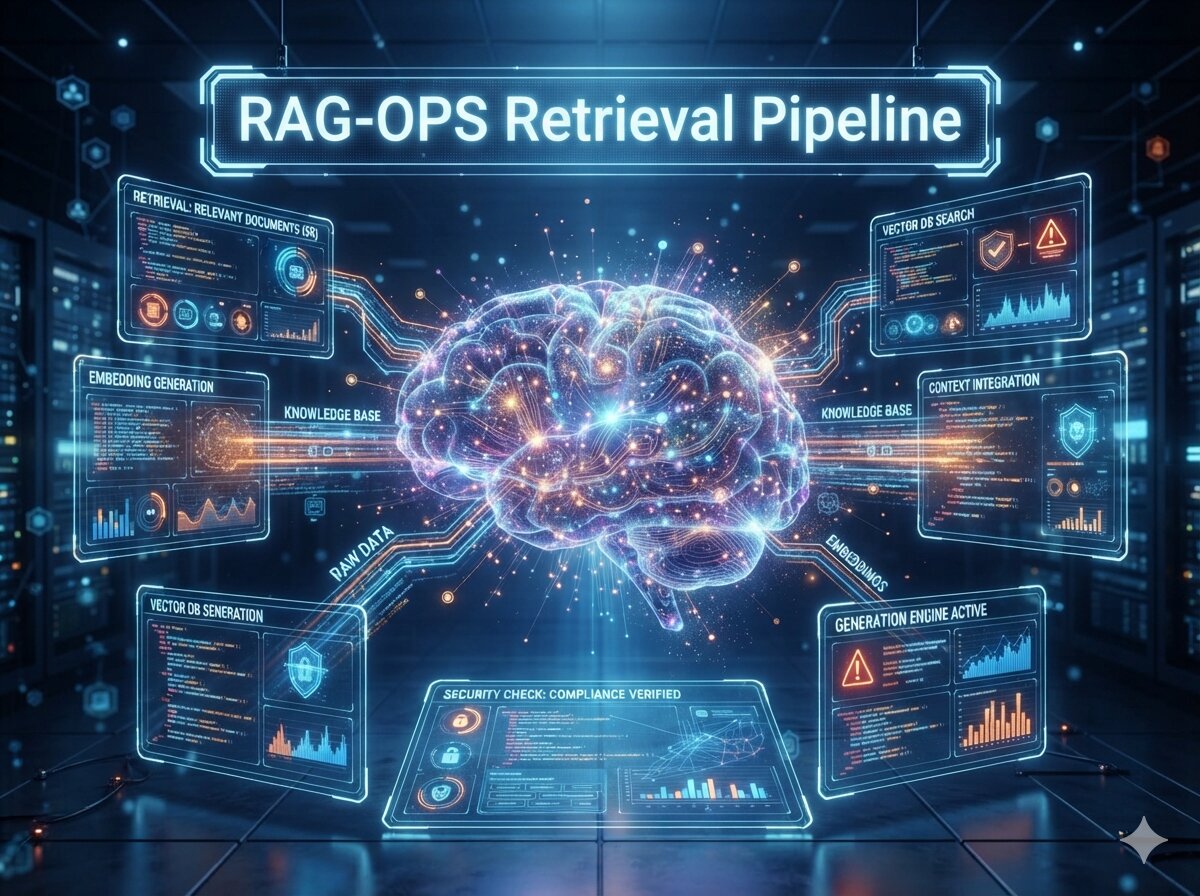
Most candidates panic and fail this ultra-low-latency platform round by pitching standard web application designs: "I would spin up an autoscaling group of API servers, use a standard load balancer, and write all bid logs to a fast SQL database with indexing." Stop. Relying on typical HTTP request blocks, synchronous waiting loops, or traditional relational databases inside a sub-100ms hard-SLA loop is an operational death sentence. In elite ad tech, fintech, and high-frequency trading (HFT) infrastructure loops at companies like Google, The Trade Desk, Meta, and Amazon, panel judges are evaluating your understanding of Asynchronous Non-Blocking I/O (Netty/Epoll), Geographically Distributed Edge Clusters, Fan-Out Broadcast Topologies, In-Memory Low-Latency Caching (Aerospike/Redis), and Distributed Write-Ahead Log Logging (Apache Kafka).
The Core Framework: The "RTB-AUCTION" Method
Elite infrastructure product leaders do not handle ad bidding through standard synchronous request-response loops. They isolate the real-time execution path from backend logging, leveraging non-blocking distributed systems and aggressive edge-caching to fulfill strict global SLAs.
                  [ User Loads Ad-Enabled Web Page ]
                                  │
                                  ▼
       ┌─────────────────────────────────────────────────────┐
       │         GEOGRAPHICALLY ROUTED EDGE GATEWAY          │
       │  * Route53 / Anycast Latency-Based Routing To Edge  │
       │  * Asynchronous Non-Blocking I/O Core (Netty)       │
       └──────────────────────────┬──────────────────────────┘
                                  │
                                  ▼ (Microsecond Device Lookup)
       ┌─────────────────────────────────────────────────────┐
       │           IN-MEMORY PRE-WARMED FEATURE CACHE        │
       │  * Aerospike / Redis Read: User Identity & Fraud DB │
       └──────────────────────────┬──────────────────────────┘
                                  │
                                  ▼ (Parallelized Fan-Out Broadcast)
       ┌─────────────────────────────────────────────────────┐
       │             DSP ASYNCHRONOUS FAN-OUT                │
       │  * Parallel HTTP/2 or gRPC Push to 100+ DSP Partners│
       │  * Strict 45ms Hard-Cutoff Aggregator Timeout       │
       └──────────────────────────┬──────────────────────────┘
                                  │
                                  ▼ (Select Highest Valid Bid)
       ┌─────────────────────────────────────────────────────┐
       │             EDGE AUCTION RESOLUTION ENGINE          │
       │  * Resolves 2nd Price / Clean Vickrey Match Logic   │
       └──────────────────────────┬──────────────────────────┘
                                  │
               ┌──────────────────┴──────────────────┐
               ▼ (Immediate Payload)                 ▼ (Asynchronous)
       ┌──────────────────────────────┐    ┌──────────────────────────────┐
       │      WINNING AD RENDER       │    │    ASYNC KAFKA STREAM INGEST │
       │  * Deliver VAST/ORTB to User │    │ * Clickhouse Batch Billing   │
       └──────────────────────────────┘    └──────────────────────────────┘
1. R-outed Latency-Based Edge Gateways
Intercept and process requests at the closest geographical edge point to the user to eliminate cross-continental network flight time.
- The Strategy: Deploy Anycast DNS routing to steer traffic to regional Edge Data Centers (e.g., US-East, EU-Central, AP-South). Use asynchronous, non-blocking network frameworks like Netty or event-driven Epoll to handle hundreds of thousands of open TCP connections per server without thread-exhaustion.
- The Script: "To beat the 100ms SLA, we must eliminate network transit flight time. We will utilize Anycast latency-based routing to terminate the user's connection at the nearest edge pop. The edge gateway itself will be written using an asynchronous, non-blocking I/O runtime like Netty. Instead of allocating one operating system thread per request—which would crash our servers under a 1M QPS spike—Netty uses a small event-loop thread pool to process thousands of concurrent connections concurrently with near-zero overhead."
2. T-imeout-Enforced Asynchronous Fan-Out
Broadcast the auction payload to hundreds of Demand-Side Platforms simultaneously without letting slow partner servers drag down your response time.
- The Strategy: Implement a parallel fan-out architecture using high-performance network protocols like gRPC or HTTP/2 multiplexing. Wrap the broadcasting service in a strict, deterministic code-level timeout mechanism (e.g., 45ms) that drops slow responders instantly.
- The Script: "Once the request is parsed, our exchange must execute a massive parallel fan-out to over 100 bidding DSPs. We will establish persistent HTTP/2 or gRPC connections to bypass the TCP handshake penalty. The fan-out engine broadcasts the OpenRTB payload across all partners concurrently. We will enforce a strict 45ms hard-cutoff timer inside our async selector loop. If a DSP fails to return a financial bid within that 45ms window, we instantly discard their connection, protecting our core platform SLA from third-party performance degradation."
3. B-uffer-Isolated Write Aggregations
Prevent disk-write operations from choking your active application runtime by offloading all transaction logs into a decoupled streaming bus.
- The Strategy: Never write logs directly to a transactional database during the auction loop. Stream win/loss notifications, click events, and bid records directly into an optimized Apache Kafka cluster, allowing backend data warehouses (like ClickHouse) to consume and batch-process billing asynchronously.
- The Play: "A primary reason ad tech platforms crash under load is logging blockages. In our design, the real-time execution path does zero direct database inserts. The moment an auction resolves, the win/loss metadata is serialized into a lightweight byte array and pushed into an optimized Apache Kafka cluster using a non-blocking producer. A downstream ClickHouse cluster consumes these streams asynchronously to process financial billing, isolating our 100ms transaction engine from analytics overhead."
4. A-erospike In-Memory Identity and Fraud Verification
Perform hyper-fast lookups on user device matching and fraud blacklists without breaking your microsecond budget.
- The Strategy: Store user cookie-matching tables, frequency-capping limits, and known invalid traffic (IVT) bot profiles in a highly parallelized, hybrid memory database like Aerospike or Redis Enterprise.
- The Play: "Before inviting DSPs to bid, we must enrich the request with user identity data and filter out fraudulent bot traffic. We will cache our device-matching topologies and invalid traffic registries in Aerospike, leveraging its hybrid-memory flash architecture. This allows our edge application nodes to fetch user sync profiles and perform anti-fraud verification via key-value lookups in less than 2 milliseconds, leaving the bulk of our 100ms budget available for the external auction."
The Comparison: Bad vs. Good
Bad Answer (Synchronous Monolithic Architecture)Good Answer (RTB-AUCTION Framework)"I will write an API using standard Node.js, save all bid logs straight into a MySQL database, and wait for every ad provider to text back their price before picking the winner.""I will architect an edge-routed, non-blocking network core using Netty, execute a parallelized gRPC fan-out with a hard 45ms timeout, and offload event logging into Apache Kafka.""If our ad platform slows down or misses its time limit during peak traffic, we will just buy bigger servers or tell the ad providers to optimize their code.""I will use Anycast DNS to minimize physical packet transit times, enforce strict asynchronous connection cutoffs, and cache device identifiers in an in-memory Aerospike tier."Treats ad bidding like a traditional web shop transaction, leading to catastrophic thread-locking, slow load speeds, and massive dropped revenue.Implements geographic edge processing, ultra-low-latency in-memory data structures, asynchronous parallel broadcasting, and totally decoupled stream logging.
The Pitch: Command Ultra-Low-Latency Infrastructure
Operating at the absolute boundaries of hardware and network capabilities—where every microsecond represents thousands of dollars in transacted ad revenue—requires deep, uncompromising system design authority. If you approach extreme high-concurrency, low-latency domains with basic software paradigms, high-performance platform engineering panels will pass on your profile.
Kracd infrastructure frameworks equip you with the specialized distributed systems topologies, network protocol knowledge, and low-latency data layouts needed to dominate any elite core execution round.
👉 Master high-performance system execution and architecture: PM Prep Guide
👉 Master deep distributed data scaling and network operations: TPM Prep Kit
FAQs
Q1: Why is Aerospike preferred over a traditional relational database or standard MongoDB cluster in Ad Tech?
A: Traditional databases rely on complex storage layers, heavy transaction locking, and disk-bound indexing, which push read latencies into tens of milliseconds. Ad tech requires sub-3ms lookups at millions of operations per second. Aerospike uses a hybrid-memory architecture where the primary index is held purely in RAM while the data blocks reside on raw, un-journaled NVMe flash storage, achieving predictable sub-millisecond data retrieval without garbage collection pauses.
Q2: What is the benefit of using HTTP/2 multiplexing or gRPC for DSP fan-out instead of standard HTTP/1.1?
A: Under HTTP/1.1, each request requires a dedicated TCP connection, or must wait sequentially in a queue (Head-of-Line blocking). Creating a new TCP connection requires a 3-way handshake, adding 20-50ms of network latency per bid request. HTTP/2 and gRPC allow hundreds of bidirectional requests and responses to be multiplexed simultaneously over a single persistent TCP connection, completely removing connection setup overhead and saving critical milliseconds during the fan-out.
Q3: How does the platform handle discrepancies between the exchange's auction log and the DSP's billing report?
A: Discrepancies are avoided by separating real-time execution from billing log compilation via unique cryptographic transaction IDs ($Auction IDs$). The edge engine appends this unique token to the winning tracking pixel ($VAST/ORTB payload$) sent to the user's browser. When the ad renders, the client browser pings an independent, decoupled tracking endpoint which publishes a "Win Notice" event to Kafka. Billing is calculated solely on these verified rendering tokens rather than raw, internal bid logs.






















.jpg)