Introduction
The VP of AI Engineering and Chief Enterprise Architect kick off the system design interview: "We are scaling an enterprise Retrieval-Augmented Generation (RAG) platform across 50,000 employees processing millions of internal documents—PDFs, Notion pages, SQL schemas, and Slack logs. The system suffers from low retrieval recall, high hallucination rates on complex queries, high vector database query costs, and stale index state. How do you design an end-to-end RAG ingestion, hybrid search, reranking, contextual chunking, and continuous evaluation architecture operating under 300ms SLA?"
This is where candidates fall into the "Naive Naive-RAG" trap.
They offer overly basic architecture: "We'll just split text into 500-character chunks using LangChain, generate OpenAI embeddings, store them in Pinecone, run top-k cosine similarity search, and paste the retrieved chunks into the LLM system prompt."
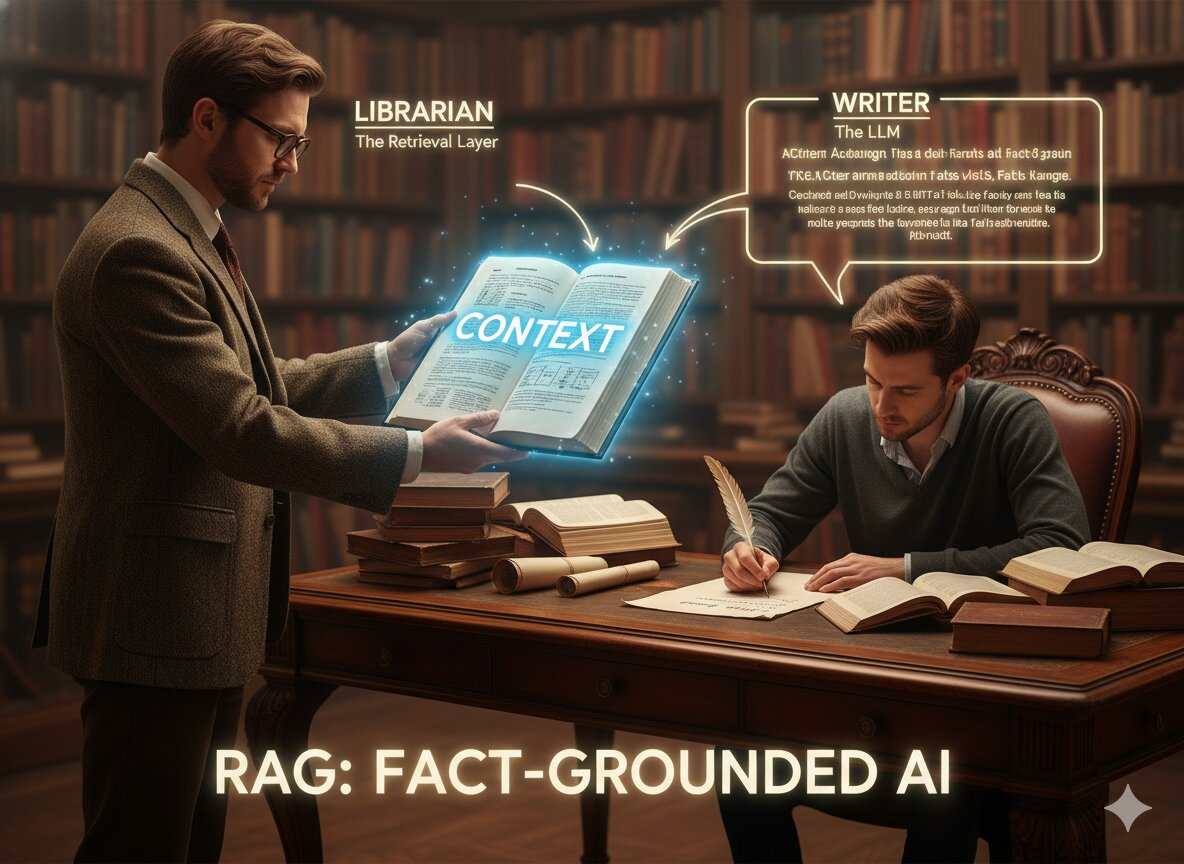
Stop relying on basic naive RAG for enterprise-grade applications. Naive chunking destroys document layout context, standard cosine similarity search misses exact keyword matches (like part numbers or legal clauses), vector search scales poorly for structured queries, and un-reranked context floods LLMs with noise. In elite FAANG AI Product Management and TPM system design loops, panels evaluate your grasp of Hierarchical Contextual Chunking, Dense-Sparse Hybrid Search (BM25 + Dense Vectors), Cross-Encoder Reranking, Reciprocal Rank Fusion (RRF), Graph-RAG (Knowledge Graphs), and RAG Triad Evaluation (Ragas/TruLens).
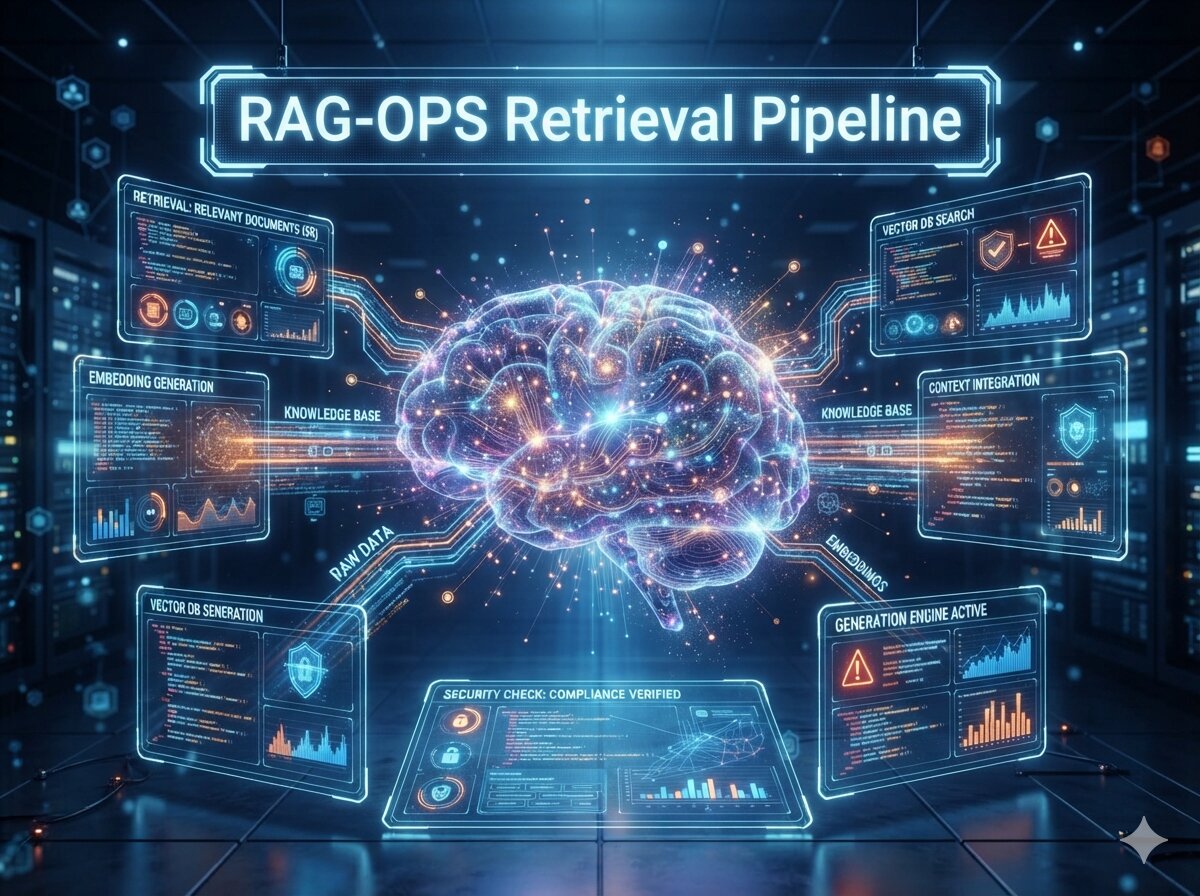
To pass this advanced GenAI data architecture and technical platform system design round, you need an enterprise-grade framework: the "RAG-FLOW" method.
The Core Framework: The "RAG-FLOW" Method
Elite AI platform leaders do not build naive vector lookup engines. They build multi-stage ingestion, hybrid retrieval, semantic reranking, and automated evaluation pipelines.
          [ Multi-Source Ingestion: PDFs, Confluence, SQL, Slack ]
                                     │
                                     ▼
       ┌────────────────────────────────────────────────────────────┐
       │             R-ESILIENT INGESTION & CONTEXTUAL CHUNKING     │
       │  * Layout-aware parsing, Parent-Child / Semantic Chunking  │
       └─────────────────────────────┬──────────────────────────────┘
                                     │
                                     ▼
       ┌────────────────────────────────────────────────────────────┐
       │             A-DVANCED HYBRID SEARCH & DUAL INDEXING        │
       │  * Dense Vectors (HNSW) + Sparse Keyword (BM25) Inverted   │
       └─────────────────────────────┬──────────────────────────────┘
                                     │
                                     ▼
       ┌────────────────────────────────────────────────────────────┐
       │             G-RAPH ENRICHMENT & KNOWLEDGE RETRIEVAL        │
       │  * Knowledge Graph (Graph-RAG) for multi-hop relationship  │
       └─────────────────────────────┬──────────────────────────────┘
                                     │
                                     ▼
       ┌────────────────────────────────────────────────────────────┐
       │             F-ILTRATION & CROSS-ENCODER RERANKING          │
       │  * Cohere Rerank / Cross-Encoder, Reciprocal Rank Fusion   │
       └─────────────────────────────┬──────────────────────────────┘
                                     │
                                     ▼
       ┌────────────────────────────────────────────────────────────┐
       │             L-ATENCY-OPTIMIZED CONTEXT COMPRESSION         │
       │  * Prompt Compression (LLMLingua), Token Pruning           │
       └─────────────────────────────┬──────────────────────────────┘
                                     │
                                     ▼
       ┌────────────────────────────────────────────────────────────┐
       │             O-BSERVABILITY & RAG TRIAD EVALUATION          │
       │  * Faithfulness, Answer Relevance, Context Relevance       │
       └─────────────────────────────┬──────────────────────────────┘
                                     │
                                     ▼
       ┌────────────────────────────────────────────────────────────┐
       │             W-RITE-BACK FRESHNESS & DYNAMIC CACHING        │
       │  * Change Data Capture (CDC), Semantic Caching (Redis)     │
       └─────────────────────────────┬──────────────────────────────┘
                                     │
                                     ▼
             [ High-Precision, Low-Latency Generation ]
1. R-esilient Ingestion & Contextual Chunking
Transform raw unstructured documents into context-rich representations without losing layout context.
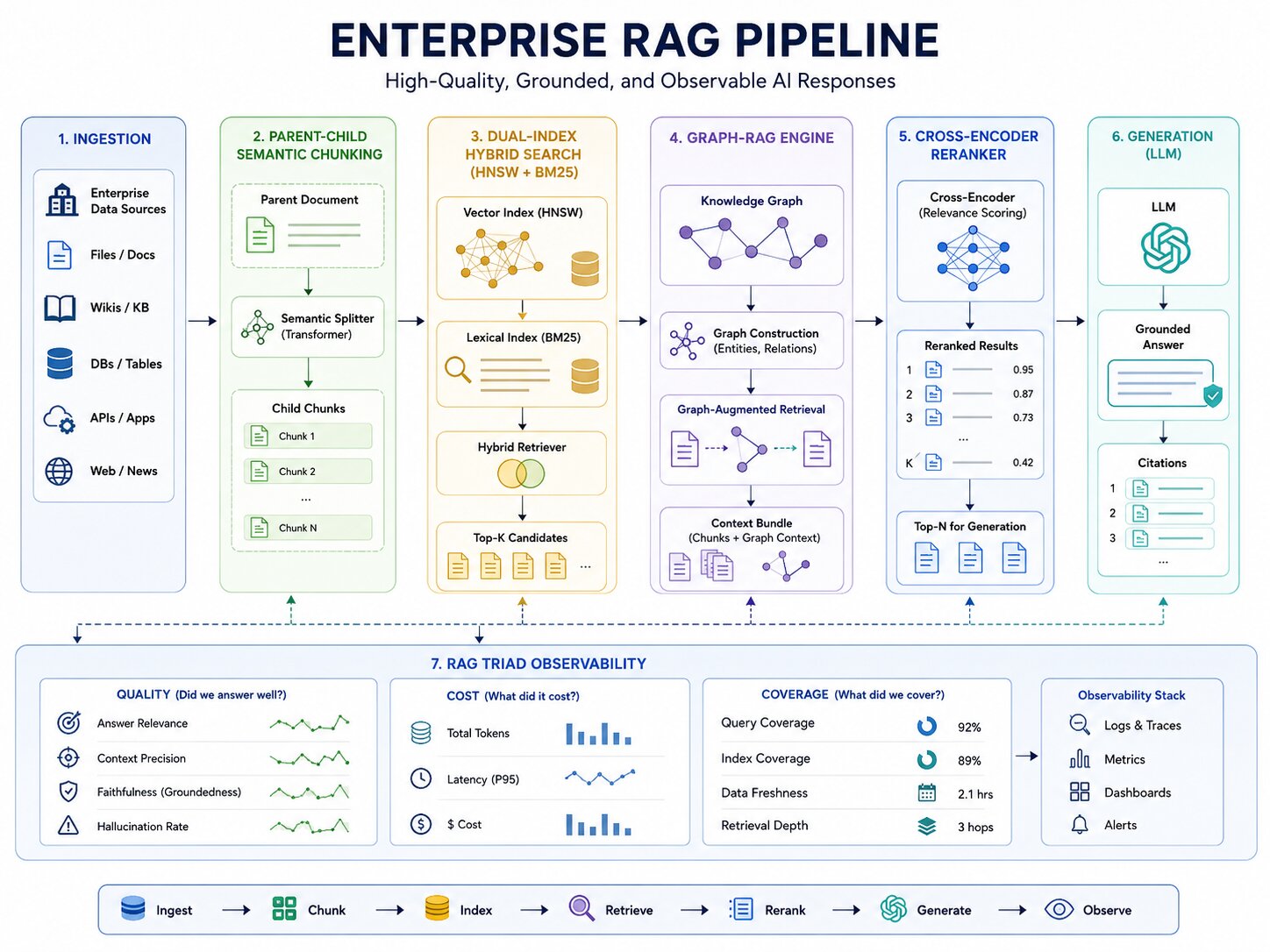
- The Strategy: Avoid fixed-character splitting (e.g., slicing every 500 characters). Implement Layout-Aware Semantic Chunking using OCR parser engines (like Unstructured or LlamaParse) to preserve tables, headers, and bullet structures. Apply a Parent-Child (Hierarchical) Chunking Strategy: retrieve small text chunks (100–200 tokens) for vector embedding precision, but expand to the full parent block (1,000+ tokens) when passing context to the LLM.
- Interview Script: "First, we establish our ingestion pipeline using Layout-Aware Semantic Chunking. To preserve context boundaries, we use a Parent-Child chunking approach where embeddings are generated on granular 150-token child vectors for high retrieval precision, while the larger parent context window is passed to the generator."
2. A-dvanced Hybrid Search & Dual Indexing
Combine vector semantic search with traditional lexical keyword matching.
- The Strategy: Vector embeddings alone struggle with exact alphanumeric matches (e.g.,
Error Code ERR-9042orPart #883A). Build a Dual-Index System:- Dense Vector Index: Approximate Nearest Neighbor (ANN) search via HNSW trees (e.g., Pinecone, Qdrant, Milvus) for semantic intent.
- Sparse Keyword Index: Inverted index via BM25 (e.g., Elasticsearch or OpenSearch) for precise lexical matches.
- Combine candidates using Reciprocal Rank Fusion (RRF).
- Interview Script: "To ensure maximum retrieval recall, we implement Dual-Index Hybrid Search. We run HNSW dense vector search alongside sparse BM25 keyword matching in parallel, fusing the resulting candidate lists using Reciprocal Rank Fusion to catch both broad semantic intent and exact code or policy numbers."
3. G-raph Enrichment & Knowledge Retrieval (Graph-RAG)
Enable multi-hop reasoning across interconnected enterprise data.
- The Strategy: Flat vector chunk search fails on global summary queries (e.g., "How do our regional compliance policies differ across all European subsidiaries?"). Augment vector stores with a Knowledge Graph Index (Graph-RAG) using Neo4j or Amazon Neptune. Extract entities and relationships to traverse linked nodes across multiple documents.
- Interview Script: "For complex multi-hop queries, we enrich vector retrieval with Graph-RAG. By extracting entities and relations into a property Knowledge Graph, the system traverses interconnected nodes across disparate documents, synthesizing structured relational facts that standard vector searches miss."
4. F-iltration & Cross-Encoder Reranking
Filter out irrelevant retrieval noise before feeding context to the LLM.
- The Strategy: Bi-encoder vector search is fast but imprecise. Take the top-50 candidate chunks returned by Hybrid Search and run them through a heavy Cross-Encoder Reranker Model (e.g., Cohere Rerank or BGE-Reranker). The cross-encoder computes deep joint query-document attention scores, narrowing the context down to the top 5–10 most relevant chunks.
- Interview Script: "To maximize context precision, we route the top-50 raw candidates through a Cross-Encoder Reranker stage. This scores joint query-chunk attention dynamics, discarding irrelevant context and passing only the top 5 highly scored chunks to the generator context window."
5. L-atency-Optimized Context Compression
Keep prompt payloads compact to reduce latency and token costs.
- The Strategy: Passing thousands of redundant tokens increases time-to-first-token (TTFT) and inflates API cost. Deploy Prompt Compression Algorithms (e.g., LLMLingua) to prune filler tokens, redundant words, and low-information sentences from reranked context blocks without degrading generation quality.
- Interview Script: "We optimize latency and token spend using Prompt Compression via LLMLingua. This compresses the reranked context blocks by removing low-information tokens before prompt insertion, reducing TTFT by 40% while preserving context fidelity."
6. O-bservability & RAG Triad Evaluation
Continuously evaluate retrieval accuracy and generation quality in production.
- The Strategy: Implement continuous synthetic and live evaluations using the RAG Triad framework (e.g., Ragas or TruLens):
- Context Relevance: Are retrieved chunks relevant to the query?
- Groundedness / Faithfulness: Is the generated answer derived exclusively from retrieved context (zero hallucination)?
- Answer Relevance: Does the output directly answer the user's prompt?
- Interview Script: "We enforce production quality using automated RAG Triad observability. Every query trace is scored asynchronously for Context Relevance, Groundedness, and Answer Relevance, logging hallucination alerts when groundedness scores drop below set thresholds."
7. W-rite-Back Freshness & Dynamic Caching
Maintain real-time index synchronization and fast repeat responses.
- The Strategy: Prevent stale index states and redundant LLM calls:
- Change Data Capture (CDC): Stream source document mutations (updates, deletions) instantly into the vector/sparse indices via Kafka/Debezium.
- Semantic Caching: Deploy a semantic cache (e.g., Redis VL) to store recent query-response pairs, serving semantically identical incoming user queries instantly without re-triggering full RAG inference.
- Interview Script: "For index freshness and low latency, we deploy Change Data Capture pipelines to update vector indices in real time when source documents change. Additionally, a Redis Semantic Cache intercepts incoming queries, serving cached responses for recurring semantic intents in under 20ms."
The Comparison: Bad vs. Good
Bad Answer (Naive RAG)Good Answer (RAG-FLOW Framework)"We will split documents every 500 characters, store embeddings in a vector DB, and do a standard vector search to get top 5 chunks.""I will implement the RAG-FLOW framework: parent-child semantic chunking, dense-sparse hybrid search with BM25, Graph-RAG for multi-hop reasoning, and cross-encoder reranking to optimize context quality.""If the model hallucinates, we will add 'Do not lie' to the system prompt.""System prompts don't fix poor retrieval. We enforce groundedness through cross-encoder context filtering and measure faithfulness using continuous RAG Triad observability pipelines."
The Pitch/Transition
Architecting enterprise-grade RAG systems requires moving beyond basic vector lookups toward multi-stage ingestion, hybrid dual-indexing, knowledge graph enrichment, cross-encoder reranking, and automated RAG Triad evaluation. The RAG-FLOW framework provides an enterprise architecture blueprint for high-precision, low-latency enterprise search platforms.
In executive FAANG AI Product Management and TPM system design interviews, hiring panels evaluate candidates on their ability to design scalable data infrastructure, manage latency budgets, and eliminate non-deterministic hallucinations.
Prepare with production-validated AI frameworks, enterprise system design blueprints, and authoritative infrastructure vocabulary:
- Command your AI product strategy, search architecture roadmap, and execution metrics with the comprehensive PM Prep Guide.
- Dominate system design, search infrastructure, and platform execution loops with the tactical TPM Prep Kit.
FAQs
Q: Why is Dense-Sparse Hybrid Search superior to Vector-Only Search in enterprise RAG?
A: Vector embeddings capture semantic meaning but struggle with exact lexical matches like SKU numbers, specific legal names, or technical error codes. Sparse Search (BM25) excels at exact term matching. Combining both approaches ensures the retrieval engine catches both conceptual intent and precise technical terms.
Q: How does a Cross-Encoder Reranker differ from standard Bi-Encoder vector retrieval?
A: Bi-Encoders (used in standard vector search) process queries and documents independently into separate embeddings for fast ANN lookup, but miss fine-grained token-level interactions. Cross-Encoders process the query and candidate document together through joint attention layers, yielding far higher relevance accuracy at the cost of slightly higher latency—making them ideal as a secondary reranking step on top-k candidates.
Q: How do you handle document permissioning (RBAC) in Enterprise RAG platforms?
A: Enforce Role-Based Access Control (RBAC) during retrieval using Metadata Filtering:
- Attach user permission tags (e.g.,
allowed_groups: ["finance-tier-2"]) as payload metadata to vector and sparse document chunks during chunk indexing. - During query execution, automatically inject the requesting user's identity token and permission scope directly into the vector database query payload to filter out unauthorized chunks before retrieval occurs.























.jpg)