Introduction
The Chief Information Security Officer (CISO) and VP of AI Safety lean forward during a platform review: "We are deploying a customer-facing conversational agent across healthcare and financial services, processing 20 million user prompts daily. How do you design an end-to-end AI Guardrails and Governance Architecture to block prompt injection attacks, prevent PII/PHI leakage, enforce hallucination and safety thresholds, control latency overhead, and maintain a compliance audit trail for regulatory frameworks like the EU AI Act?"
This is where candidates fall into the "Static Regex Filter" trap.
They offer naive, brittle answers: "We'll just write a list of banned words using regex," or "We'll add 'Please answer safely' to the system prompt."
Stop relying on simple system prompts and static keyword blocklists for enterprise AI security. Simple system prompts are easily bypassed via jailbreaks and indirect prompt injection (e.g., untrusted content loaded via RAG), while basic keyword lists fail to catch complex semantic policy violations. In elite FAANG AI Product Management and TPM architecture loops, panels evaluate your grasp of Multi-Tiered Guardrail Systems (Input/Output Filtering), Semantic Prompt Injection Defense, Real-Time PII Anonymization, Hallucination Verification, Safety Classifier Latency Budgets, and Regulatory Audit Telemetry.
To pass this advanced GenAI security, governance, and platform architecture loop, you need a enterprise-grade defense framework: the GUARD-RAIL method.
The Core Framework: The "GUARD-RAIL" Method
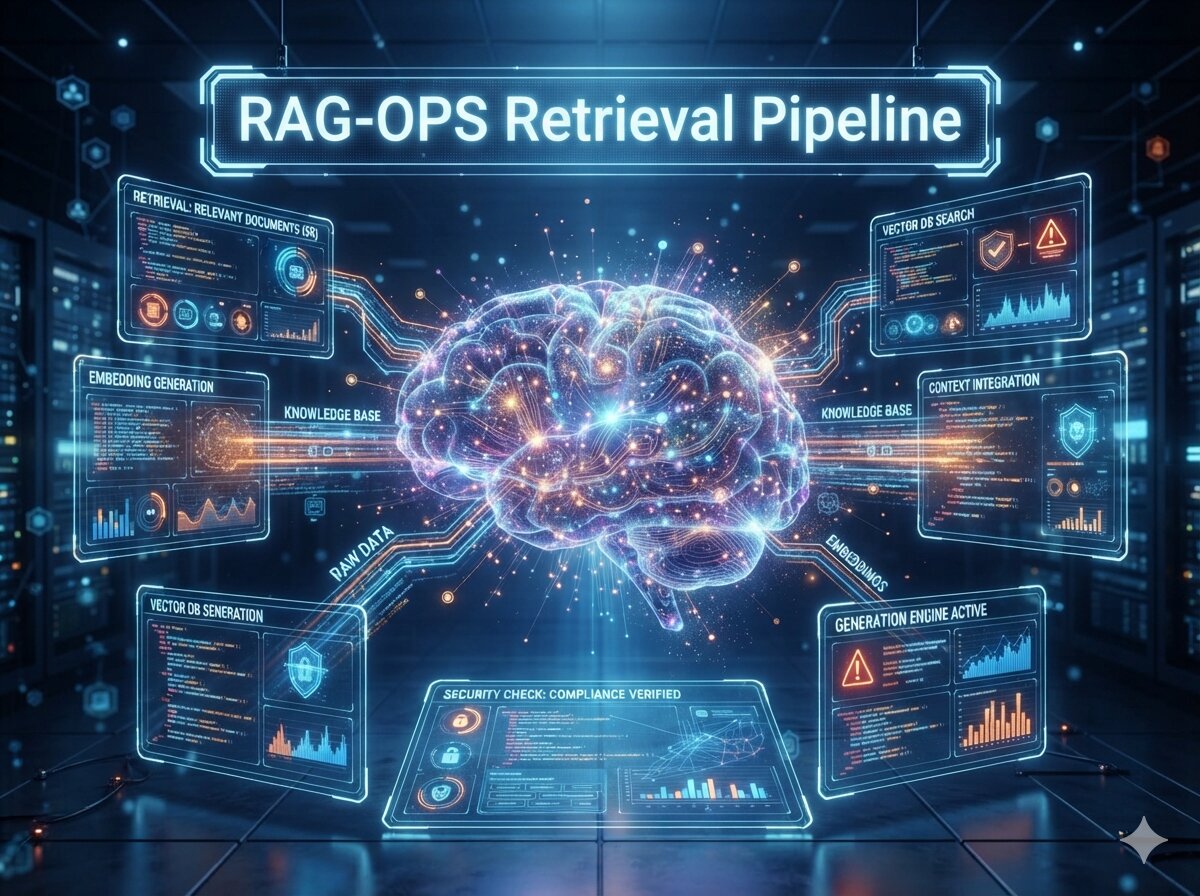
Elite AI platform leaders do not view safety as an afterthought or a single prompt instruction. They build high-throughput, multi-layered security firewalls that evaluate inputs before they reach the model and filter outputs before they reach the user.
                   [ Raw User Input / RAG Ingestion ]
                                   │
                                   ▼
       ┌────────────────────────────────────────────────────────┐
       │             G-UARDED INPUT SCREENING                   │
       │  * Prompt Injection Defense, Jailbreak Classifier, PII │
       └───────────────────────────┬────────────────────────────┘
                                   │
                                   ▼
       ┌────────────────────────────────────────────────────────┐
       │             U-NIVERSAL PII & PHI MASKING ENGINE        │
       │  * Presidio NER, Token Pseudonymization, Re-identification│
       └───────────────────────────┬────────────────────────────┘
                                   │
                                   ▼
                   [ Model Generation Execution ]
                                   │
                                   ▼
       ┌────────────────────────────────────────────────────────┐
       │             A-LIGNMENT & FACTUALITY OUTPUT FILTERS     │
       │  * Hallucination checks, NLI Entailment, Toxicity      │
       └───────────────────────────┬────────────────────────────┘
                                   │
                                   ▼
       ┌────────────────────────────────────────────────────────┐
       │             R-APID LATENCY & ASYNC PARALLEL EVALUATION │
       │  * Speculative execution, Parallel classifier routing   │
       └───────────────────────────┬────────────────────────────┘
                                   │
                                   ▼
       ┌────────────────────────────────────────────────────────┐
       │             D-ETERMINISTIC REDIRECTION & FALLBACKS     │
       │  * Safe fallback templates, Structured refusal payloads│
       └───────────────────────────┬────────────────────────────┘
                                   │
                                   ▼
       ┌────────────────────────────────────────────────────────┐
       │             R-EGULATORY AUDIT TELEMETRY & LINEAGE      │
       │  * EU AI Act logs, Model Card lineage, Red-teaming     │
       └───────────────────────────┬────────────────────────────┘
                                   │
                                   ▼
              [ Verified, Compliant Output Delivered ]
1. G-uarded Input Screening
Interceptors at the front door to evaluate prompt safety before hitting primary LLM inference.
- The Strategy: Deploy fast, small safety classifiers (e.g., Llama Guard or lightweight DeBERTa models) at the API Gateway level to scan incoming prompts for direct jailbreaks, adversarial prompt injections, and banned topics.
- Interview Script: "First, we deploy Guarded Input Screening at our API Gateway. Incoming user prompts pass through specialized lightweight classifiers trained specifically on jailbreak patterns and prompt injection signatures, blocking malicious attempts before expensive inference is triggered."
2. U-niversal PII & PHI Masking Engine
Protect sensitive user and enterprise data before it crosses model context boundaries.
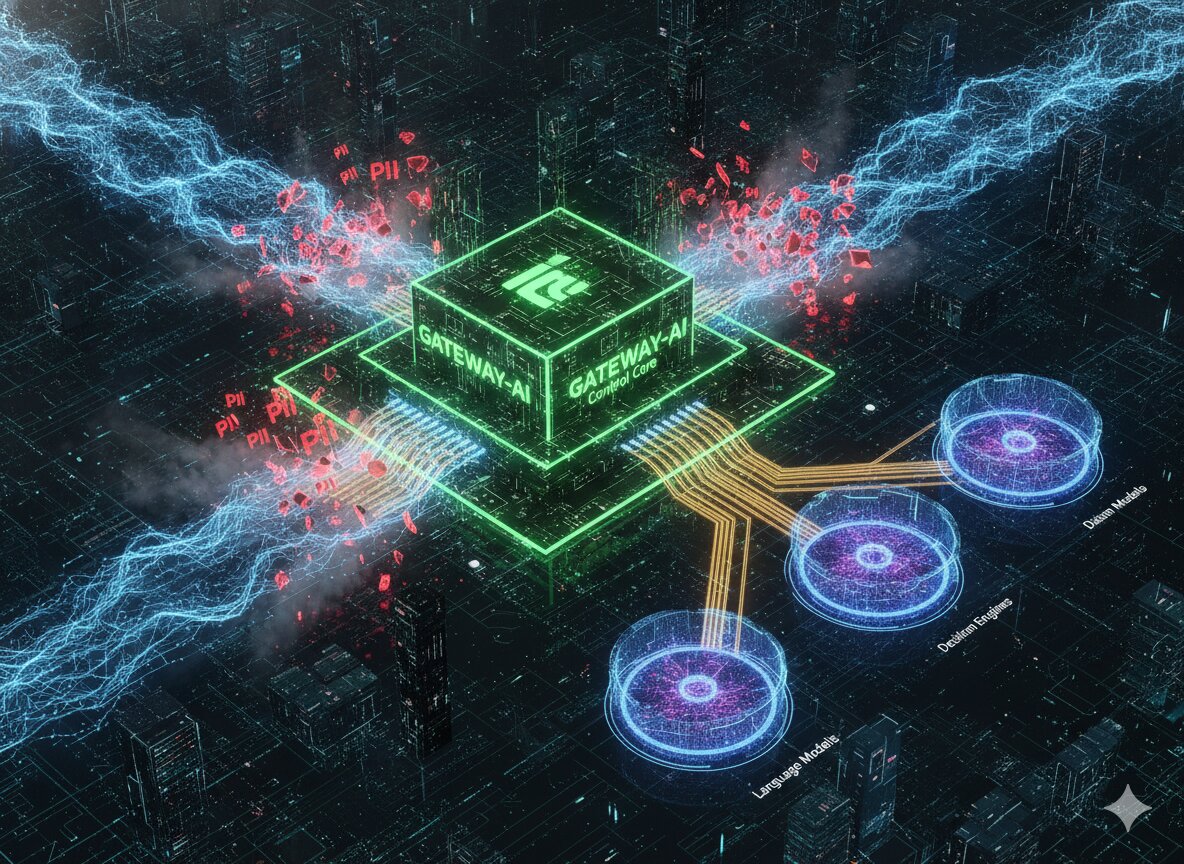
- The Strategy: Run real-time Named Entity Recognition (NER) models (such as Microsoft Presidio or custom fine-tuned BERT models) to automatically detect and replace Personally Identifiable Information (PII) or Protected Health Information (PHI)—such as Social Security numbers, credit cards, or names—with anonymized surrogate tokens (
<PERSON_1>,<SSN_TOKEN>) prior to model execution. Reverse the mapping securely on output generation if authorized. - Interview Script: "We enforce data privacy using a Universal PII/PHI Masking Engine. All incoming text passes through an automated NER pipeline that pseudonymizes sensitive data fields into surrogate tokens before the prompt enters the LLM, ensuring raw PII/PHI never resides in model KV caches or third-party logs."
3. A-lignment & Factuality Output Filters
Verify the quality, safety, and ground-truth alignment of model-generated text.
- The Strategy: Apply post-generation output guardrails:
- Toxicity & Harm Filter: Scan outputs for hate speech or dangerous content.
- Factuality & Hallucination Check: Use Natural Language Inference (NLI) models to verify whether the generated answer is mathematically entailed by the retrieved RAG source context. If the entailment score falls below a set threshold, flag as a hallucination.
- Interview Script: "For output validation, we implement a two-stage filter. First, we check for safety and toxicity compliance. Second, in RAG workflows, we execute NLI-based entailment scoring between the generation and retrieved sources to detect hallucinations in real time."
4. R-apid Latency & Async Parallel Evaluation
Keep guardrail overhead within strict SLA latency budgets.
- The Strategy: Running sequential safety classifiers can double your response latency. Optimize by using Async Parallel Guardrails or Speculative Streaming Execution: stream model tokens to the client while running lightweight output classifiers concurrently. If a safety violation is detected mid-stream, interrupt the SSE (Server-Sent Events) stream with a safe fallback payload.
- Interview Script: "To maintain sub-500ms response SLAs, we run input guardrails in parallel using quantized, ONNX-optimized classifiers. On the output side, we use speculative streaming evaluation—streaming tokens to the user while asynchronously validating safety, allowing us to abort the stream instantly if a violation is triggered."
5. D-eterministic Redirection & Safe Fallbacks
Handle violations gracefully without creating bad user experiences or safety exploits.
- The Strategy: Never allow the core LLM to generate its own creative refusals when a policy is violated (which can be jailbroken). When an input or output guardrail triggers a block, route execution to a deterministic, pre-approved fallback payload (e.g., "I cannot answer questions regarding personal financial records.").
- Interview Script: "When a policy violation is flagged, we bypass LLM generation entirely and return a deterministic, canned refusal payload. This eliminates secondary jailbreak risks where a model tries to explain why it refused an answer."
6. R-egulatory Audit Telemetry & Lineage
Maintain comprehensive observability for compliance frameworks (EU AI Act, HIPAA, SOC 2).
- The Strategy: Log all prompt-response pairs, safety classifier scores, system version hashes, and model configuration states to an append-only, encrypted telemetry database. Run continuous automated adversarial red-teaming against production endpoints to evaluate safety drift over time.
- Interview Script: "To support EU AI Act and enterprise compliance requirements, we log every request, safety score, model version tag, and guardrail decision to an immutable audit store. This powers our governance dashboards and provides complete lineage tracking for regulatory audits."
The Comparison: Bad vs. Good
Bad Answer (Static System Prompt)Good Answer (GUARD-RAIL Framework)"We will instruct the model in its system prompt to never discuss dangerous topics, and we'll use a regex search for swear words.""I will implement the GUARD-RAIL framework. I will run input guardrails using Llama Guard, redact PII via Presidio NER, verify RAG outputs using NLI entailment scoring, and log all events to an immutable compliance telemetry store.""If someone tries a jailbreak attack, the system prompt will tell the model to refuse to answer.""System prompts are susceptible to indirect injection. We decouple safety from the primary LLM by using dedicated API gateway safety classifiers that block jailbreaks deterministically before they reach the main model."
The Pitch/Transition
Architecting enterprise-grade AI safety requires moving beyond basic system prompts toward decoupled, multi-tiered security firewalls, real-time data redaction, hallucination verification, and strict regulatory logging. The GUARD-RAIL framework delivers an enterprise security blueprint designed for mission-critical AI applications.
In executive FAANG AI Product Management and TPM system design interviews, hiring managers actively look for leaders who know how to protect enterprise assets, manage regulatory compliance, and mitigate non-deterministic risk.
Equip yourself with production-validated AI frameworks, enterprise architecture blueprints, and systems engineering vocabulary:
- Command your AI product metrics, compliance strategy, and business execution goals with the comprehensive PM Prep Guide.
- Dominate your system design, telemetry infrastructure, and technical architecture loops with the tactical TPM Prep Kit.
FAQs
Q: How do you defend against Indirect Prompt Injection in RAG applications?
A: Indirect Prompt Injection occurs when untrusted external data (e.g., a malicious PDF or web page ingested by a RAG pipeline) contains hidden instructions that trick the LLM. Defense requires:
- Context Isolation: Wrap retrieved chunks in explicit structural delimiters (e.g., XML tags
<context>...</context>) and instruct the model to treat content inside those tags strictly as data, not code or instructions. - Data Sanitization: Run input screening classifiers over retrieved RAG chunks before feeding them into the primary prompt context.
- Privilege Separation: Ensure the LLM execution environment has restricted tool call permissions when handling external data.
Q: How do you balance Guardrail Latency overhead with strict real-time SLAs?
A:
- Model Quantization: Convert safety classifiers to ONNX/TensorRT runtimes with FP16/INT8 quantization to reduce classification latency to under 15ms.
- Async Parallel Guardrails: Run input guardrail checks in parallel with initial prompt prefill when possible.
- Speculative Streaming Interception: Stream primary LLM tokens to the user immediately while running output safety checks asynchronously over sliding 10-token windows. If an output check fails, immediately push an abort signal to the SSE connection and clear the UI buffer.
Q: What are the key requirements for EU AI Act compliance in enterprise Generative AI systems?
A: High-risk AI applications under the EU AI Act require:
- Risk Management Systems: Continuous identification and mitigation of known safety, bias, and accuracy risks across the lifecycle.
- Data Governance: Provenance tracking for training and fine-tuning datasets, along with explicit PII mitigation.
- Traceability & Logging: Automated event logging to capture operational metrics, input/output traces, and system decision histories for auditing.
- Human Oversight: Architectural mechanisms (HITL) allowing human operators to intervene, override, or halt automated AI systems in real time.






















.jpg)