How to Deploy and Validate a New AI Model: The "SAFE-ROLLOUT" Testing Framework

This post unpacks the SAFE-ROLLOUT framework, a highly technical and protective deployment strategy designed for AI product managers and technical program managers to master machine learning A/B testing and canary rollouts in FAANG interviews.

Introduction

You are sitting in a high-stakes FAANG interview. The Principal ML Architect leans forward and throws a complex technical scenario at you: "We have just retrained our core recommendation model. Offline metrics look fantastic, with a 3% gain in precision. But we cannot afford a single regression in live user conversion or system latency. How do you design an online validation and A/B testing strategy that guarantees a safe rollout, isolates user groups, and implements automated recovery triggers?"

Your pulse races. This is where average candidates fall into the "50/50 Rollout" trap.

They suggest basic, risky procedures: "I would split production traffic in half on day one," or "I would push it to production and roll it back manually if we see errors in our logs."

Stop guessing and stop risking production stability. Blindly exposing 50% of your live user traffic to an unvalidated machine learning model is an amateur mistake that will fail you the interview. In elite AI Product Management and technical program execution loops, panel members are judging your mastery over Shadow Deployments, Deterministic Hashing, Guardrail Metric Boundaries, and Sub-Second Automated Rollbacks.

To pass this advanced ML execution round, you need an airtight, step-by-step risk-mitigation architecture. You need the SAFE-ROLLOUT framework.

The Core Framework: The "SAFE-ROLLOUT" Method

Elite technical leaders do not gamble with production traffic. They treat model deployment as a highly controlled, progressively open pipeline that isolates risk at every step of the lifecycle.

1. S-hadow Deployments for Zero-User Risk

Before exposing a single real user to new model outputs, validate the infrastructure under actual production load.

  • The Strategy: Duplicate real-time incoming production traffic at the API gateway layer. Serve users from the stable baseline model, but pipe the exact same inputs to the new candidate model in the background. Log its predictions and discard them.
  • Interview Script: "I will not expose a single live user to our retrained model on day one. Instead, I will initiate a shadow deployment. Our API gateway will duplicate incoming user requests, sending them to both the baseline and retrained models. We will serve the baseline predictions to the user while logging the candidate model's predictions in the background. This allows us to validate P99 latency SLAs and check for out-of-memory errors under real production concurrency with absolute zero risk to our user experience."

2. A-llocate Traffic via Deterministic Hashing

Ensure consistent user experiences and valid statistical splits without incurring database query latency.

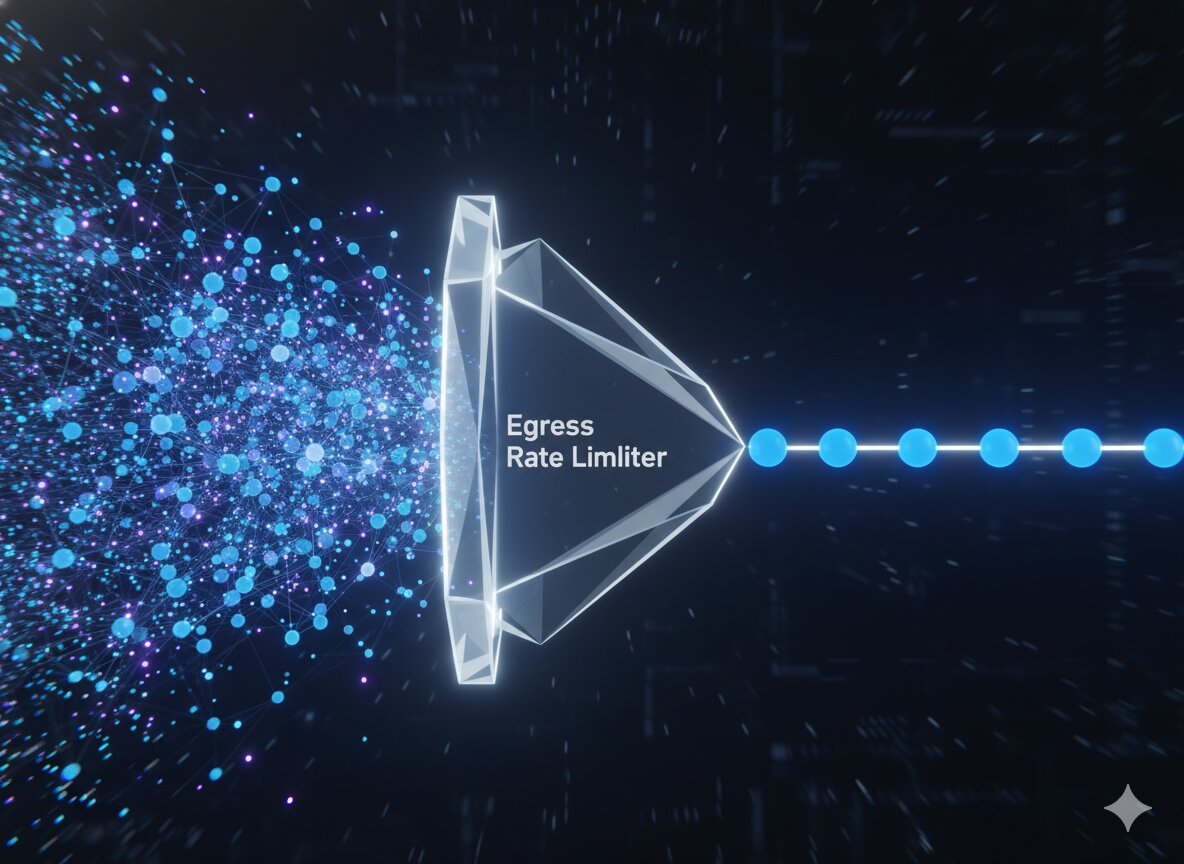
  • The Strategy: Avoid centralized database lookups for user bucket allocation. Use stateless, deterministic hashing algorithms like MurmurHash3 to segment users into consistent test buckets at the edge.
  • Interview Script: "To allocate traffic cleanly without creating database query bottlenecks, I will implement stateless, deterministic hashing at the routing layer. We will run a MurmurHash3 function on the user ID concatenated with the experiment ID, modulo 100. This assigns each user a fixed, immutable integer between 0 and 99. If we are running a 5% canary test, users hashing below 5 are routed to the new model. This ensures a highly consistent user experience and prevents cross-contamination of our test cohorts."

3. F-ormulate Strict Guardrail Metrics

Establish clear boundaries for operational and business health that must never be violated.

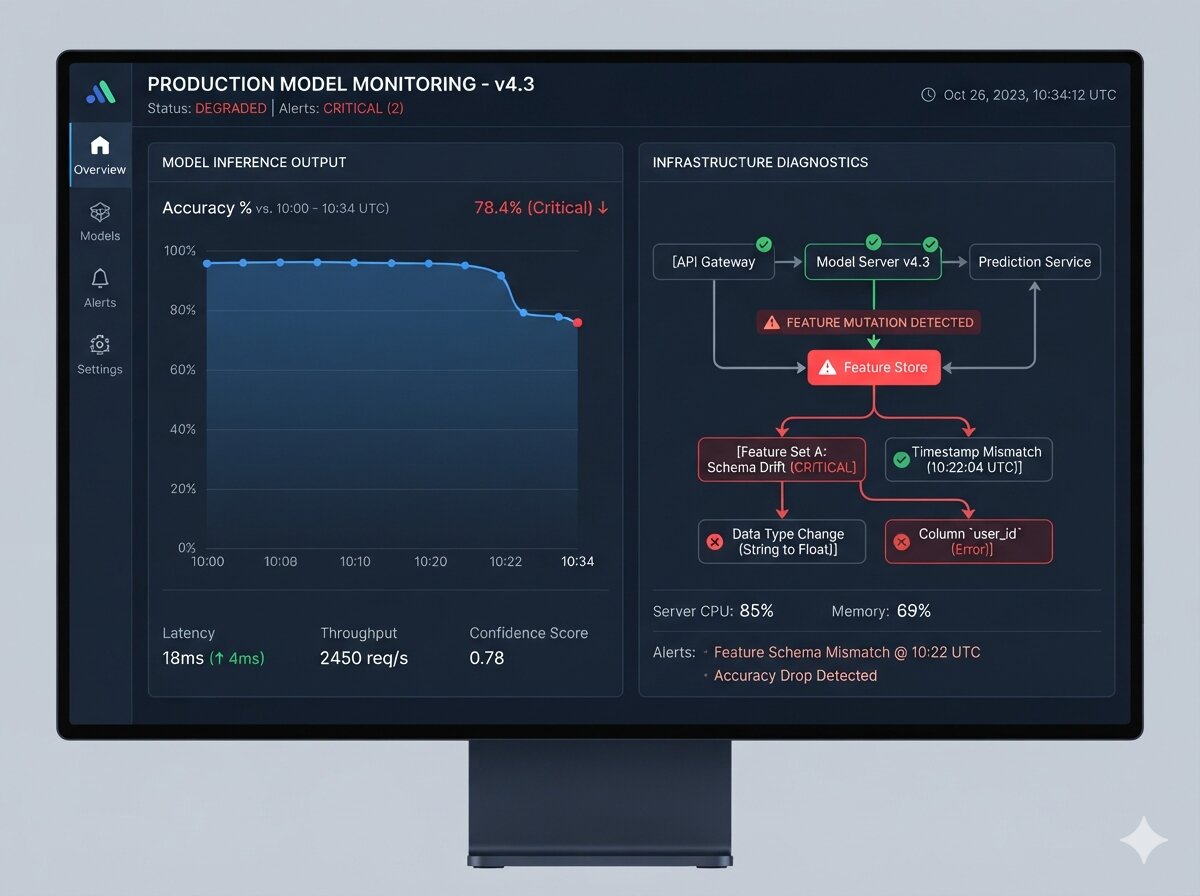
  • The Strategy: Define non-negotiable metric thresholds. While primary metrics (like click-through rate) can fluctuate, guardrail metrics (such as P99 latency, checkout drop-offs, or HTTP 5xx error rates) must remain within safe operational bounds.
  • Interview Script: "While our primary goal is to improve recommendation relevance, we must establish strict, non-negotiable guardrail metrics. For example, our P99 latency must not exceed 120ms, and our downstream shopping cart conversion rate cannot drop by more than 1%. If our primary engagement metrics look positive but our guardrail metrics are breached, the experiment is instantly flagged for failure."

4. E-xecute Automated Rollback Triggers

Remove human delay and manual monitoring from the critical path when production degrades.

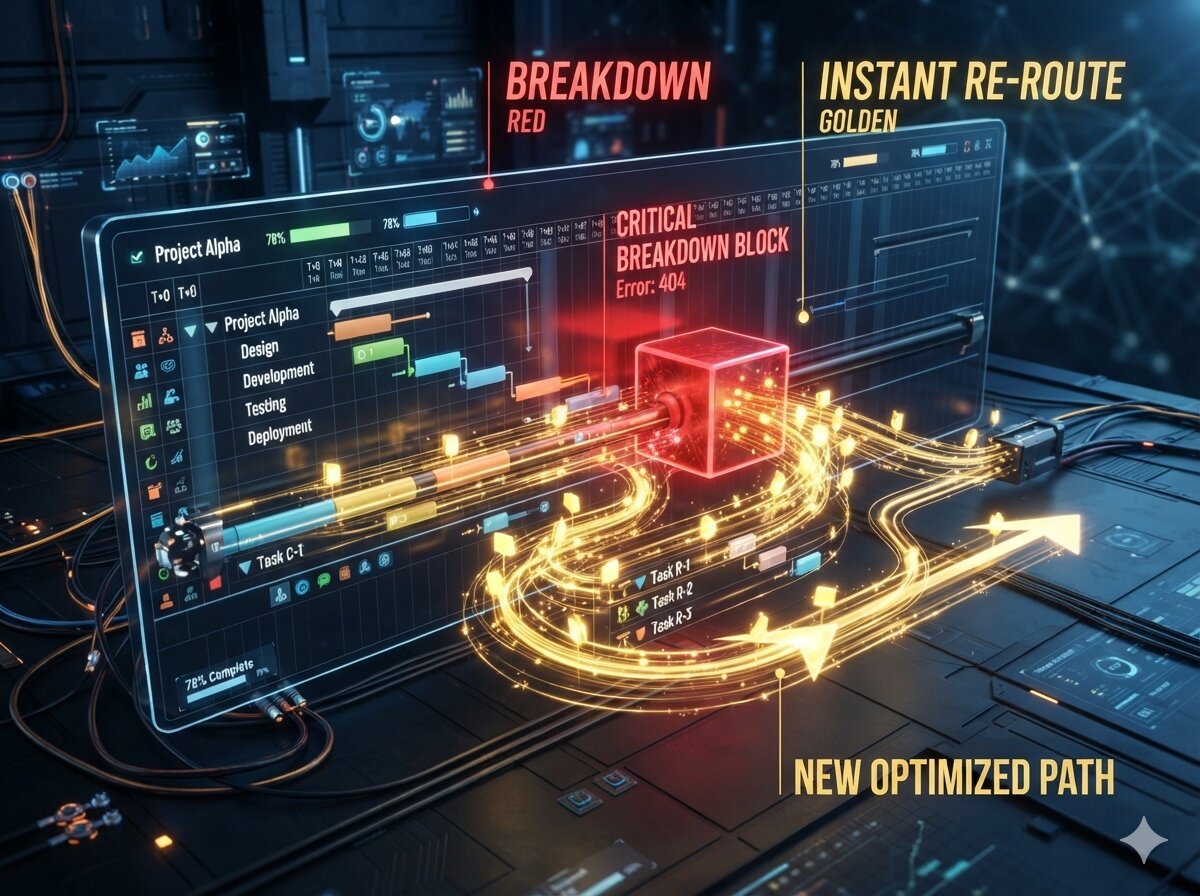
  • The Strategy: Configure automated alerting monitors connected directly to your routing mesh. If any guardrail metric is breached for a continuous time window, automatically drop the candidate model's traffic weight to 0%.
  • Interview Script: "We cannot rely on manual dashboards or human intervention to trigger rollbacks. I will configure automated alerts via our telemetry pipelines. If our candidate model breaches any guardrail threshold—like our HTTP 5xx rate spiking above 0.05% for three consecutive minutes—our service mesh will automatically trip its circuit breaker and instantly route 100% of traffic back to our stable baseline in under 500ms, paging the engineering team afterward."

The Comparison: Bad vs. Good

Bad Answer (50/50 Rollout)Good Answer (SAFE-ROLLOUT Framework)"I would push the model to 50% of our users on a Tuesday morning, check our dashboard occasionally throughout the day, and ask the developers to roll it back if customers start complaining about slow load times.""I will apply the SAFE-ROLLOUT framework. I will initiate a zero-risk shadow deployment, utilize stateless MurmurHash3 routing for consistent user bucket assignment, establish non-negotiable guardrails, and implement automated sub-second rollback triggers.""I'd trust the offline training validation numbers because a 3% precision gain is huge, and assume any live issues can be fixed with quick hot patches directly on our production containers.""I will isolate our business health from technical risk. I will progressively scale our live exposure from a 1% canary to a full 50/50 test, while continuously validating system telemetry and using circuit breakers to protect our conversion metrics."

The Pitch/Transition

Deploying and validating advanced machine learning systems requires an exceptional blend of analytical precision, system architecture literacy, and product safety discipline. The SAFE-ROLLOUT framework provides a production-ready template to manage the high-concurrency risks of live AI applications.

In highly competitive FAANG product management and technical program management interviews, the panel will probe your technical depth, looking to see if you can lead ML squads through real-world deployment trade-offs. Don't leave your technical preparation to chance.

Equip yourself with the exact high-velocity scaling frameworks, machine learning systems blueprints, and engineering terminologies trusted by principal tech leaders:

  • Master your AI product lifecycle, metric estimation, and business execution goals with the comprehensive PM Prep Guide.
  • Dominate your system design deep dives, large-scale machine learning deployments, and cloud platform execution rounds with the tactical TPM Prep Kit.

FAQs

Q: Why use a Shadow Deployment instead of going straight to a 1% Canary?

A: A 1% canary still exposes real users to the new model's output. If the model has an unhandled code bug or suffers from severe latency under load, thousands of users will experience a broken application. A shadow deployment processes production traffic in parallel without ever displaying the output to a customer, allowing you to catch errors with absolute zero user-facing impact.

Q: How does consistent hashing prevent "user jumping" during an A/B test?

A: If you assign user buckets dynamically on every API request, a user might see the old model on their home feed, click a link, and see the new model on the next page. This "user jumping" ruins the customer experience and corrupts your experiment data. Consistent hashing (like MurmurHash3) guarantees that a specific user ID always maps to the exact same bucket every time, ensuring clean data collection.

Q: How do you choose the Minimum Detectable Effect ($MDE$) for an AI model A/B test?

A: The $MDE$ is the smallest change in your primary metric that is financially or strategically meaningful to the business. Setting it too low requires an impractically large sample size and runs the test too long. For high-volume FAANG platforms, an $MDE$ of 0.5% to 1% is typically used, balancing statistical rigor with swift deployment velocity.
Read more blogs

How to Deploy and Validate a New AI Model: The "SAFE-ROLLOUT" Testing Framework
How to Manage a High-Stakes Project Slip: The "SCOPE-ALIGNED" Mitigation Framework
How to Handle an AI Model Regression: The "MODEL-VALIDATE" Diagnostic Framework
Tell Me About a Time You Failed: The "BOUNCE-BACK" Behavioral Framework
How to Handle a Dropping Metric: The "ROOT-CAUSE" Analytical Framework
How to Architect a Globally Scalable Notification Engine: The "FAN-OUT" Priority Delivery Framework
How to Architect an Enterprise-Grade Vector Search Engine: The "VECTOR-SHARD" Data Framework
How to Architect a High-Concurrency API Gateway: The "GATE-KEEPER" Edge Routing Framework
How to Architect a Distributed Telemetry & Logging System: The "TRACE-STREAM" Observability Framework
How to Architect an Enterprise LLM Deployment: The "RAG-OPS" Production Scale Framework
How to Handle a Dropping Metric: The "METRIC-TRIAGE" System Design Framework
How to Architect a Globally Scalable Financial Ledger System: The PM & TPM "LEDGER-BALANCE" Framework
How to Architect a Globally Scalable Real-Time Ad Bidding & Ad Tech Exchange: The PM & TPM "RTB-AUCTION" Framework
How to Architect a Globally Scalable Real-Time Recommendation Engine: The PM & TPM "RECO-MATRIX" Framework
How to Architect an Enterprise LLM Evaluation & Monitoring Pipeline: The PM & TPM "GUARD-RAIL" Framework
How to Design an Enterprise Agentic AI Workflow: The PM & TPM "ORCHESTRATE-AGENT" Framework
How to Architect an Enterprise Retrieval-Augmented Generation (RAG) Architecture: The PM & TPM "KNOWLEDGE-CORE" Framework

How to Architect a Globally Scalable Event-Driven Architecture: The PM & TPM "STREAM-FLOW" Framework
How to Manage Cache Invalidation and Consistency: The PM & TPM "CACHE-CLEAR" Framework
How to Manage Data Privacy and Cross-Border Transfers: The PM & TPM "DATA-BOUNDARY" Framework
How to Design an Enterprise AI Orchestration Layer: The PM & TPM "GATEWAY-AI" Framework
How to Architect a High-Throughput API Gateway: The PM & TPM "GATE-KEEPER" Framework
How to Diagnose and Fix a Dropping Metric: The PM & TPM "METRIC-TRIAGE" Framework
How to Optimize Cloud Infrastructure Unit Economics: The PM & TPM "FIN-SCALE" Framework
How to Manage Technical Debt and Refactoring Backlogs: The PM & TPM "PAY-DOWN" Framework
How to Coordinate Multi-Region Cloud Failovers: The PM & TPM "ZONE-DEFENSE" Framework
How to Orchestrate Massive API Deprecations Without Breaking Ecosystems: The PM & TPM "DECOUPLE-FLOW" Framework
How to Lead Large-Scale Corporate AI Transformations: The PM & TPM "CORE-INTEGRATE" Framework
How to Scale Infrastructure Upgrades Without Downtime: The PM & TPM "LIVE-MIGRATE" Framework
How to Architect an AI-Powered Quality Assurance & Release Engine: The PM & TPM "BUG-SHIELD" Framework
How to Formulate the Ultimate "Product-to-Engineering" Spec Engine: The PM & TPM "TECH-TRANSLATE" Framework
How to Leverage AI for Cross-Functional Product Alignment: The PM & TPM "SYNCHRONIZE" Framework
How to Build a Complete AI-Powered Agile Workflow: The PM & TPM "CORE-VELOCITY" Framework
How to Automate High-Friction Dependency Mapping and Jira Tracking: The "AUTO-TRACK" TPM Workflow
How to Handle a Critical API Rate Limiting and Service Degradation Crisis: The "THROTTLE-GUARD" Resilience Framework
How to Handle a High-Scale Database Crash During Peak Traffic: The "FAILOVER-SHIELD" Recovery Framework
How to Handle an Algorithmic Model Bias Crisis: The "ETHICAL-AUDIT" ML Governance Framework
How to Handle a Major Cloud Migration Failure: The "CLOUD-SAFETY" Rollback Framework
How to Handle a Major Technical Program Delay: The "RE-BASELINE" Schedule Recovery Framework
How to Handle a Database Sharding Migration: The "DATA-BALANCE" Scale Framework
How to Handle a Critical Third-Party API Sunset: The "DEPENDENCY-BUFFER" Integration Framework
How to Handle a Pricing Tier Change: The "PRICING-SHIELD" Revenue Framework
next How to Handle a Post-Launch Crisis: The "ROLL-BACK" Incident Management Framework
How to Handle a Critical API Migration: The "DECOUPLE-SAFE" Architecture Framework
How to Handle a Major System Outage: The "TRIAGE-SCALE" Technical Execution Framework
How to Resolve Cross-Functional Gridlock: The "BRIDGE-ALIGN" Trade-off Framework
How to Handle a Dropping Metric: The "DIG-DEEP" Root Cause Framework
How to Master the Behavioral Interview: The "STAR-GROWTH" Method
How to Lead a Product Launch: The "GTM-VELOCITY" Framework
How to Design a Product for the Next Billion Users: The "ADAPT-LIGHT" Framework
How to Negotiate Your Senior Tech Offer: The "VALUE-ANCHOR" Method
How to Master the Behavioral Interview: The "STAR-GROWTH" Method
How to Lead a Product Launch: The "GTM-VELOCITY" Framework
How to Design a Product from Scratch: The "EMPATHY-SCALE" Framework
How to Prioritize Features: The "RICE-VALUE" Framework
How to Design for the Next Billion Users: The "ADAPT-LIGHT" Framework
How to Build an AI-First Feature: The "RAG-EVAL" Framework
Move from a Monolith to Microservices: The "STRANGLE-SHIELD" Framework
How Do You Decide When to Build vs. Buy?: The "MOAT-LEVER" Framework
How Do You Handle a Conflict Between Engineering and Design?: The "TRIANGLE-TRADE" Framework
How Do You Manage a Delayed Project?: The "REALIGN-RECOVER" Framework
How Do You Design an API?: The "CONTRACT-FIRST" Framework
How Do You Prioritise a Roadmap?: The "ROI-ALIGN" Framework
How to Answer "Tell Me About a Time You Failed": The "PIVOT-OWN" Framework
How to Handle a Dropping Metric: The "SEGMENT-DRILL" Framework
The "Incentive-Alignment" Framework: Building in Web3
The "Value-Tradeoff" Framework: Mastering the Art of "No"
The "Cycle-Velocity" Framework: Building Viral Loops
The "Agentic-Utility" Framework: Building AI-First Features
The "Proxy-Experience" Framework: Mastering the Career Pivot
The "Throughput-Engine" Framework: Elite Productivity
The "Pause-Pivot" Framework: Leading the Room
The "Curated-Authority" Framework: Building Your Tech Brand
The "Throughput-First" Framework: Managing the Sprint
The "Segment-Drill" Framework: Winning with Data
The "Identity-Loop" Framework: Building the Community Moat
The "TTV" Framework: Mastering the First 5 Minutes
The "Red-Team" Framework: Building Ethical AI
The "Extensibility-First" Framework: Building the Ecosystem
The "Glocalization" Framework: Scaling Across Borders
The "PQL-Conversion" Framework: From User to Revenue
The "Phased-Velocity" Framework: Mastering the GTM
The "Win-Loss" Framework: Closing the Product-Market Gap
The "Post-Mortem" Framework: Institutionalizing Failure
The "Cognitive-Utility" Framework: Building AI-First
The "Product Health-Check" Framework: The First 30 Days
The "Moat-Mapping" Framework: Defending the Castle
The "Growth-Loop" Framework: Beyond the Marketing Funnel
The "Radical Clarity" Framework: Managing Underperformance
The "Proof of Work" Framework: Building a Career Magnet
The "Insight-Mining" Framework: High-Impact User Interviews
The "Executive-Pulse" Framework: High-Stakes Communication
The "Technical-Empathy" Framework: The Art of the 1:1
The "Elastic-Scale" Framework: Scaling from 1 to 100
The "Venture-Validation" Framework: Building from 0 to 1
The "Anchor & Lever" Framework: Negotiating $400k+ Total Comp (TC)
The "Asynchronous-First" Framework: Leading Distributed Teams
The "Value-Bridge" Framework: From Specialist to Strategist
The "Value-First AI" Framework: Integrating Intelligence Without the Gimmicks
The FAANG Interview Mastery Checklist: 10 Frameworks to Rule the Loop

Transform Your Career with Our Complete Learning Solutions

Discover our diverse offerings, including expert-led courses, free training sessions, and personalized consultation services designed to help you master project management and advance your career with confidence.

FREE Training

Crack your next TPM Interview

From unravelling the intricacies of TPM/PM interview structures to mastering system design to discover the keys to navigating cross-functional collaboration, decoding top interview questions, and fine-tuning your resume and LinkedIn profile, including negotiation frameworks, networking strategies, and much more!

Register Now

Trusted by over 9,600 students

Course

30-Day TPM Masterclass

Expect early technical assessments, followed by a focus on strategic thinking, leadership capabilities, and a thorough evaluation of program management proficiency. From engaging self-guided exercises to comprehensive guides, frameworks, and sample answers, our TPM interview preparation covers it all, including practice lessons, updated content, and mock interviews.

Learn More

Trusted by over 9,600 students

Interview Prep Kit

Ultimate TPM Interview Prep Kit

Master TPM interview skills with this comprehensive guide covering system design, program management, and cross-functional collaboration.

Includes real-world scenarios, sample questions, and expert tips for success.

Learn More

Trusted by over 9,600 students

Interview Prep Guide

Complete PM Interview Guide

Master product design, strategy, and leadership with this all-in-one guide for Product Management interviews.

Gain confidence with actionable advice, real-world examples, and tailored mock questions to secure your next PM role.

Learn More

Trusted by over 9,600 students

Consulting

1-on-1 Interview Prep

1-on-1 Interview PreparationGet personalized guidance to ace your next interview with confidence. Our 1-on-1 interview preparation sessions focus on your unique strengths and areas for improvement. From tailored practice questions and feedback to mastering behavioral and technical responses, we ensure you're fully prepared to impress and secure your dream role.

Book a call

Trusted by over 9,600 students

Free Training

Unlock  Free Training

Get access to free training that reveals "How To crack your next TPM INTERVIEW In Just 30 Days!"

Gain exclusive access to expert-led training sessions designed to equip you with the skills, strategies, and confidence to excel in Technical Program Management.

Enroll now

Trusted by over 9,600 students