The Interview Trap: The "Cold-Start Data Lake" Bottleneck
The interviewer presents an algorithmic system design challenge: "Your streaming platform handles over 50 million active users. During peak hours, the homepage recommendation grid is dropping personalization metrics because the machine learning model takes over 5 seconds to calculate a user's next video recommendation. Worse, when a new viral video drops, it takes up to 24 hours to appear in anyone's feed because the batch-processing data lake only updates once a day. If your developers switch to purely real-time calculations, the relational database throws CPU exhaustion locks under the massive query load. How do you re-architect the data infrastructure to deliver sub-100ms personalized recommendations that instantly adapt to user clicks?"
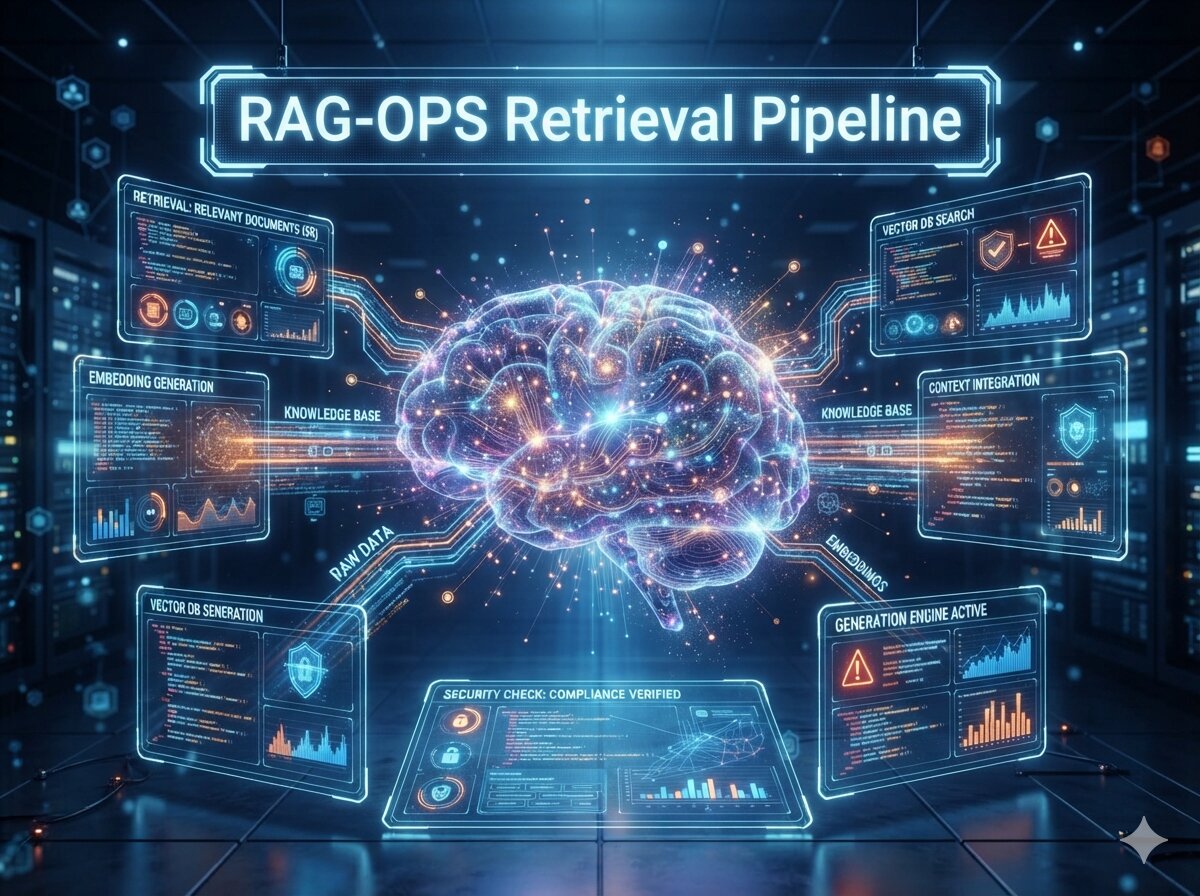
Most candidates tank this core platform round by offering surface-level machine learning generalities: "I would write a better Python machine learning script using collaborative filtering, save user watch histories in a big database, and set up a faster API server to handle the user requests." Stop. Relying on raw monolithic database queries or slow, un-cached on-the-fly model evaluations to power active home feeds is an anti-pattern that destroys system latency and kills user engagement. In elite core infrastructure and AI platform program loops at giants like Netflix, YouTube, and TikTok, panel judges are evaluating your understanding of Two-Stage Recommendation Topologies (Retrieval vs. Ranking), Vector Similarity Indexing (HNSW), Multi-Tier Feature Stores, Streaming Inference, and Real-Time Event Aggregation.
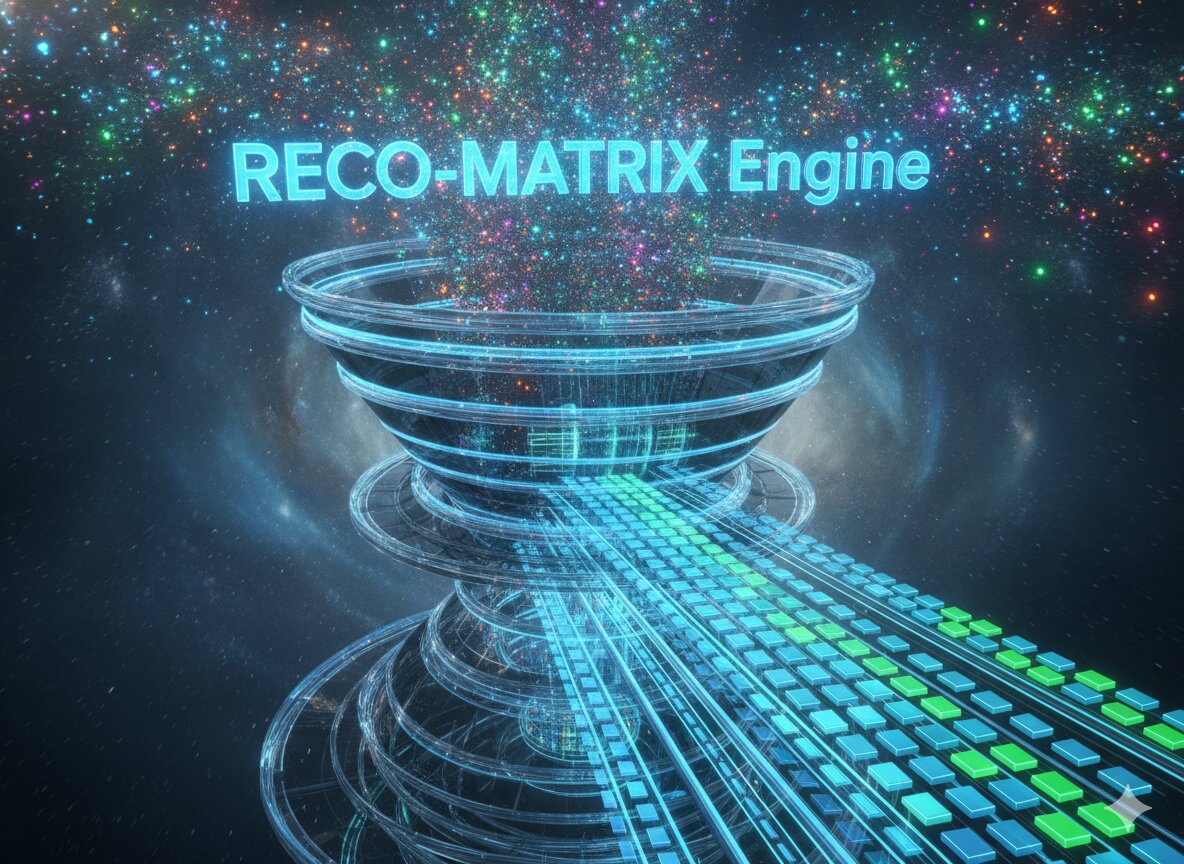
The Core Framework: The "RECO-MATRIX" Method
Elite infrastructure product leaders do not perform end-to-end deep learning evaluations across millions of items in real-time. They decouple recommendation execution into a highly efficient Two-Stage Architecture (Candidate Retrieval followed by Heavy Re-ranking), leveraging multi-tier feature storage arrays to balance algorithmic complexity against lightning-fast sub-100ms performance boundaries.
                      [ User Triggers Homepage Load ]
                                     │
                                     ▼
       ┌──────────────────────────────────────────────────────────┐
       │               RECO-MATRIX RETRIEVAL PHASE               │
       │                                                          │
       │  * Pulls User Vector & Contextual Interaction Signals   │
       │  * Executes Fast HNSW Vector Match across Millions of IDs│
       └─────────────────────────────┬────────────────────────────┘
                                     │
                                     ▼ (Filters Down to ~100 Top Candidates)
       ┌──────────────────────────────────────────────────────────┐
       │               MULTI-TIER FEATURE STORE BUS               │
       │  * In-Memory Core (Redis): Fetches Live User Clicks      │
       │  * Offline Core (Cassandra): Fetches Historical Metadata │
       └─────────────────────────────┬────────────────────────────┘
                                     │
                                     ▼ (Enriched Candidate Matrix)
       ┌──────────────────────────────────────────────────────────┐
       │                DEEP RANKING MODEL ENGINE                 │
       │  * Evaluates Final Probabilities (CTR / Watch Time)     │
       └─────────────────────────────┬────────────────────────────┘
                                     │
                                     ▼ (Top 20 Ordered Shards)
       ┌──────────────────────────────────────────────────────────┐
       │                BUSINESS LOGIC RULES FILTER               │
       │  * De-duplication, Diversity, and Sponsor Injection     │
       └─────────────────────────────┬────────────────────────────┘
                                     │
                                     ▼ (Sub-50ms Payload Delivery)
                     [ Personalised Homepage Grid ]
1. R-etrieval Stage Candidate Sifting
Do not attempt to pass your entire library of millions of videos through a heavy deep learning model on every page refresh.
- The Strategy: Implement a two-stage recommendation pattern. Stage one is candidate retrieval—utilize high-speed, lightweight vector space indices like Hierarchical Navigable Small World ($HNSW$) to mathematically sift through millions of items, cutting the catalogue down to the top 100 most relevant options within 5 milliseconds.
- The Script: "To preserve low latency under heavy scale, we will decouple our prediction loop into a rigid two-stage topology: Candidate Retrieval followed by Deep Ranking. During retrieval, we bypass heavy multi-layer neural network scoring entirely. Instead, the application layer fetches a user's embedding vector and performs an approximate nearest neighbor search across our catalog's vector space using an HNSW index. This instantly trims millions of media assets down to roughly 100 candidate IDs in single-digit milliseconds."
2. E-vent-Driven Real-Time Feature Ingestion
Bridge the gap between historic batch processing tables and active, real-time user clicks.
- The Strategy: Deploy a streaming event consumer (like Apache Flink) that captures real-time engagement logs (clicks, skips, views) straight from user applications, instantly computing rolling feature aggregations to update user profile states within seconds.
- The Script: "To eliminate the 24-hour viral video delay, we will implement a real-time event aggregation pipeline. User interaction logs—such as clicks, skips, and hover events—will be broadcasted instantly to a Kafka topic. An Apache Flink stream processing cluster consumes these events on the fly, calculating real-time user interest vectors over a rolling 5-minute window. This allows our recommendation engine to adapt immediately to a user's shifting mood during an active session."
3. C-aching Tiered Features via Unified Feature Stores
Decouple data sourcing pipelines entirely from active application logic by implementing an enterprise feature repository split across two operational profiles.
- The Strategy: Deploy a unified Feature Store (like Feast or Hopsworks) composed of an Online Tier (ultra-low latency in-memory Redis cluster for streaming interactions) and an Offline Tier (scalable, wide-column store like Cassandra or Bigtable for heavy historical batch runs).
- The Script: "Our inference loop cannot afford to query raw transactional databases for user features. We will deploy a unified Feature Store architecture. Real-time metrics will be continuously written to an in-memory Redis cluster serving as our low-latency online tier, while massive historical user data tables reside in an offline Cassandra cluster. This ensures that when our model requires user profile attributes at inference time, it fetches them via optimized key-value lookups in under 10 milliseconds."
4. O-ptimized Ranking and Contextual Inference Execution
Pass the highly refined, enriched candidate matrix through your primary predictive model to generate definitive performance rankings.
- The Strategy: Take the ~100 candidate IDs gathered in phase one, enrich them with live attributes fetched from your online feature store, and stream them into a high-throughput deep neural network model (like a Deep & Cross Network or Transformer ranker) to predict explicit click-through probabilities.
- The Play: "Once our candidate retrieval step isolated our top 100 records, we pass them into our second stage: Deep Ranking. The ranking service merges these 100 items with real-time user features pulled from our online storage cache, creating a dense input tensor array. This tensor is evaluated by a Deep & Cross Network (DCN) model optimized for GPU inference using NVIDIA TensorRT, producing exact probabilistic sorting metrics for click-through-rate (CTR) within a 20-millisecond execution window."
5. M-atrix Business Rule Layers and Diversity Deduplication
Protect user home feeds from becoming a highly repetitive echo chamber of the exact same category or duplicating content they already watched.
- The Strategy: Pass the top ordered items through a final deterministic code validation filter to enforce product constraints—such as limiting the number of consecutive videos from a single creator, injecting sponsored materials, and stripping out historical watch blocks.
- The Play: "The raw algorithmic scores generated by our deep learning models must pass through a final, deterministic business logic filter before UI rendering. This non-agentic layer executes category de-duplication rules, ensuring that no more than two items from the same genre sit adjacent to each other on the homepage grid. It also cross-checks our client's recent session log to prune out content watched within the last 48 hours, balancing raw predictive accuracy with a healthy, diverse user experience."
The Comparison: Bad vs. Good
Bad Answer (Monolithic Database Scans)Good Answer (RECO-MATRIX Framework)"I would query the database to find everything the user likes, run a big python recommendation function on the server, and sort the list from best to worst on every page load.""I will architect a strict two-stage retrieval-and-ranking topology, using HNSW indexing for rapid candidate selection, and separating data paths via low-latency feature stores.""If the system takes too long to show recommendations when a new item drops, we will just run our overnight database sorting batch script every 4 hours instead of every 24 hours.""I will implement a real-time data streaming pipeline using Apache Kafka and Apache Flink to calculate rolling interaction attributes, updating user profile states in under 5 seconds."Treats recommendations as a simple monolithic search query, leading to severe system slowdowns and outdated feeds.Implements parallelized candidate pruning, event stream aggregations, split feature storage management, and contextual business rule filtering.
The Pitch: Command the Scale Engines
Engineering algorithmic pipelines that can instantly personalize content layouts for hundreds of millions of concurrent users without shattering microsecond application latency profiles requires a deep, fluent mastery of modern data architectures. If you approach core marketplace or content recommendation problems with superficial modeling theories, senior platform infrastructure panels will pass on your profile.
Kracd systemic frameworks supply you with the concrete data lifecycle maps, distributed system layouts, and high-performance engineering terminologies needed to command any enterprise platform execution round with absolute authority.
👉 Master enterprise system architecture and core system design: PM Prep Guide
👉 Master deep data infrastructure scaling and cloud delivery: TPM Prep Kit
FAQs
Q1: Why use an HNSW Vector Index for Retrieval instead of calculating exact Cosine Similarity across the whole catalogue?
A: Calculating exact Cosine Similarity across a library of millions of media records requires running intensive matrix multiplication across every single item for every user request. This scales linearly with catalogue size ($O(N)$ complexity) and causes application latency to explode. An Approximate Nearest Neighbor ($ANN$) algorithm like Hierarchical Navigable Small World ($HNSW$) treats vector spaces like a multi-layered skip list graph, navigating down to the closest matching item coordinates with logarithmic ($O(\log N)$) efficiency, delivering candidate matches within microseconds.
Q2: What is the mechanical difference between a feature store and a standard caching layer like Redis?
A: A standard caching layer is a simple, unstructured key-value repository that stores whatever data blobs you explicitly write to it. A Feature Store is an enterprise data management system that maintains a dual-storage profile for identical data attributes. It provides an automated dual-write mechanism: it maintains a highly indexed key-value structure in an Online Store (Redis) for microsecond inference lookups, while simultaneously structuring time-series training logs in an Offline Store (Parquet files/BigQuery) for historic machine learning model re-training cycles.
Q3: How do you handle the "Cold-Start" challenge for completely new items that have zero historical click metrics?
A: You bypass user interaction tracking filters during the candidate retrieval phase by employing Content-Based Filtering models. The moment a new media asset is uploaded, automated computer vision and natural language models analyze its content (e.g., tags, category descriptions, thumbnail features) to generate an immediate "item embedding vector." This vector places the object inside our global multidimensional vector space, allowing it to instantly surface alongside contextually similar material long before any click logs exist.




















.jpg)