The Interview Trap: Don't Panic and Guess
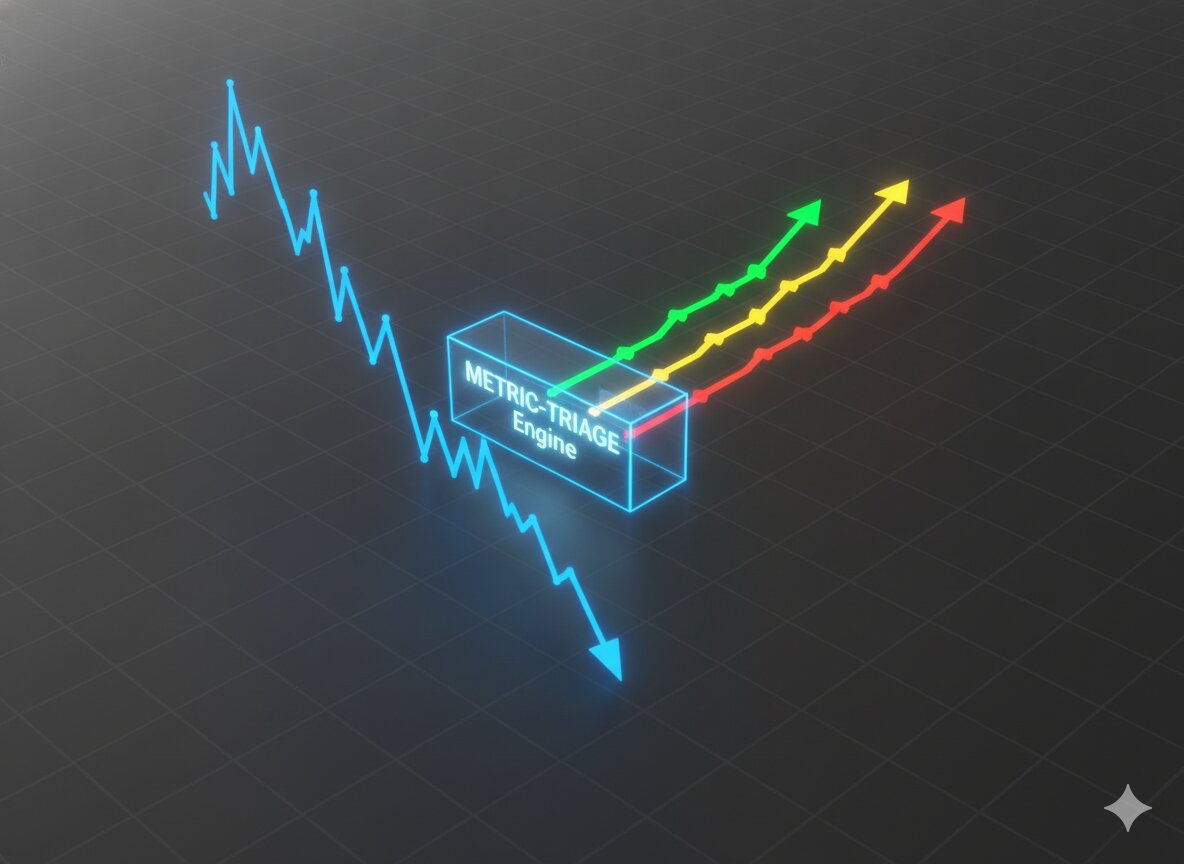
You’re five minutes into the interview. The interviewer leans in: "Our daily active users (DAU) dropped by 10% overnight. What do you do?" Most candidates panic. They start guessing: "Maybe we should launch a marketing campaign?" or "Maybe it's a bug in the login flow?" Stop guessing. Jumping to solutions without diagnosing the problem is a "red flag" for senior-level roles. It signals that you are reactive, not analytical. Interviewers aren't looking for the "right" answer; they are looking for a structured, clinical investigation. ---
The Core Framework: The "SEGMENT-DRILL" Method
To solve a metric drop, you must act like a detective. You move from the broad "What" to the specific "Why."
1. S-cope & Clarification
Before you dive into data, validate the metric itself. Is this a real problem or a data glitch?
- The Strategy: Check the health of the instrumentation.
- The Soundbite: "First, I’d clarify the timeframe and the magnitude. Is this a sudden 10% cliff or a gradual trend? I’d also check with the data engineering team to ensure this isn't a logging error or a broken dashboard pipeline."
2. E-xternal Factors
Look outside the walls of your product. Is the world changing, or just your app?
- The Strategy: Rule out seasonality and environment.
- The Soundbite: "I’d look at seasonality. Is it a holiday? A weekend? I’d also check for external events: Did a competitor launch a new feature? Was there a major OS update or an internet outage in a specific region?"
3. G-eographic & Segment Breakdown
Slice the data to see where the "leak" is coming from.
- The Strategy: Identify if the drop is localized or global.
- The Soundbite: "I’ll segment the drop by Geography, Platform (iOS vs. Android), and User Type (New vs. Returning). If the drop is only on iOS in India, we have a localized technical issue. If it’s global across all segments, we have a systemic product failure."
4. M-echanical/Technical Check
If the segments show a specific platform is failing, look at the "plumbing."
- The Strategy: Correlate with recent releases.
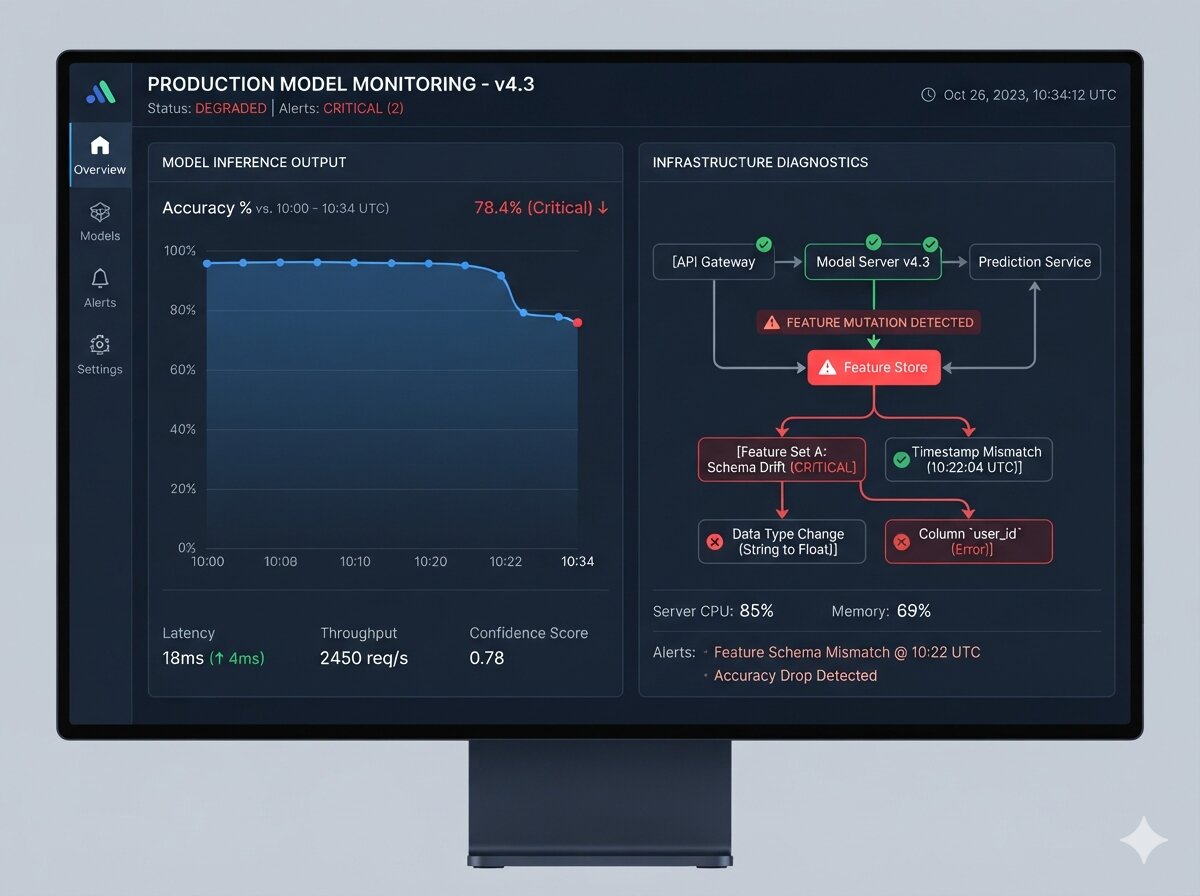
- The Soundbite: "I’d cross-reference the drop with our deployment log. Did we push a new build yesterday? I’d check latency, crash rates, and API error codes for that specific timeframe."
5. E-ngagement & Behavior Change
If the tech is fine, the users' desire has changed.
- The Strategy: Look for changes in the "Aha!" moment.
- The Soundbite: "I’ll look at the 'Internal Funnel.' Are users failing at the 'Sign-up' step, or are they getting into the app but not performing the 'Core Action'? This helps me distinguish between an acquisition problem and a retention problem."
6. N-ext Steps & T-riage
Summarize your findings and propose a fix.
- The Strategy: Prioritize the fix based on ROI.
Bad AnswerGood Answer (SEGMENT-DRILL)"I'd ask the team to fix the bug.""I'd first verify if the drop is global or localized to a specific platform.""Maybe we should offer a discount.""I'd check the deployment logs to see if a recent code push correlated with the drop.""I'd wait a few days to see if it recovers.""I'd rule out external seasonality and competitive moves first."
Master the "Data-Sense" Interview
Handling a metric drop is a staple of the "Product Sense" and "Execution" rounds at companies like Google, Meta, and Amazon. This framework is just the beginning.
If you want to move beyond basic answers and start speaking like a Staff-Level PM or TPM, you need the full playbook. We’ve decoded hundreds of real-world interview questions to build the ultimate technical and product strategy guides.
- For PMs: Master metric-driven execution with the PM Prep Guide.
- For TPMs: Deep dive into system health and incident management with the TPM Prep Kit.
FAQs
Q: How long should I spend on "Clarification"?
A: Spend no more than 1–2 minutes. You want to show you are thorough, but don't get bogged down. Ask about the metric definition, the timeframe, and if any other related metrics (like conversion rate) also dropped.
Q: What if the interviewer says "There are no technical bugs"?
A: This is a signal to pivot to User Behavior and External Factors. Focus on the "Product Market Fit" lens—has the user's need changed, or has a competitor stolen the "Aha!" moment?
Q: Should I mention "A/B testing"?
A: Yes. Often, a drop is caused by a "winning" A/B test that had a hidden negative impact on a secondary metric. Always ask if any experiments were recently launched or ramped up to 100%.
























.jpg)