Introduction
The Director of AI Platform Engineering folds their hands and poses a high-concurrency production challenge: "We are scaling a suite of LLM features—ranging from automated code completion to multi-turn conversational agents—serving 10 million daily active users across global regions. How do you build an end-to-end evaluation, monitoring, and telemetry platform that continuously measures generation quality, tracks latency and token economics, detects data drift in real time, and establishes automated regression testing across continuous deployment pipelines?"
Your pulse quickens. This is where average candidates fall into the "Vibe Check" trap.
They give vague, qualitative answers: "We would manually inspect sample outputs every week," or "We'll just ask our users to give a thumbs-up or thumbs-down feedback on responses."
Stop relying on manual 'vibe checks' and raw user feedback for production AI telemetry. Passive user feedback (like thumbs-up/down) is notoriously noisy, covering less than 1% of total interactions, while manual sampling is completely incapable of catching regressions before they hit production. In elite FAANG AI Product Management and TPM architecture loops, panels evaluate your grasp of LLM-as-a-Judge Pipelines, Semantic Drift Detection, Token Cost Unit Economics, CI/CD Regression Benchmarking, and Real-Time Observability Pipelines.
To pass this advanced GenAI infrastructure and operational excellence loop, you need a systematic, production-grade observability architecture. You need the EVAL-METRICS framework.
The Core Framework: The "EVAL-METRICS" Method
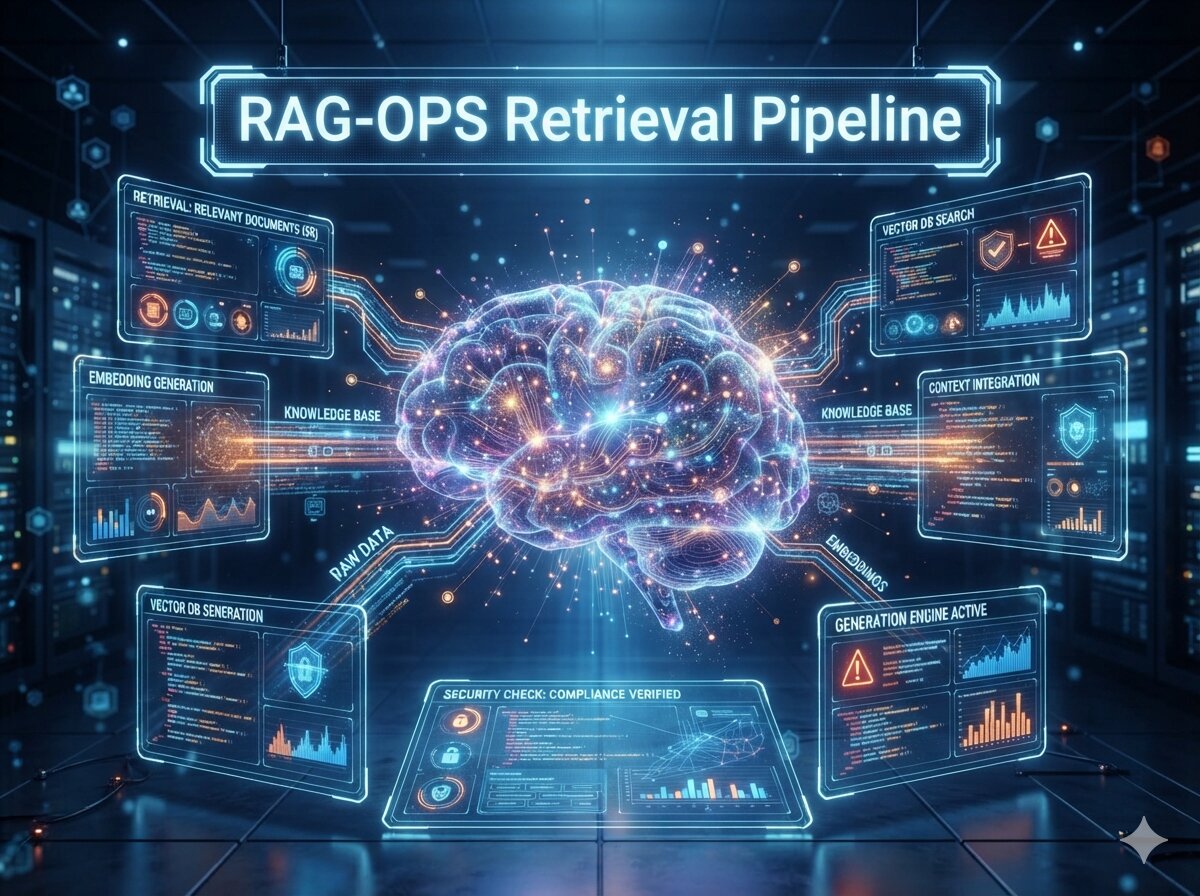
Elite technology directors do not launch GenAI features without continuous telemetry and automated testing. They build multi-tiered evaluation loops that continuously test model outputs before deployment and monitor telemetry in real-time post-deployment.
                      [ LLM Production & CI/CD Pipeline ]
                                       │
                                       ▼
       ┌────────────────────────────────────────────────────────────────┐
       │             E-XPLICIT BENCHMARK SUITES & REGRESSION SETS       │
       │  * Golden Datasets, Synthetic Edge Cases, Prompt Unit Tests     │
       └───────────────────────────────┬────────────────────────────────┘
                                       │
                                       ▼
       ┌────────────────────────────────────────────────────────────────┐
       │             V-ALIDATION VIA LLM-AS-A-JUDGE & HEURISTICS        │
       │  * Rubric-based scoring (G-Eval), BERTscore, ROUGE/BLEU        │
       └───────────────────────────────┬────────────────────────────────┘
                                       │
                                       ▼
       ┌────────────────────────────────────────────────────────────────┐
       │             A-GGRAGATED TELEMETRY & TOKEN UNIT ECONOMICS       │
       │  * TTFT, TPOT, P99 Latency, Cost per Resolved Task             │
       └───────────────────────────────┬────────────────────────────────┘
                                       │
                                       ▼
       ┌────────────────────────────────────────────────────────────────┐
       │             L-IVE DRIFT & HALLUCINATION OBSERVABILITY          │
       │  * Semantic Drift tracking, Embedding Shift, Anomaly Alerts    │
       └───────────────────────────────┬────────────────────────────────┘
                                       │
                                       ▼
                        [ Continuous Quality Assurance ]
1. E-xplicit Benchmark Suites & Golden Datasets
Establish ground-truth evaluation datasets before touching production prompts or models.
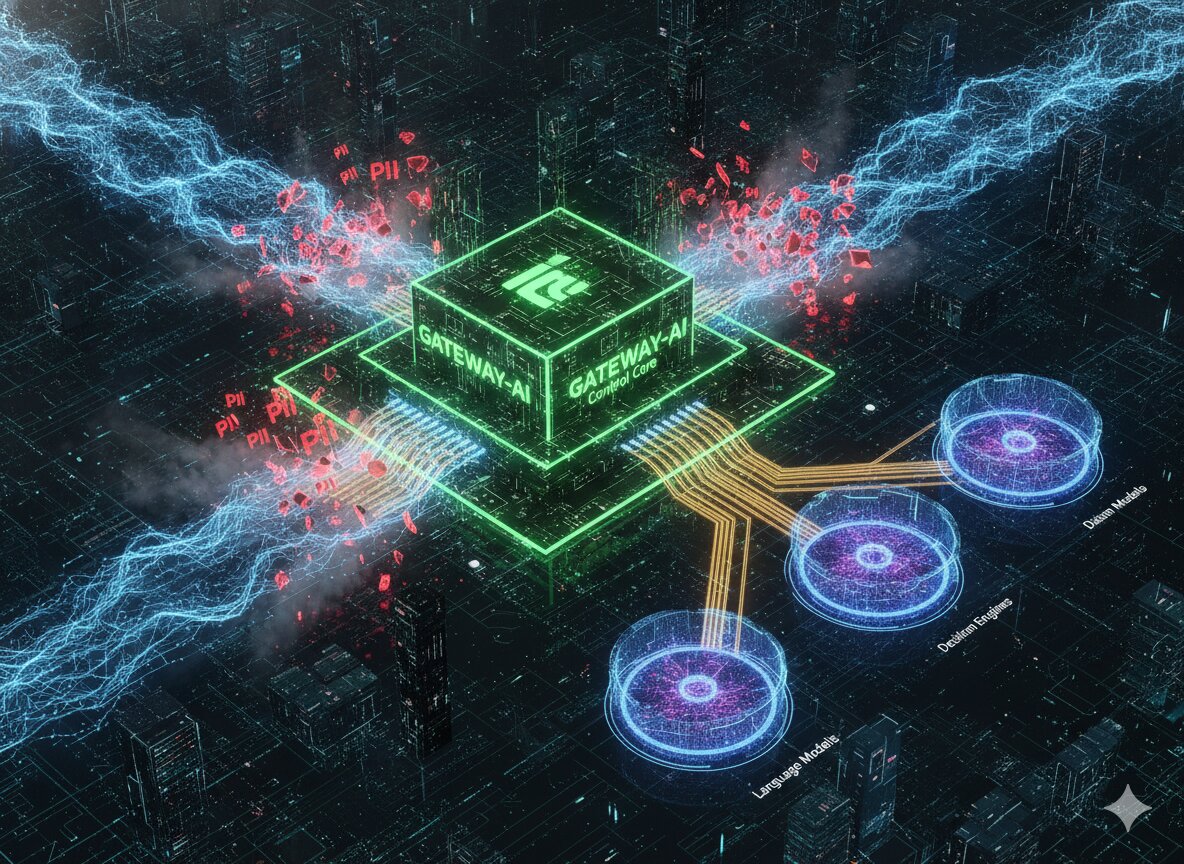
- The Strategy: Build a curated "Golden Dataset" representing core user personas, high-stakes edge cases, and adversarial prompt injections. Integrate these benchmark suites directly into your CI/CD pipeline so every prompt change or model migration runs an automated regression test.
- Interview Script: "First, we establish a curated Golden Dataset containing at least 1,000 diverse, validated test cases across standard queries, edge cases, and safety attacks. Before any prompt modification, model fine-tune, or gateway routing change is merged to main, our CI/CD pipeline runs automated regression tests against this suite to catch quality drops prior to deployment."
2. V-alidation via LLM-as-a-Judge & Hybrid Heuristics
Combine fast deterministic metrics with nuanced semantic evaluations.
- The Strategy: Layer your evaluation metrics into two tiers:
- Deterministic / Lexical Metrics: Fast, cheap checks (exact match, regex validation, BLEU/ROUGE, JSON schema validation).
- Model-Based Evaluators (LLM-as-a-Judge): Use a powerful model (e.g., GPT-4o or Claude 3.5 Sonnet) configured with strict evaluation rubrics (G-Eval) to score response dimensions such as Faithfulness, Relevance, Tone, and Completeness on a 1–5 scale.
- Interview Script: "We implement a two-stage evaluation engine. We run cheap deterministic checks first—such as JSON schema validation and regex parsing. For open-ended semantic quality, we deploy a standardized LLM-as-a-Judge pipeline utilizing multi-aspect rubrics to output calibrated scores along with explicit chain-of-thought justifications."
3. A-ggregated Telemetry & Token Unit Economics
Track system operational performance alongside direct financial metrics.
- The Strategy: Monitor real-time operational infrastructure SLAs alongside financial cost efficiency metrics:
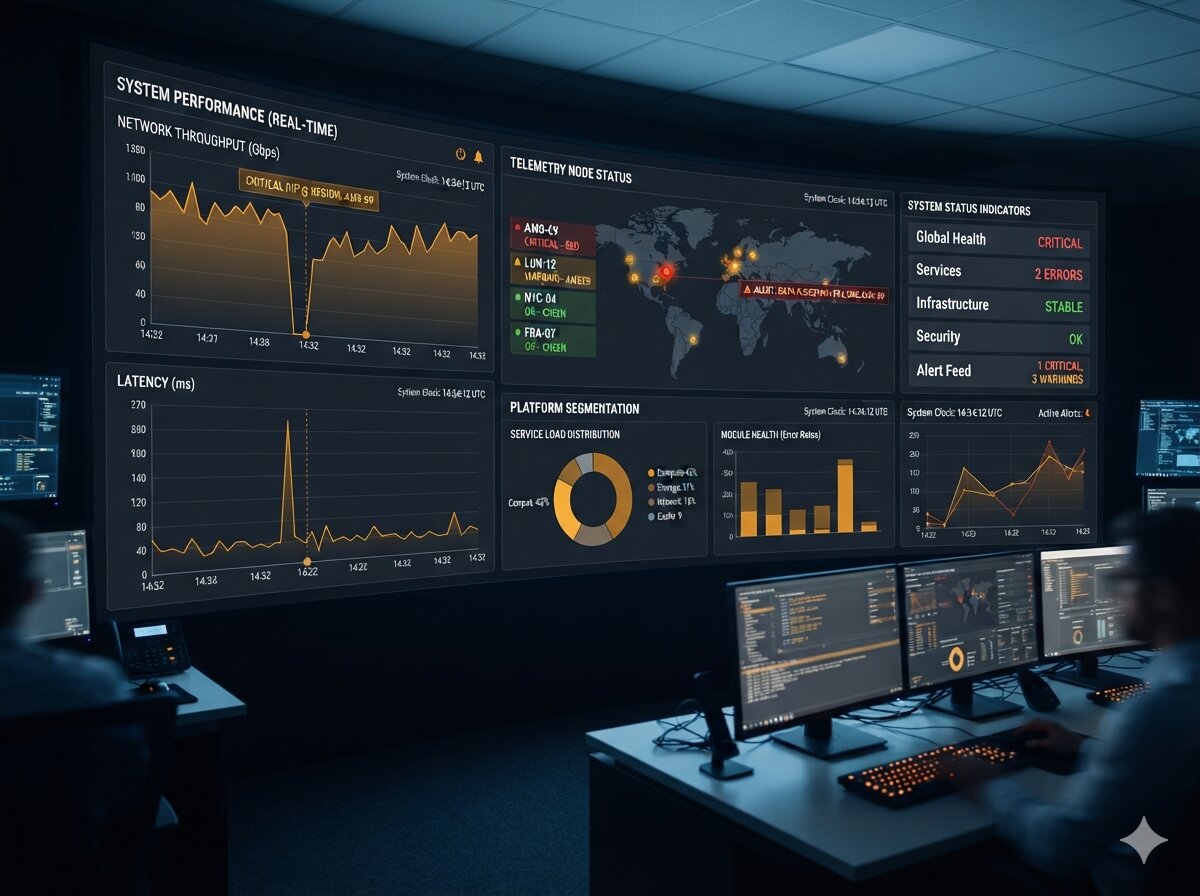
- TTFT (Time to First Token): Measures initial responsiveness and prompt processing latency.
- TPOT (Time Per Output Token): Measures generation streaming speed.
- Cost Per Resolved Task: Total token expenditure divided by successful user outcomes.
- Interview Script: "Our operational observability stack tracks key real-time metrics. We break down latency into Time to First Token (TTFT) and Time Per Output Token (TPOT) to isolate prompt processing bottlenecks from streaming delays. Simultaneously, we monitor Cost Per Resolved Task to optimize our token unit economics as we balance small and large models."
4. L-ive Drift & Hallucination Observability
Detect degradation in production data distributions and response quality in real time.
- The Strategy: Pass production prompt-response embeddings into a vector monitoring layer to track Semantic Drift over time. Monitor shifts in user query distributions, out-of-bounds embedding clusters, and sudden drops in answer similarity against retrieved context.
- Interview Script: "In production, we log prompt and response embeddings to a vector observability store. By calculating cosine distance between historical baseline distributions and live daily queries, we detect semantic drift instantly—such as new user behavior patterns or emergent failure modes—and trigger automated alerts for team review."
The Comparison: Bad vs. Good
Bad Answer (Passive Vibe Checks)Good Answer (EVAL-METRICS Framework)"We will look at thumbs-up/down buttons from users, manually inspect logs every week, and assume everything is fine if customer tickets stay low.""I will implement the EVAL-METRICS framework. I will build Golden Benchmark datasets for CI/CD, run LLM-as-a-Judge rubric pipelines, track TTFT/TPOT latency metrics, and monitor real-time semantic drift using embedding vectors.""If we change a prompt, we'll just test it with a few manual prompts in the playground to make sure it still sounds good.""We decouple prompt changes from manual testing by maintaining an automated CI/CD evaluation harness. Every PR must pass automated regression testing against our 1,000-case Golden Suite before hitting production."
The Pitch/Transition
Building an enterprise-grade LLM system requires moving past intuition-based testing toward disciplined, automated evaluation and real-time observability pipelines. The EVAL-METRICS framework delivers the exact methodology needed to measure, scale, and safeguard high-concurrency AI applications in production.
In executive FAANG AI Product Management and TPM architecture interviews, hiring managers actively look for leaders who know how to manage non-deterministic systems with rigorous, metric-driven engineering discipline. Don't go into high-stakes AI strategy rounds without a battle-tested evaluation framework.
Equip yourself with the production-ready AI frameworks, enterprise architecture blueprints, and systems engineering vocabulary trusted by top technology leaders:
- Command your AI product metrics, evaluation strategy, and business execution goals with the comprehensive PM Prep Guide.
- Dominate your system design, telemetry infrastructure, and technical architecture loops with the tactical TPM Prep Kit.
FAQs
Q: What is the "LLM-as-a-Judge" technique, and how do you prevent positional and length bias in evaluation?
A: LLM-as-a-Judge uses a powerful LLM (like GPT-4o) to evaluate generated responses against explicit rubrics. To prevent biases:
- Positional Bias: Swap the order of candidate responses when comparing two options ($A/B$ testing) and average the results.
- Length Bias: Explicitly instruct the evaluator model to penalize verbosity and score solely based on conciseness and factual relevance.
- Chain-of-Thought Guardrails: Require the judge model to write its reasoning step-by-step before assigning a final numerical score.
Q: How do you measure latency accurately in a streaming LLM application?
A: End-to-end latency in streaming systems should be decoupled into three metrics:
- Time to First Token (TTFT): Duration from user request submission to the first streamed token arriving at the client (measures gateway routing, prompt assembly, and prefill processing).
- Time Per Output Token (TPOT): Average generation time per subsequent token (measures model generation throughput).
- Total Generation Time (TGT): Total elapsed time to complete the full generation ($TTFT + (TPOT \times TotalTokens)$).
Q: What is "Semantic Drift" in production GenAI systems, and how is it calculated?
A: Semantic Drift occurs when live production queries or model outputs shift away from the historical training/testing distribution over time. It is measured by generating vector embeddings of user queries, computing the centroids of baseline vs. current query clusters, and calculating the Cosine Similarity or Wasserstein Distance between the distributions. A significant increase in distance indicates new user intent patterns or novel system usage.




















.jpg)