The Interview Trap: The "Retry-Storm" and "Ignore-the-SLA" Failure
The interviewer presents a highly volatile third-party ecosystem crisis: "Your core application architecture relies on an external logistics provider's API to calculate real-time shipping costs and delivery windows at checkout. Suddenly, the vendor hits you with a severe, unannounced rate-limit restriction because your application traffic spiked during a flash sale. The external service is throwing HTTP 429 'Too Many Requests' errors globally, causing your checkout pages to stall, time out, and drop conversions. How do you lead your team through this incident?" Most candidates tank this round by exacerbating the infrastructure damage: "I'd immediately configure our application servers to run a fast loop that automatically retries the API call every time it fails until it gets a successful response." Stop. Launching immediate, unthrottled retries against an already struggling or rate-limited upstream endpoint triggers a catastrophic "Retry Storm." It will cause the vendor to block your IP entirely and choke your own internal application worker threads. In a FAANG execution or system design loop, panels are looking for your Traffic Shaping Strategies, Degradation Grace Mechanics, and Client-Side Resilience Design.
The Core Framework: The "THROTTLE-GUARD" Method
When an upstream dependency throttles your integration pipeline, you must instantly protect your internal application thread pools, gracefully degrade the user experience, and implement sophisticated traffic-shaping loops.
1. T-rips and Circuit Breakers (Fail-Fast Isolation)
Instantly stop sending traffic down the broken pipeline to protect your internal application resource pools.
- The Strategy: Open the application-layer circuit breaker to intercept outbound requests before they hit the network stack, avoiding thread starvation.
- The Soundbite: "My immediate step is to isolate our internal systems from the upstream failure. I will instruct engineering to trip the application-layer circuit breaker for the logistics API. By forcing the integration to fail-fast locally, we prevent our internal checkout application threads from hanging open while waiting for network timeouts. This preserves our web server memory capacity and keeps the rest of the application running smoothly."
2. H-euristic & Fallback Estimation Engine
Provide your users with a smooth, gracefully degraded experience instead of a raw error screen.
- The Strategy: Switch your application logic to serve static, fallback approximations derived from historical data caches while the live API is unreachable.
- The Soundbite: "We cannot let an external API failure break our user flow. With the circuit breaker open, our application will instantly fall back to a local heuristic engine. Instead of calling the live API, we will calculate fallback shipping estimates using an optimized static look-up table based on historical geographic averages. We display a clean, estimated delivery window to the user with a slight buffer, keeping the checkout funnel moving smoothly."
3. R-etry Backoff with Jitter Implementation
Re-introduce background health checks safely without crushing the upstream vendor's infrastructure.
- The Strategy: Implement an Exponential Backoff algorithm with random variations ("jitter") to space out retry attempts across your worker nodes.
- The Soundbite: "We will completely ban naive, tight loops for retries. When we test the connection to the vendor, we will use an Exponential Backoff algorithm with randomized jitter. This ensures that our background worker nodes don't retry all at once on a predictable schedule, preventing a secondary 'Retry Storm' from hitting the vendor's endpoints when they try to recover."
4. O-utbound Rate Limiting (Token Bucket Shaping)
Align your application's egress traffic footprint directly with the vendor's strict SLA boundaries.
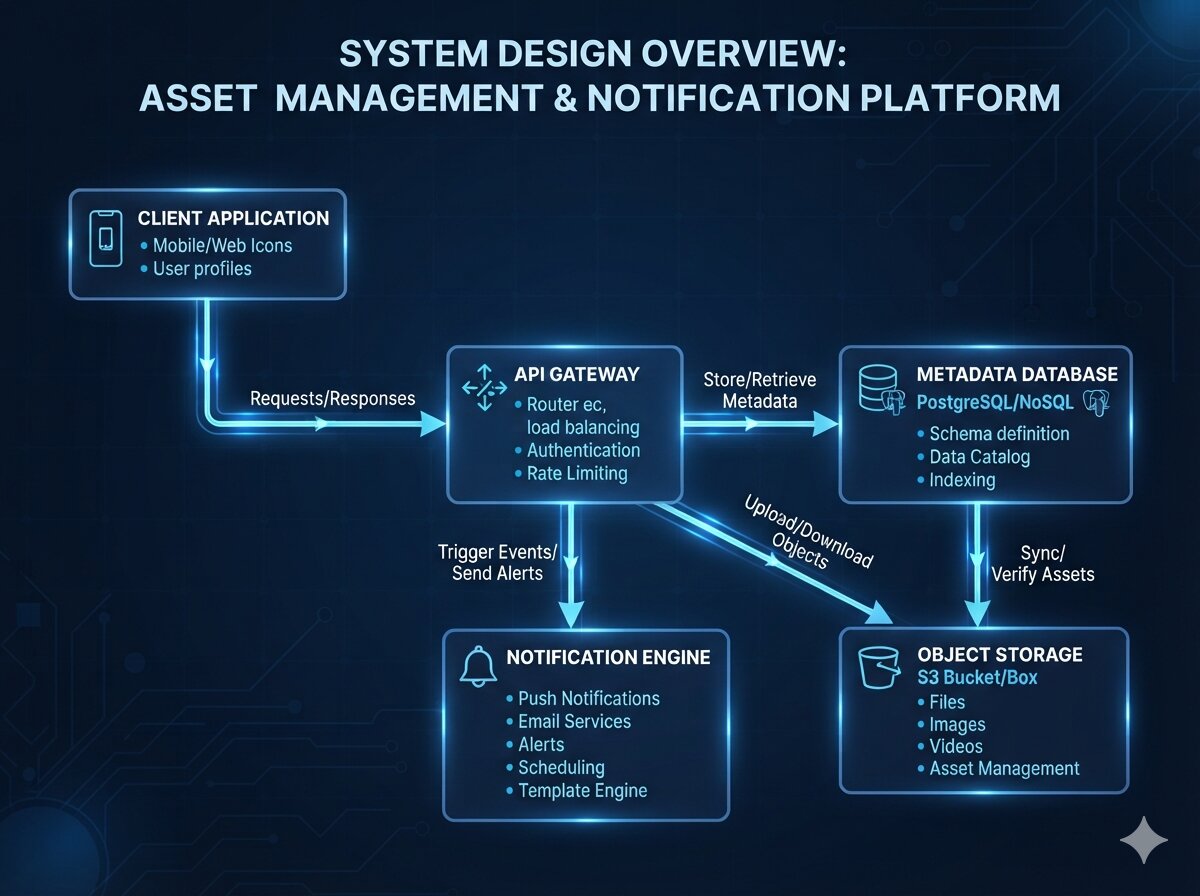
- The Strategy: Deploy an egress rate limiter at your API Gateway layer utilizing a Token Bucket or Leaky Bucket algorithm.
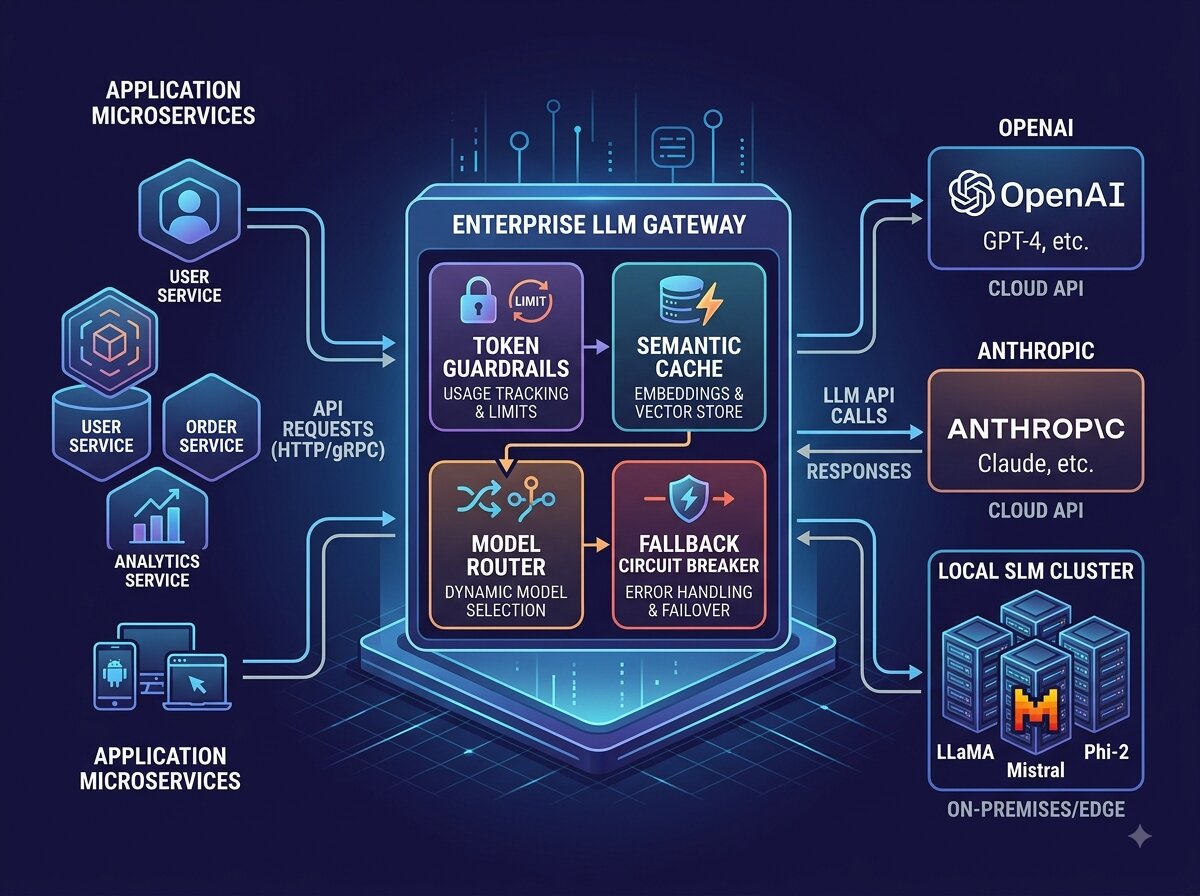
- The Soundbite: "To respect the vendor's new operational limits, we will establish an outbound rate limiter at our API Gateway using a Token Bucket pattern. We will hard-cap our outbound requests precisely at the vendor's maximum allowed transactions per second. Any internal checkout tasks that exceed this threshold will be held in an asynchronous queue rather than hitting the network and triggering a 429 error."
5. T-ransactional Asynchronous Decoupling
Move non-essential transactional tasks out of the synchronous user request-response cycle.
- The Strategy: Re-architect the application flow to handle the third-party dependancy asynchronously via a message broker or event stream.
- The Soundbite: "For any operations that don't require an immediate, split-second synchronous answer, we will decouple the integration. We will place the logistics processing payload into a persistent message queue like RabbitMQ or AWS SQS. The checkout completes instantly for the user, and our background consumer workers process the logistics data from the queue at a throttled pace that aligns perfectly with the vendor's capacity limits."
6. T-elemetry and Rate Limit Header Parsing
Dynamically adapt your application's data footprint by reading the vendor's real-time response payload headers.
- The Strategy: Configure your API consumption layer to actively parse standard HTTP rate-limiting response headers (
X-RateLimit-Limit,X-RateLimit-Remaining,Retry-After). - The Soundbite: "We must make our integration self-aware. We will update our API communication layer to actively parse the vendor's return headers—specifically tracking fields like 'Retry-After' and 'X-RateLimit-Remaining'. Our database router will use these live metrics to dynamically throttle or ease our outgoing transaction rate in real-time before we ever trigger a hard HTTP 429 violation."
7. L-ong-term Caching and Edge Optimization
Lower your total reliance on the external endpoint by maximizing data reusability at the network edge.
- The Strategy: Implement a localized caching layer (e.g., using Redis or Memcached) with an optimized Time-To-Live (TTL) configuration for static reference payloads.
- The Soundbite: "We need to structurally reduce our outward data footprint. We will deploy a centralized caching layer using Redis to cache the vendor's location routing combinations. Since shipping structures for specific zip codes rarely change hour-by-hour, we can implement an aggressive 12-hour TTL cache strategy, eliminating up to 60% of our redundant outbound API calls entirely."
8. E-nterprise Contract and Multi-Vendor Redundancy Finalization
Eradicate single points of dependency failure permanently by establishing an active-passive multi-vendor topology.
- The Strategy: Source a secondary, alternative logistics provider API and configure your gateway to automatically pivot traffic when SLA failures occur.
- The Soundbite: "Finally, we eliminate the structural single point of failure. While we optimize our code to handle the current vendor's rate limits, I will fast-track an architecture blueprint to integrate a secondary logistics provider. We will establish an Active-Passive provider pattern. If our primary vendor breaches their agreed uptime SLA or initiates an unannounced rate-limiting restriction again, our API gateway will instantly route traffic to the alternative provider pipeline with zero impact on our end users."
The Comparison: Bad vs. Good
- Bad Answer: "I would write a script that catches the 429 error and instantly fires the API request again and again until it works, while keeping the user's browser loading spinner spinning until the vendor responds." (Triggers an immediate infrastructure crash, causes thread exhaustion, completely breaks the user experience).
- Good Answer: "I will protect our platform continuity by activating local circuit breakers to prevent internal thread starvation, serving estimated shipping costs via a localized heuristic fallback cache, and implementing an egress token-bucket rate limiter combined with exponential backoff and jitter." (Highly resilient, systemically sound, exhibits mature engineering leadership).
Master Third-Party Ecosystem Architecture Rounds
Navigating volatile external interfaces and handling upstream constraints gracefully is what distinguishes a surface-level coordinator from a seasoned system operator. Demonstrating to an interview panel that you know exactly how to manage API thread cycles, design client-side backoffs, shape outbound egress traffic, and deploy multi-vendor fallback strategies proves you can build enterprise-grade software that survives real-world internet scale. The THROTTLE-GUARD framework arms you with a highly disciplined, robust playbook to lead teams through high-friction vendor crises cleanly.
The Kracd Prep Kits provide comprehensive distributed systems material, including advanced circuit breaker configurations, API gateway design patterns, and client-side resilience templates.
- For PMs: Learn how to design robust fallback product experiences, negotiate enterprise SLAs, and protect core business funnel metrics against external technical failures with the PM Prep Guide.
- For TPMs: Master high-volume API routing architectures, distributed caching topologies, message queue scale mechanics, and dynamic traffic shaping infrastructure with the TPM Prep Kit.
FAQs
Q: What is the exact mathematical difference between standard exponential backoff and backoff with jitter?A: Standard exponential backoff multiplies the wait time by a constant factor for each subsequent failure (e.g., wait times scale predictably: 1s, 2s, 4s, 8s...). If hundreds of your application instances are all retrying using this exact calculation, they will stay perfectly synchronized, hitting the vendor in identical, massive wave spikes. Jitter introduces a random variable into the equation (e.g., instead of exactly 4s, an instance waits a random time between 0 and 4s). This completely breaks the synchronization, scattering your network footprint evenly over time and letting the upstream service recover gracefully.
Q: How do you determine the optimal TTL for a localized data cache?A: You balance data accuracy against infrastructure capacity. If you set the Time-To-Live (TTL) too short, your application will continue to hit the external API constantly, failing to solve your rate-limit issue. If you set it too long, your users might see stale or inaccurate information (e.g., outdated pricing). You must analyze data volatility: if a vendor's pricing or calculation structures only shift once a day, setting a cache TTL of 4 to 6 hours is a highly safe, conservative engineering choice that dramatically slashes external network load.
Q: Should we inform the vendor before we implement our new outbound rate limiter?A: Yes, coordinate with their engineering team immediately. Presenting your outbound Token Bucket metrics and rate-limiting limits to the vendor's technical lead establishes strong engineering alignment. It helps confirm that your application's maximum traffic profile matches their internal backend scaling models perfectly, while demonstrating high-leverage engineering discipline and partnership.






















.jpg)