Introduction
You are sitting in a technical deep-dive interview with the Head of AI Safety and a Principal Machine Learning Engineer. They throw a high-stakes, highly realistic system design challenge at you: "We are deploying a generative AI co-pilot for clinical decision support and prescription lookup in an enterprise healthcare system. A single hallucinated drug dosage or false medical citation could lead to severe patient harm. How do you design an end-to-end detection, validation, and mitigation architecture to guarantee zero-shot hallucination prevention and strict medical compliance?"
Your palms start to sweat. This is where average candidates fall into the "Better System Prompt" trap.
They suggest basic, surface-level fixes: *"I would write in the system prompt 'Do not lie and only use facts,'" * or "I would just set the temperature parameter to 0.0."
Stop relying on prompt engineering alone for high-stakes reliability. Setting temperature to zero does not eliminate hallucinations, and telling a stochastic model "not to lie" is fundamentally ineffective at preventing plausible-sounding false statements. In elite FAANG AI Product Management and TPM architecture loops, panels are evaluating your ability to implement Self-Consistency Decoding, Triangulated Grounding Evaluation, Real-Time Guardrail Gateways, Semantic Uncertainty Quantification, and Circuit Breaker Escalate-to-Human Protocols.
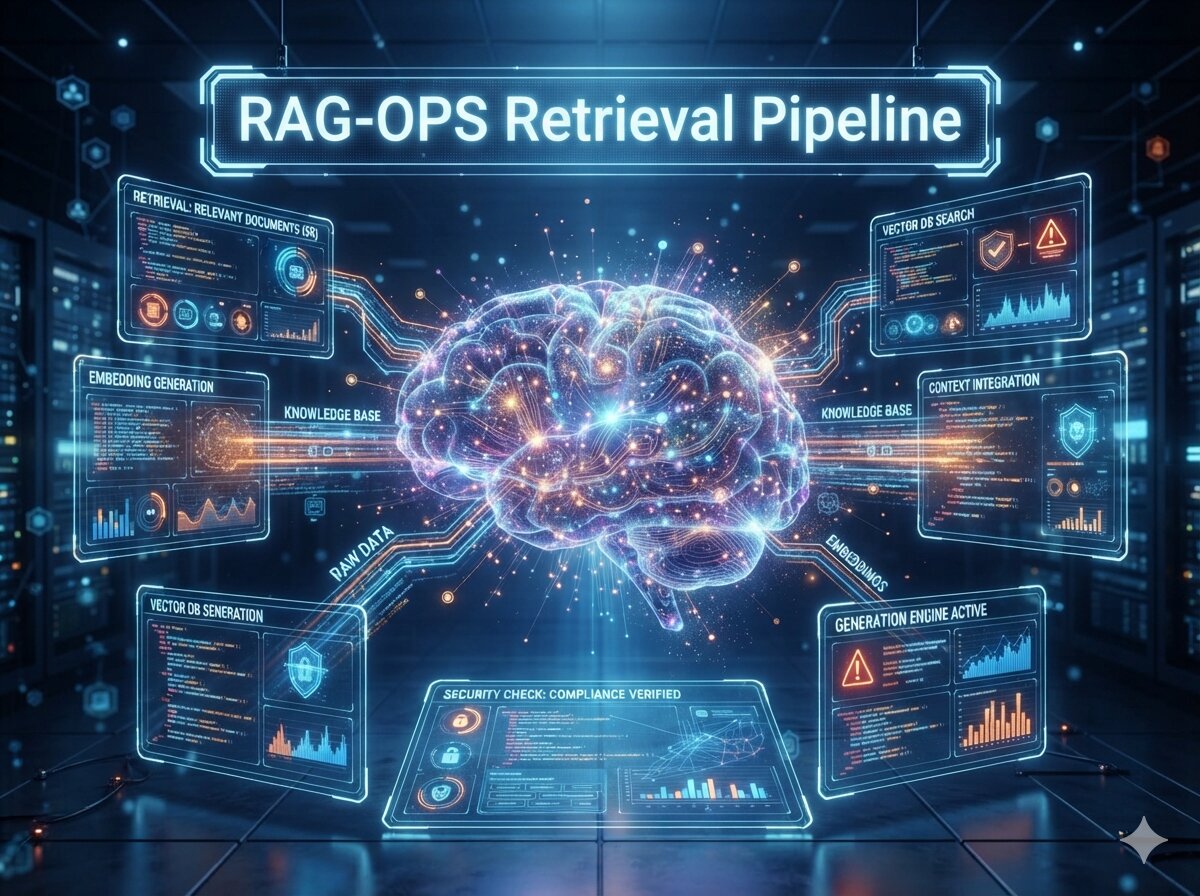
To pass this advanced AI safety and high-stakes execution round, you need an airtight defense-in-depth architecture. You need the FAITHFUL-AI framework.
The Core Framework: The "FAITHFUL-AI" Method
Elite AI platform leaders do not assume an LLM will ever be 100% truthful on its own. They build a multi-layered verification system that validates outputs before they reach a user.
                  [ Raw User Query / Clinical Prompt ]
                                   │
                                   ▼
       ┌────────────────────────────────────────────────────────┐
       │     F-ACTUAL GROUNDING & ENFORCED RETRIEVAL (RAG)       │
       │  * Strict context-only prompting + citation anchors    │
       └───────────────────────────┬────────────────────────────┘
                                   │
                                   ▼
       ┌────────────────────────────────────────────────────────┐
       │     A-UTO-EVALUATION VIA SELF-CONSISTENCY DECODING     │
       │  * Sample K responses in parallel; check agreement      │
       └───────────────────────────┬────────────────────────────┘
                                   │
                                   ▼
       ┌────────────────────────────────────────────────────────┐
       │     I-NLINE GUARDRAIL CRITIC & SHIELD MODELS           │
       │  * Second-pass verification model (NLI / Claim Check)  │
       └───────────────────────────┬────────────────────────────┘
                                   │
                                   ▼
       ┌────────────────────────────────────────────────────────┐
       │     T-HRESHOLDING & UNCERTAINTY QUANTIFICATION         │
       │  * Analyze log probabilities and entropy metrics       │
       └───────────────────────────┬────────────────────────────┘
                                   │
                                   ▼
       ┌────────────────────────────────────────────────────────┐
       │     H-UMAN-IN-THE-LOOP & CIRCUIT BREAKER FALLBACKS      │
       │  * Low-confidence outputs route to human expert queue  │
       └───────────────────────────┬────────────────────────────┘
                                   │
                                   ▼
               [ Safe, Verified Clinical Response ]
1. F-actual Grounding via Enforced Retrieval (RAG)
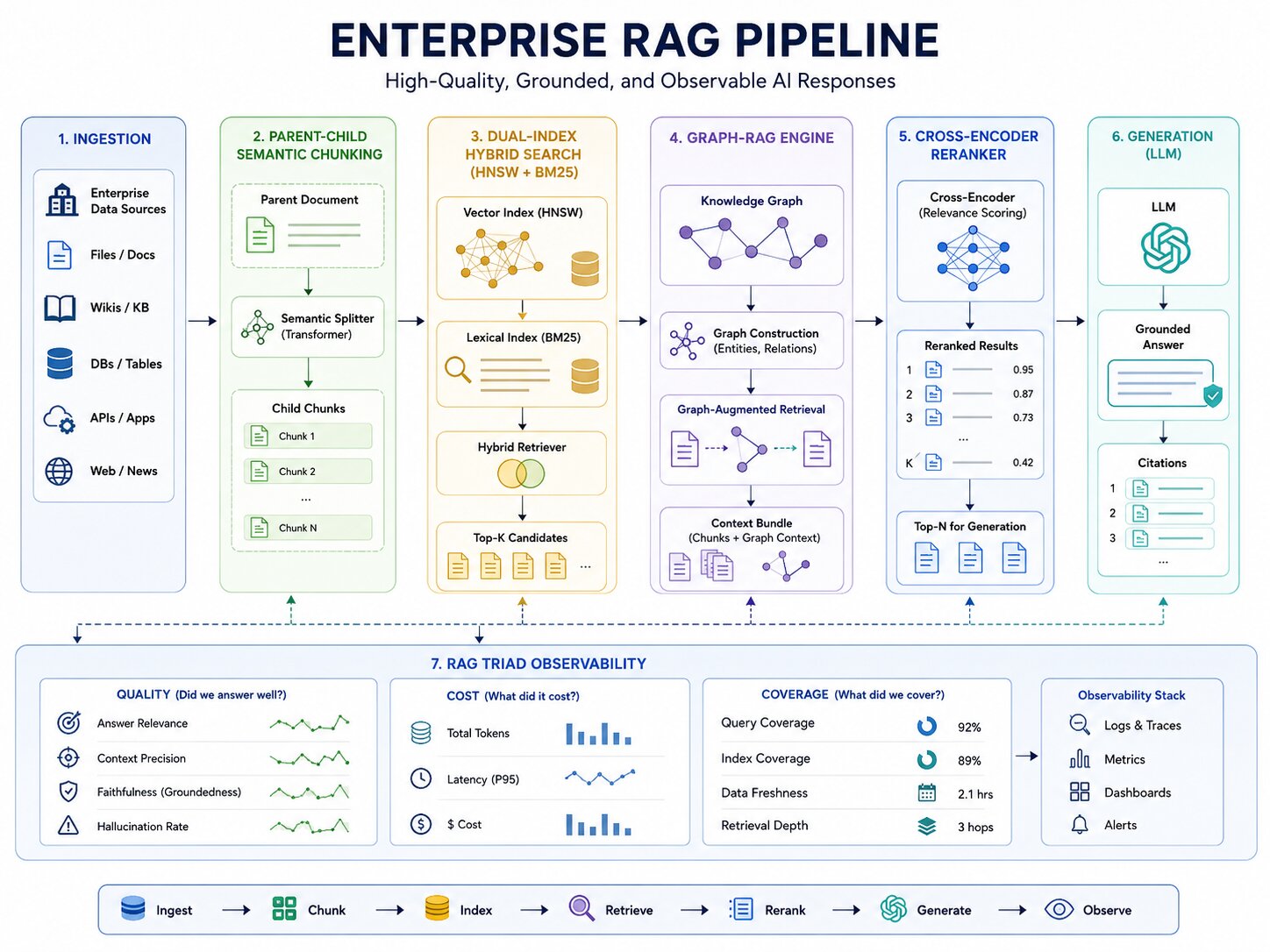
Lock the model's generation capabilities strictly to verified reference sources.
- The Strategy: Force the LLM to generate outputs exclusively using retrieved text passages (e.g., medical journals, FDA drug databases). Require the model to map every claim to an explicit source chunk ID ($[1], [2]$).
- Interview Script: "First, we eliminate parametric reliance. We enforce a strict RAG architecture where the system prompt explicitly restricts the LLM to facts present in our retrieved, vetted clinical reference chunks. Furthermore, we require structured source attribution, where every medical assertion must anchor to a verified chunk ID."
2. A-uto-Evaluation via Self-Consistency Decoding
Use multi-path sampling to check for factual stability across generation attempts.
- The Strategy: Run $K$ parallel generation requests ($K=3\text{ to }5$) at a slight temperature ($T=0.3$) and evaluate semantic agreement across responses. If responses diverge on critical entities (e.g., drug names or numerical dosages), flag the generation as an unstable hallucination.
- Interview Script: "To detect non-deterministic hallucinations, we run Self-Consistency Decoding. We generate three independent responses in parallel and compute their semantic overlap using an embedding similarity matrix. If two outputs give conflicting medical dosages, the system immediately flags high output variance and rejects the generated text."
3. I-nline Guardrail Critic & Shield Models
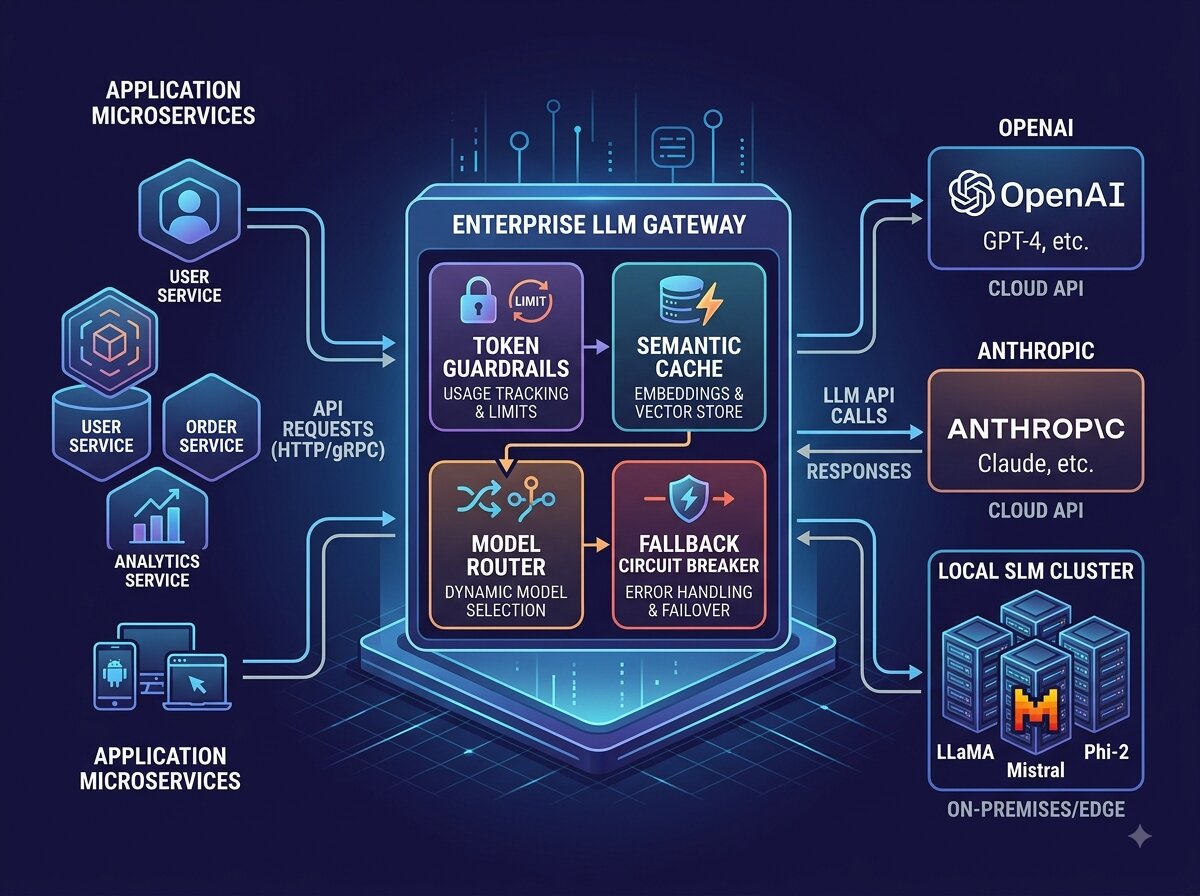
Run output text through dedicated verification models before serving the user.
- The Strategy: Deploy a lightweight, specialized Critic model (e.g., Natural Language Inference / NLI classifier) that evaluates premise-hypothesis pairs: Premise: Retrieved Source Chunk vs. Hypothesis: Generated LLM Sentence. The Critic labels each claim as Entailment, Neutral, or Contradiction.
- Interview Script: "Before the user sees a single token, we route the output through a fast, specialized NLI Shield Model. The Shield Model splits the generated text into atomic factual claims and verifies each claim against our retrieved source chunks. If any claim is marked as a 'Contradiction' or lacks 'Entailment' ground truth, the sentence is pruned or rejected."
4. T-hresholding & Semantic Uncertainty Quantification
Evaluate model confidence using log probabilities and entropy metrics.
- The Strategy: Analyze token-level output log probabilities ($\log P$). High entropy across key entity tokens (e.g., numbers, proper nouns, medical terminology) signals low model confidence, indicating a hallucination risk.
- Interview Script: "We track the token-level log probabilities of key generated entities. If the average log probability for critical medical terms drops below a defined confidence threshold (e.g., $P < 0.92$), we treat the generation as uncertain, regardless of how confident the phrasing sounds."
5. H-uman-in-the-Loop & Circuit Breaker Fallbacks
Fail safely when confidence bounds are breached.
- The Strategy: When uncertainty metrics, self-consistency checks, or NLI guardrails flag a potential hallucination, trigger a circuit breaker. Instead of serving an unverified answer, fallback gracefully to a human expert queue or a safe default message ("I cannot verify this prescription dosage with 100% certainty. Escalating to a licensed pharmacist.").
- Interview Script: "If our guardrails detect a contradiction or high entropy, we trip an automated circuit breaker. We do not attempt to guess or output half-accurate text. The request is routed to a Human-in-the-Loop review queue for licensed medical staff, while the user receives a clear, safe fallback response."
The Comparison: Bad vs. Good
Bad Answer (Prompt Engineering Only)Good Answer (FAITHFUL-AI Framework)"I would write a system prompt telling the LLM to never lie, set the temperature to 0.0, and assume the model will give accurate medical answers because it was trained on vast medical data.""I will apply the FAITHFUL-AI framework. I will restrict generation to RAG chunks, run parallel Self-Consistency decoding, validate claims via NLI Shield models, track token log probabilities, and set up automated HITL circuit breakers.""If the model hallucinates, we can fine-tune it on correct medical data and tell users to double-check the results themselves.""I will implement a multi-layered verification defense. I will decouple generation from validation using an inline Critic model, calculate token entropy, and trigger sub-second fallbacks to prevent unverified text from ever reaching production."
The Pitch/Transition
Mitigating model hallucinations in mission-critical environments requires an uncompromising commitment to systems safety, evaluation pipelines, and real-time guardrail engineering. The FAITHFUL-AI framework provides a production-grade template to ensure high reliability across high-stakes GenAI deployments.
In advanced FAANG AI Product Management and TPM technical rounds, interviewers want to see if you can lead AI initiatives through complex safety, regulatory, and system reliability challenges. Do not leave your technical prep to chance.
Equip yourself with the exact high-velocity scaling frameworks, AI safety architectures, and system design playbooks trusted by leading tech executives:
- Master your AI product lifecycle, safety metrics, and strategic execution with the comprehensive PM Prep Guide.
- Dominate your LLM system design, validation pipelines, and technical execution loops with the tactical TPM Prep Kit.
FAQs
Q: Why isn't setting Temperature = 0.0 enough to stop hallucinations?
A: Temperature = 0.0 (greedy decoding) simply forces the LLM to choose the highest-probability token at every step. If the model's parametric memory contains incorrect or incomplete information, its highest-probability prediction can still be factually wrong. Greedy decoding makes generations deterministic, not factually correct.
Q: How does a Natural Language Inference (NLI) model detect hallucinations in real time?
A: An NLI model takes two text inputs: a Premise (the retrieved source document) and a Hypothesis (a claim generated by the LLM). It computes probabilities across three relationship categories: Entailment (Premise proves Hypothesis), Contradiction (Premise disproves Hypothesis), or Neutral (Premise does not mention Hypothesis). If an output claim evaluates to Contradiction or Neutral, it is flagged as an ungrounded hallucination.
Q: How do you balance real-time guardrail latency with strict safety SLAs?
A: Latency is optimized using a tiered validation pipeline:
- Streaming Token Entropy Checks: Compute log probabilities on the fly during token generation (zero added latency).
- Parallelized Critic Execution: Pass generated claims through lightweight, optimized cross-encoders or small NLI models (e.g., DeBERTa-v3-small) in parallel with streaming.
- Speculative Execution: Begin drafting the response while async guardrail checks evaluate claims in the background, cutting token delivery delay down to under 150ms.
























.jpg)