How to Answer "How Do You Handle a Dropping Metric?": The TRIAGE Framework for Product & Technical Leaders

This guide breaks down how PMs and TPMs can systematically solve dropping metric interview questions using the 6-step TRIAGE Framework—covering data validation, segment isolation, release auditing, macro analysis, targeted mitigation, and post-mortem safeguards.

Introduction

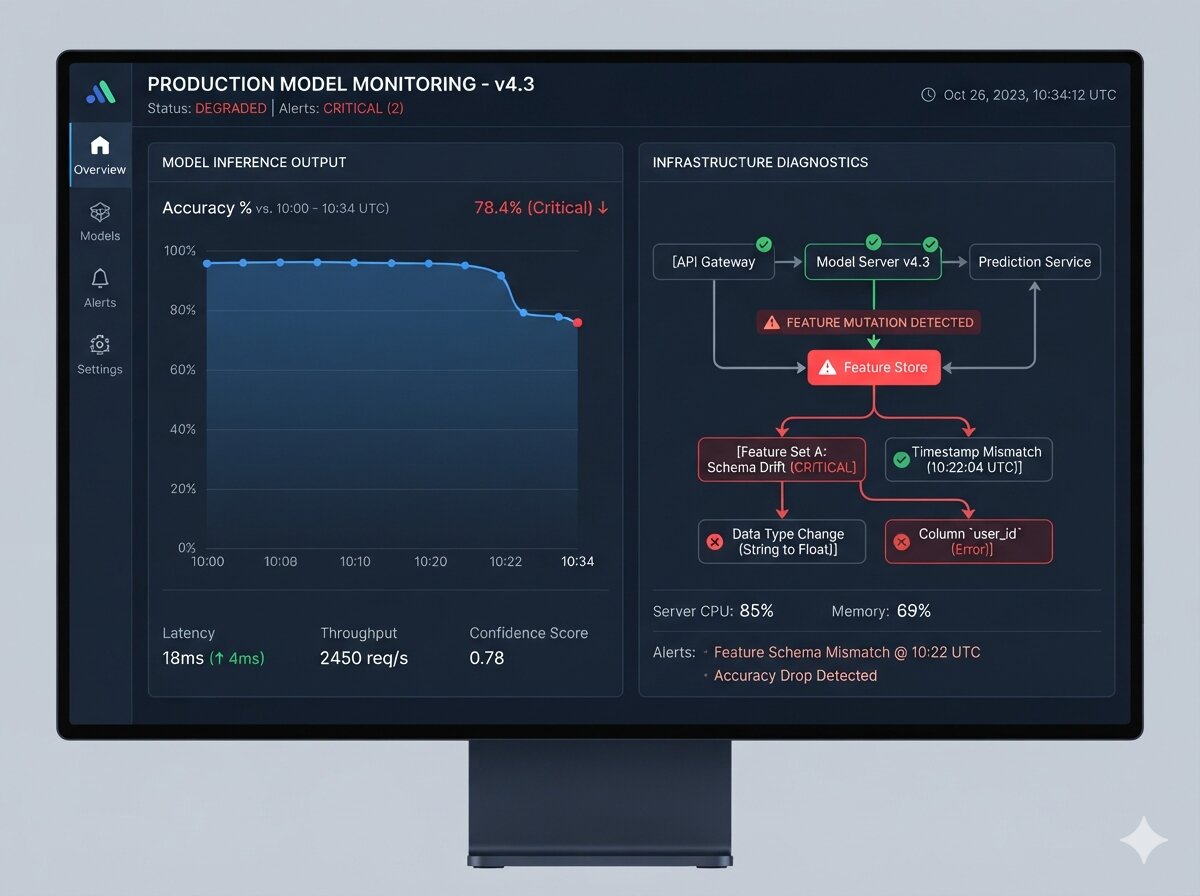
You are sitting across from a Senior Director in a top-tier FAANG interview. They drop the nightmare scenario: "You wake up on Monday morning, open your dashboard, and see that user engagement for your core product feature has dropped by 15% overnight. What do you do?"

Your pulse quickens. You panic and start blurting out random fixes: "I'd run a marketing campaign!" or "I'd immediately rollback the last code deployment!"

Stop guessing. Jump-to-conclusion troubleshooting in a product or technical execution loop is an immediate red flag. Hiring committees use metric drop questions to test your analytical rigor, structural thinking, and ability to stay calm under fire. They don’t want wild hypotheses—they want to see a systematic process that isolates data anomalies, pinpoints root causes, and implements durable fixes without destabilizing the broader ecosystem.

To showcase elite problem-solving and structured execution, you need the TRIAGE Framework.

The Core Framework: The TRIAGE Method

              [ 15% Metric Drop Detected ]
                           │
                           ▼
       ┌───────────────────────────────────────┐
       │  T-ERMINOLOGY & DATA INTEGRITY        │
       │  * Verify tracking, filters, logging  │
       └───────────────────┬───────────────────┘
                           │
                           ▼
       ┌───────────────────────────────────────┐
       │  R-EGIONAL & SEGMENT ISOLATION        │
       │  * Segment by GEO, OS, cohort, app    │
       └───────────────────┬───────────────────┘
                           │
                           ▼
       ┌───────────────────────────────────────┐
       │  I-NTERNAL CODE & PRODUCT CHANGES     │
       │  * Check deploys, experiments, APIs   │
       └───────────────────┬───────────────────┘
                           │
                           ▼
       ┌───────────────────────────────────────┐
       │  A-SSESS EXTERNAL SHIFTS & MARKET     │
       │  * Competitors, seasonality, news     │
       └───────────────────┬───────────────────┘
                           │
                           ▼
       ┌───────────────────────────────────────┐
       │  G-ATHER HYPOTHESES & DEPLOY FIX      │
       │  * Mitigate immediate impact, patch   │
       └───────────────────┬───────────────────┘
                           │
                           ▼
       ┌───────────────────────────────────────┐
       │  E-STABLISH PREVENTATIVE SAFEGUARDS   │
       │  * Alert thresholds & regression test │
       └───────────────────┬───────────────────┘
                           │
                           ▼
              [ Metric Stabilized & Mitigated ]

Step 1: Terminology & Data Integrity

Before assuming the product is broken, validate the data pipeline and metric definition to rule out logging failures.

  • Bad Answer: "I'd call an emergency all-hands meeting to rewrite the feature code."
  • Good Answer (Interview Soundbite):

"First, I validate data integrity. I verify whether the drop reflects a true drop in user behavior or a pipeline failure—such as broken tracking tags, telemetry pipeline latency, or an incorrect dashboard filter update."

Step 2: Regional & Segment Isolation

Slice the metric across key dimensions to isolate where the degradation is occurring.

  • Bad Answer: "I'd look at overall user trends over the past few months."
  • Good Answer (Interview Soundbite):

"Next, I slice the data across key dimensions to isolate the blast radius. I segment by platform (iOS vs. Android vs. Web), geographic region, user cohort (new vs. returning), and application version to identify if the drop is localized or global."

Step 3: Internal Code & Product Changes

Audit recent internal engineering and product releases to identify technical triggers.

  • Bad Answer: "I'd start changing the UI to see if users like a new design better."
  • Good Answer (Interview Soundbite):

"If localized to a specific version or platform, I audit recent internal releases. I review active A/B experiment variants, recent microservice deployments, API schema changes, and third-party dependency updates deployed in the last 48 hours."

Step 4: Assess External Shifts & Market Dynamics

Evaluate external macro factors if internal systems show no clear anomalies.

  • Bad Answer: "If code didn't break it, then users just got bored of our product."
  • Good Answer (Interview Soundbite):

"If internal checks are clear, I evaluate external factors. I look for regional internet outages, seasonal trends (e.g., holidays), competitor product launches, or policy/regulatory shifts that could alter user behavior."

Step 5: Gather Hypotheses & Deploy Fix

Formulate a prioritised root-cause hypothesis, communicate with stakeholders, and deploy a targeted fix.

  • Interview Soundbite:

"Once I isolate the root cause—for example, a broken auth token refresh on iOS v4.2—I form an action plan. I align engineering on a high-priority hotfix or experiment rollback, while keeping cross-functional stakeholders updated on business impact and recovery ETAs."

Step 6: Establish Preventative Safeguards

Lock in monitoring, automated alerting, and process improvements to prevent recurrence.

  • Interview Soundbite:

"Finally, I lead a post-mortem to institutionalize learnings. We implement automated anomaly detection alerts with tighter variance thresholds and add automated regression checks to our CI/CD deployment pipeline to catch similar issues before production."

Ace Your Next Technical & Metric Loop with Kracd

Mastering the TRIAGE Framework proves to interview panels that you possess analytical discipline, structured crisis management, and end-to-end execution maturity. But triage scenarios are just one component of a competitive FAANG interview process.

Don't let high-stakes analytical loops stand between you and your dream offer. Elevate your metric analysis, product strategy, and technical system design skills with our comprehensive interview guides:

  • Master product intuition, execution metrics, and strategic trade-offs with the PM Prep Guide.
  • Master system architecture, operational triage, and program execution with the TPM Prep Kit.

Frequently Asked Questions (FAQs)

1. How long should I take to explain the TRIAGE framework in an interview?

Aim for a concise 2-to-3-minute high-level overview of the 6 steps first. Then, pause and invite the interviewer to steer: "I can deep-dive into how I isolate telemetry pipelines or how I evaluate A/B test collisions—which area would you like to explore?"

2. What if the interviewer says, "Data pipelines are fine, and no new code was shipped"?

This is a classic interviewer pivot to test your breath. Seamlessly transition to external and systemic factors: check third-party API dependencies, ISP outages, competitor aggressive campaigns, or subtle network/DNS latency shifts.

3. How do I prioritize which segment to analyze first during a metric drop?

Start with high-variance variables that historically carry the highest blast radius: Platform/OS version (e.g., app updates), Geographic Region (e.g., local server/CDN issues), and User Cohort (e.g., new onboarding vs. power users).
Read more blogs

Mastering the "Design a Global File Storage System" Interview: The SCALE Framework
How to Answer "How Do You Handle a Dropping Metric?": The TRIAGE Framework for Product & Technical Leaders
How to Answer "How Do You Manage AI Agent Workflows?": The AGENT Framework for Senior PMs and TPMs
How to Answer "How Do You Evaluate AI Systems?": The EVALS Framework for Modern TPMs
The AI-Powered TPM: How Technical Program Managers Can Leverage AI Tools to Double Operational Efficiency
How to Answer "Tell Me About a Time You Failed": The RESCUE Framework for PMs and TPMs
Top AI Tools Every TPM Needs in 2026: The "STACK" Framework for Maximum Productivity
Tech layoffs hit 205,832 in 2026 while AI roles surge 237%—learn the IRREPLACEABLE-SIGNAL framework TPMs use to stay hired
Tech Layoffs 2026: The IRREPLACEABLE-SIGNAL Framework TPMs Use to Survive AI Automation
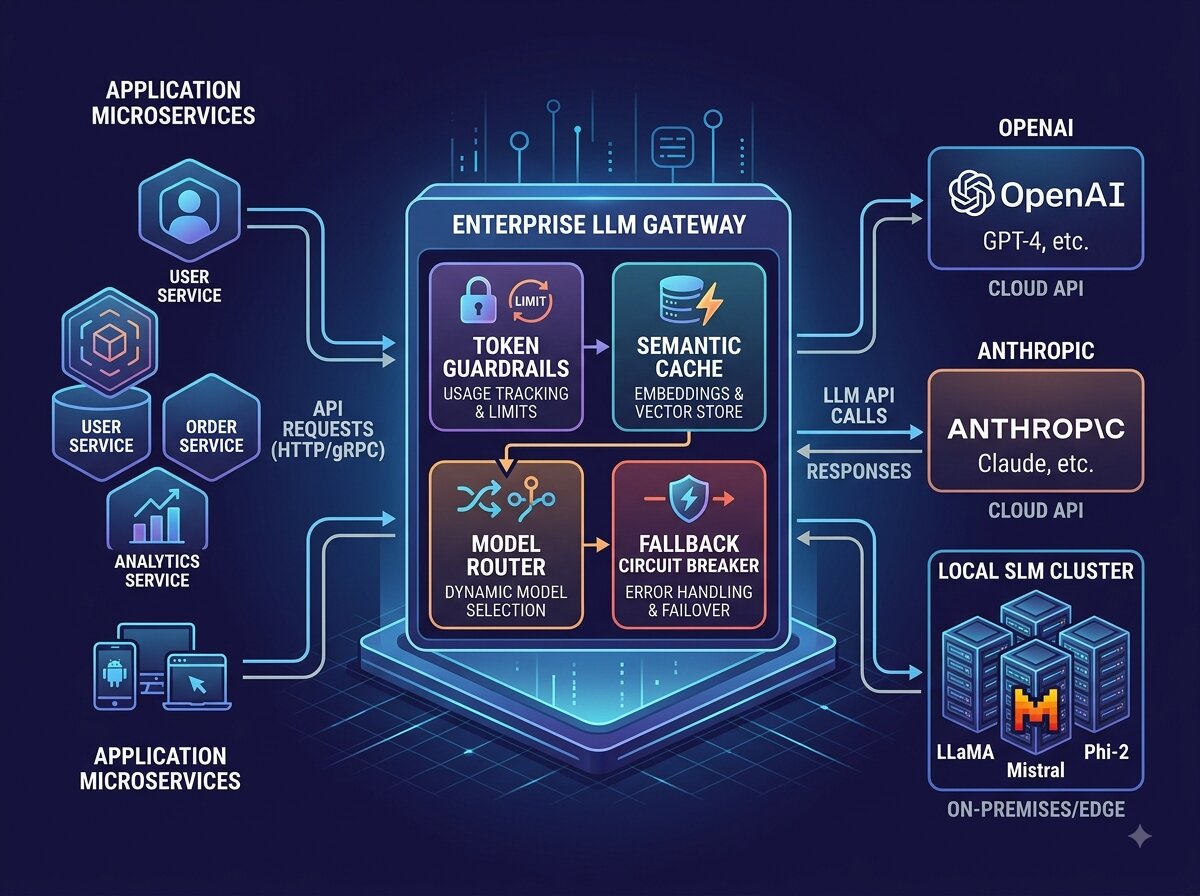
How to Design an Enterprise AI Cost & Latency Gateway (PM/TPM Guide)

Designing Real-Time Multi-Modal AI Systems: The "STREAM" Framework
Side-by-side comparison showing 2023 supervised-ML vocabulary getting screened out versus 2026 autonomous-agent fluency
AI PM Interview 2026: The AGENT-PROOF Framework for Autonomous-Systems Fluency
How to Scale Real-Time GenAI Agents: The "AGENT-SCALE" Framework
How to Design an Enterprise LLM Evaluation & Guardrails Platform: The "SHIELD" Framework
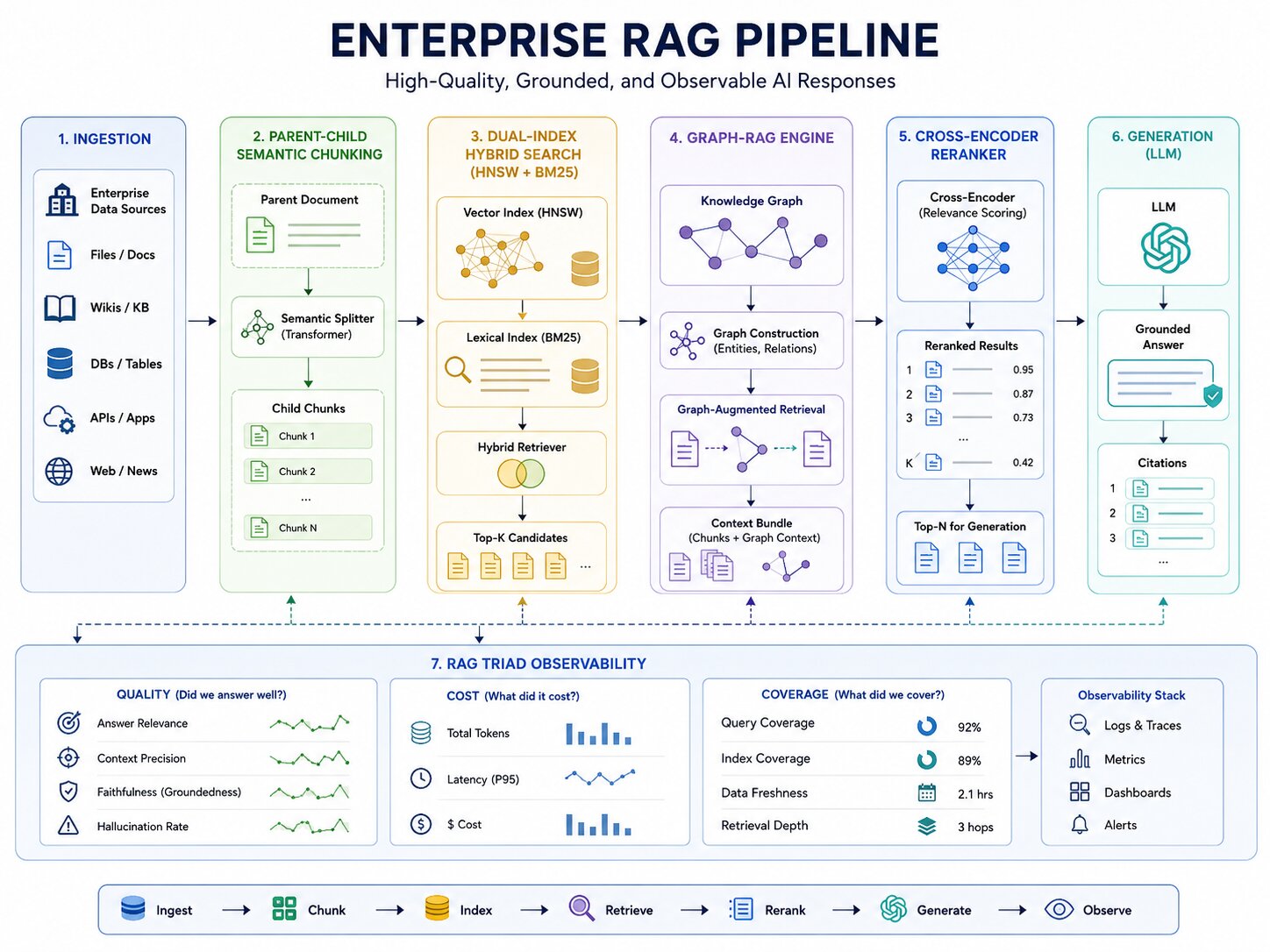
How to Design an Enterprise RAG Platform: The "RAG-FLOW" Framework
How to Diagnose & Fix a Dropping Metric: The "DRIFT" Framework
How to Architect Autonomous Enterprise AI Agents: The "AGENT-FLOW" Framework
How to Architect Multimodal AI Platforms: The "MULTI-MODAL" Framework
How to Build Enterprise AI Safety, Guardrails & Governance: The "GUARD-RAIL" Framework
How to Architect Enterprise LLM Fine-Tuning & Distillation: The "ADAPT-MODEL" Framework
How to Architect High-Throughput RAG Systems: The "VECTOR-FLOW" Framework
How to Architect Multi-Agent AI Systems: The "AGENT-FLOW" Framework
How to Master LLM Evaluation & Telemetry at Scale: The "EVAL-METRICS" Framework
How to Mitigate LLM Hallucinations in High-Stakes Applications: The "FAITHFUL-AI" Framework
How to Evaluate RAG vs. Fine-Tuning for Enterprise AI: The "KNOWLEDGE-EVAL" Trade-Off Framework
How to Design an Enterprise AI Agent Architecture: The "AGENT-SCALE" Orchestration Framework
How to Deploy and Validate a New AI Model: The "SAFE-ROLLOUT" Testing Framework
How to Manage a High-Stakes Project Slip: The "SCOPE-ALIGNED" Mitigation Framework
How to Handle an AI Model Regression: The "MODEL-VALIDATE" Diagnostic Framework
Tell Me About a Time You Failed: The "BOUNCE-BACK" Behavioral Framework
How to Handle a Dropping Metric: The "ROOT-CAUSE" Analytical Framework
How to Architect a Globally Scalable Notification Engine: The "FAN-OUT" Priority Delivery Framework
How to Architect an Enterprise-Grade Vector Search Engine: The "VECTOR-SHARD" Data Framework
How to Architect a High-Concurrency API Gateway: The "GATE-KEEPER" Edge Routing Framework
How to Architect a Distributed Telemetry & Logging System: The "TRACE-STREAM" Observability Framework
How to Architect an Enterprise LLM Deployment: The "RAG-OPS" Production Scale Framework
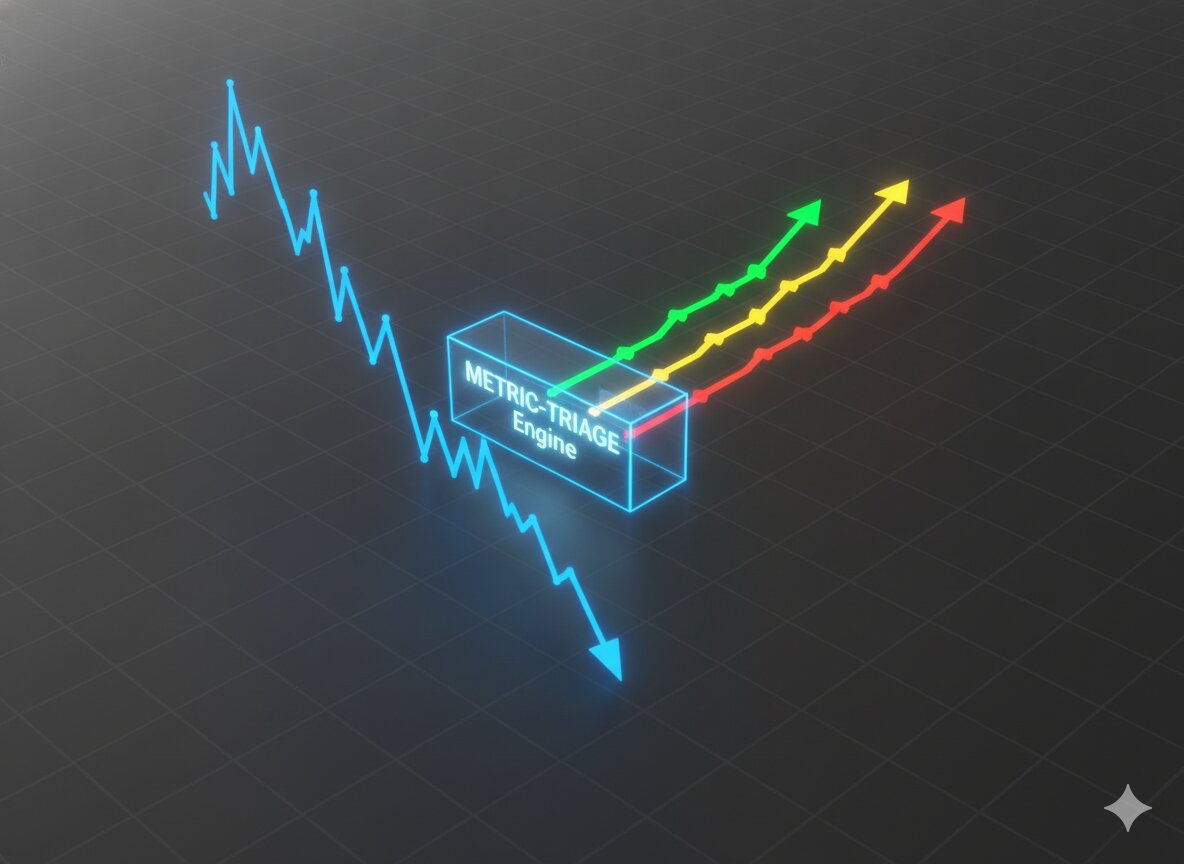
How to Handle a Dropping Metric: The "METRIC-TRIAGE" System Design Framework
How to Architect a Globally Scalable Financial Ledger System: The PM & TPM "LEDGER-BALANCE" Framework
How to Architect a Globally Scalable Real-Time Ad Bidding & Ad Tech Exchange: The PM & TPM "RTB-AUCTION" Framework
How to Architect a Globally Scalable Real-Time Recommendation Engine: The PM & TPM "RECO-MATRIX" Framework
How to Architect an Enterprise LLM Evaluation & Monitoring Pipeline: The PM & TPM "GUARD-RAIL" Framework
How to Design an Enterprise Agentic AI Workflow: The PM & TPM "ORCHESTRATE-AGENT" Framework
How to Architect an Enterprise Retrieval-Augmented Generation (RAG) Architecture: The PM & TPM "KNOWLEDGE-CORE" Framework
How to Architect a Globally Scalable Event-Driven Architecture: The PM & TPM "STREAM-FLOW" Framework
How to Manage Cache Invalidation and Consistency: The PM & TPM "CACHE-CLEAR" Framework
How to Manage Data Privacy and Cross-Border Transfers: The PM & TPM "DATA-BOUNDARY" Framework
How to Design an Enterprise AI Orchestration Layer: The PM & TPM "GATEWAY-AI" Framework
How to Architect a High-Throughput API Gateway: The PM & TPM "GATE-KEEPER" Framework
How to Diagnose and Fix a Dropping Metric: The PM & TPM "METRIC-TRIAGE" Framework
How to Optimize Cloud Infrastructure Unit Economics: The PM & TPM "FIN-SCALE" Framework
How to Manage Technical Debt and Refactoring Backlogs: The PM & TPM "PAY-DOWN" Framework
How to Coordinate Multi-Region Cloud Failovers: The PM & TPM "ZONE-DEFENSE" Framework
How to Orchestrate Massive API Deprecations Without Breaking Ecosystems: The PM & TPM "DECOUPLE-FLOW" Framework
How to Lead Large-Scale Corporate AI Transformations: The PM & TPM "CORE-INTEGRATE" Framework
How to Scale Infrastructure Upgrades Without Downtime: The PM & TPM "LIVE-MIGRATE" Framework
How to Architect an AI-Powered Quality Assurance & Release Engine: The PM & TPM "BUG-SHIELD" Framework
How to Formulate the Ultimate "Product-to-Engineering" Spec Engine: The PM & TPM "TECH-TRANSLATE" Framework
How to Leverage AI for Cross-Functional Product Alignment: The PM & TPM "SYNCHRONIZE" Framework
How to Build a Complete AI-Powered Agile Workflow: The PM & TPM "CORE-VELOCITY" Framework
How to Automate High-Friction Dependency Mapping and Jira Tracking: The "AUTO-TRACK" TPM Workflow
How to Handle a Critical API Rate Limiting and Service Degradation Crisis: The "THROTTLE-GUARD" Resilience Framework
How to Handle a High-Scale Database Crash During Peak Traffic: The "FAILOVER-SHIELD" Recovery Framework
How to Handle an Algorithmic Model Bias Crisis: The "ETHICAL-AUDIT" ML Governance Framework
How to Handle a Major Cloud Migration Failure: The "CLOUD-SAFETY" Rollback Framework
How to Handle a Major Technical Program Delay: The "RE-BASELINE" Schedule Recovery Framework
How to Handle a Database Sharding Migration: The "DATA-BALANCE" Scale Framework
How to Handle a Critical Third-Party API Sunset: The "DEPENDENCY-BUFFER" Integration Framework
How to Handle a Pricing Tier Change: The "PRICING-SHIELD" Revenue Framework
next How to Handle a Post-Launch Crisis: The "ROLL-BACK" Incident Management Framework
How to Handle a Critical API Migration: The "DECOUPLE-SAFE" Architecture Framework
How to Handle a Major System Outage: The "TRIAGE-SCALE" Technical Execution Framework
How to Resolve Cross-Functional Gridlock: The "BRIDGE-ALIGN" Trade-off Framework
How to Handle a Dropping Metric: The "DIG-DEEP" Root Cause Framework
How to Master the Behavioral Interview: The "STAR-GROWTH" Method
How to Lead a Product Launch: The "GTM-VELOCITY" Framework
How to Design a Product for the Next Billion Users: The "ADAPT-LIGHT" Framework
How to Negotiate Your Senior Tech Offer: The "VALUE-ANCHOR" Method
How to Master the Behavioral Interview: The "STAR-GROWTH" Method
How to Lead a Product Launch: The "GTM-VELOCITY" Framework
How to Design a Product from Scratch: The "EMPATHY-SCALE" Framework
How to Prioritize Features: The "RICE-VALUE" Framework
How to Design for the Next Billion Users: The "ADAPT-LIGHT" Framework
How to Build an AI-First Feature: The "RAG-EVAL" Framework
Move from a Monolith to Microservices: The "STRANGLE-SHIELD" Framework
How Do You Decide When to Build vs. Buy?: The "MOAT-LEVER" Framework
How Do You Handle a Conflict Between Engineering and Design?: The "TRIANGLE-TRADE" Framework
How Do You Manage a Delayed Project?: The "REALIGN-RECOVER" Framework
How Do You Design an API?: The "CONTRACT-FIRST" Framework
How Do You Prioritise a Roadmap?: The "ROI-ALIGN" Framework
How to Answer "Tell Me About a Time You Failed": The "PIVOT-OWN" Framework
How to Handle a Dropping Metric: The "SEGMENT-DRILL" Framework
The "Incentive-Alignment" Framework: Building in Web3
The "Value-Tradeoff" Framework: Mastering the Art of "No"
The "Cycle-Velocity" Framework: Building Viral Loops
The "Agentic-Utility" Framework: Building AI-First Features
The "Proxy-Experience" Framework: Mastering the Career Pivot
The "Throughput-Engine" Framework: Elite Productivity
The "Pause-Pivot" Framework: Leading the Room
The "Curated-Authority" Framework: Building Your Tech Brand
The "Throughput-First" Framework: Managing the Sprint
The "Segment-Drill" Framework: Winning with Data

Transform Your Career with Our Complete Learning Solutions

Discover our diverse offerings, including expert-led courses, free training sessions, and personalized consultation services designed to help you master project management and advance your career with confidence.

FREE Training

Crack your next TPM Interview

From unravelling the intricacies of TPM/PM interview structures to mastering system design to discover the keys to navigating cross-functional collaboration, decoding top interview questions, and fine-tuning your resume and LinkedIn profile, including negotiation frameworks, networking strategies, and much more!

Register Now

Trusted by over 9,600 students

Course

30-Day TPM Masterclass

Expect early technical assessments, followed by a focus on strategic thinking, leadership capabilities, and a thorough evaluation of program management proficiency. From engaging self-guided exercises to comprehensive guides, frameworks, and sample answers, our TPM interview preparation covers it all, including practice lessons, updated content, and mock interviews.

Learn More

Trusted by over 9,600 students

Interview Prep Kit

Ultimate TPM Interview Prep Kit

Master TPM interview skills with this comprehensive guide covering system design, program management, and cross-functional collaboration.

Includes real-world scenarios, sample questions, and expert tips for success.

Learn More

Trusted by over 9,600 students

Interview Prep Guide

Complete PM Interview Guide

Master product design, strategy, and leadership with this all-in-one guide for Product Management interviews.

Gain confidence with actionable advice, real-world examples, and tailored mock questions to secure your next PM role.

Learn More

Trusted by over 9,600 students

Consulting

1-on-1 Interview Prep

1-on-1 Interview PreparationGet personalized guidance to ace your next interview with confidence. Our 1-on-1 interview preparation sessions focus on your unique strengths and areas for improvement. From tailored practice questions and feedback to mastering behavioral and technical responses, we ensure you're fully prepared to impress and secure your dream role.

Book a call

Trusted by over 9,600 students

Free Training

Unlock  Free Training

Get access to free training that reveals "How To crack your next TPM INTERVIEW In Just 30 Days!"

Gain exclusive access to expert-led training sessions designed to equip you with the skills, strategies, and confidence to excel in Technical Program Management.

Enroll now

Trusted by over 9,600 students