The Interview Trap
Candidates often treat this as a "Technical Problem" (How do we code faster?). It is actually a "Stakeholder Management" problem. Stop hiding the delay until the last minute. Stop promising "crunch time" as a solution.
The Core Framework: The "3-T" Recovery Method
1. Truth (Transparency & Diagnosis)
Own the delay immediately. Do not sugarcoat.
- The Soundbite: "I don't wait for the deadline to pass. As soon as I see a variance in velocity, I surface it. I’d first perform a root cause analysis: Is it a blocking dependency, scope creep, or technical debt?"
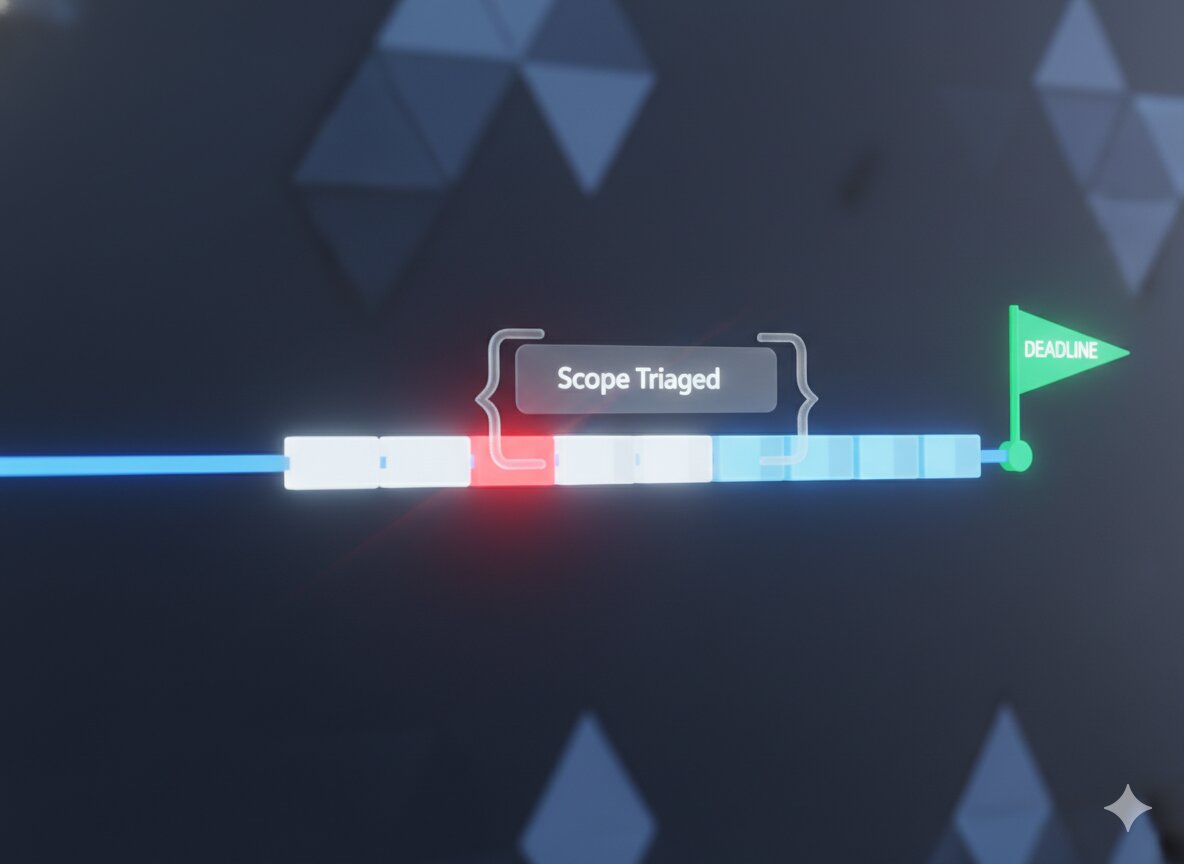
2. Trade-offs (De-scoping)
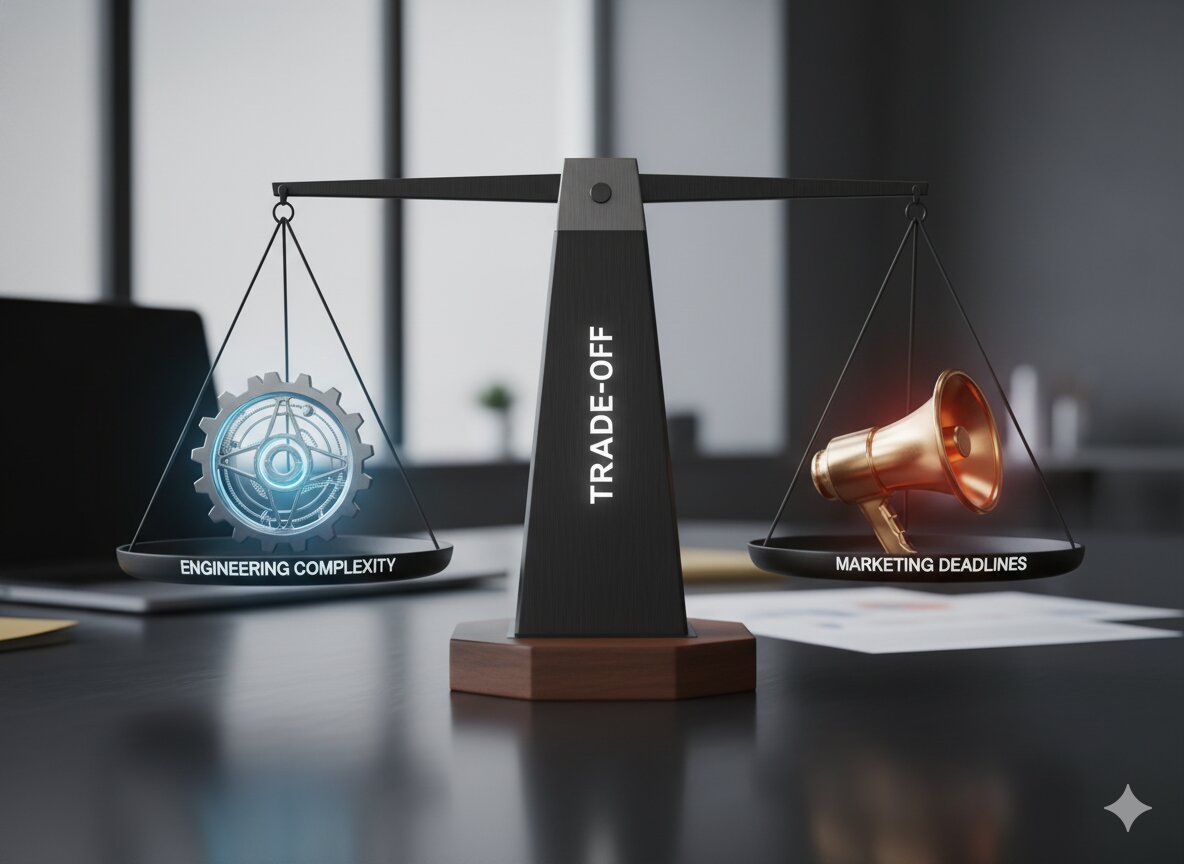
You cannot have it all: Time, Scope, and Quality. You must force the business to choose.
- The Soundbite: "I present the 'Trilemma' to stakeholders: We can either launch on time with a reduced feature set, push the date, or increase budget. I map these to our North Star goals to see what provides the most value."
3. Tactics (Execution)
If you must launch, you must de-scope.
- The Soundbite: "I lead a 'MoSCoW' session (Must-have, Should-have, Could-have, Won't-have) to isolate the P0 features needed for a minimum viable launch."
Bad AnswerKracd-Level Answer"I'll tell the team they need to work nights and weekends.""I’ll identify the critical path and propose de-scoping lower-priority features to hit our core milestone.""I'll just tell the stakeholders we need more time.""I’ll communicate the delay alongside a revised project plan, outlining the impact on downstream dependencies."
Lead Through the Crisis
When a project slips, your reputation is built on how you handle the fallout. Can you keep the team motivated while managing executive expectations?
Our kits include "Communication Templates" for exactly these difficult conversations.
- For PMs: Manage the roadmap and stakeholders with the PM Prep Guide.
- For TPMs: Master critical path analysis and dependency mapping with the TPM Prep Kit.
FAQs
Q: Should I fire people or change the team?
A: Never blame the team in an interview. Focus on "Process" and "Constraints."
Q: What if the stakeholder refuses to de-scope?
A: Use the "Cost of Delay" argument. Show them the data on what the company loses by launching an incomplete product vs. a delayed one.
Q: Is it okay to use "Crunch Time"?
A: Only as a short-term, last-resort exception, never as a strategy. FAANG companies track "burnout" as a key project health metric.























.jpg)