"Design TikTok": A 5-Step Framework for Acing the System Design Interview (Even if You Don't Code)

Ace the 'Design TikTok' interview question. Our 5-step framework helps PMs & TPMs nail the System Design interview, even if you don't code. Learn how to discuss architecture, trade-offs, and scale like a FAANG leader.

"Design TikTok": A 5-Step Framework for Acing the System Design Interview (Even if You Don't Code)

Introduction

You're in a late-stage interview for a Product Manager or Technical Program Manager role. The whiteboard is clean. The interviewer smiles and gives you the prompt:

"Design TikTok."

Or "Design Netflix." Or "Design the backend for Uber."

Your heart sinks. If you're a PM, you're thinking, "But I'm not an engineer!" If you're a TPM, you know this is the real test.

This is the System Design interview . It’s not a coding test, and it’s not a product design test . It is a test of your technical literacy, your structured thinking, and your ability to manage trade-offs.

For PMs, this is about proving you can have an intelligent conversation with engineers and understand the "why" behind their decisions . For TPMs, this is your core competency: proving you can lead a complex technical program from an architectural level .

Why Most Candidates Fail the System Design Interview

Candidates fail this interview for three main reasons:

  1. They panic and say, "I'm not technical enough to do that."
  2. They talk about the wrong things. They start designing UI features and button placements (that's a Product Design question).
  3. They don't have a structure. They just start randomly naming technologies: "I'd use a database! And a server! And... an API!" .

A "Great" answer is a calm, methodical, high-level discussion of components and trade-offs.

A 5-Step Framework for Every System Design Question

Instead of panicking, take a breath and lead the interviewer through this framework.

Step 1: Clarify Functional & Non-Functional Requirements

Never start solving without scoping the problem. This is your chance to show your PM/TPM skills .

  • Functional Requirements (What it does): "Are we designing all of TikTok? For this 45-minute interview, let's scope it down. Should we focus on the core experience: uploading a video and viewing a personalized feed?"
  • Non-Functional Requirements (How it performs): "What are our goals?
    • Scalability: We'll need to support millions of users.
    • Availability: The feed must be available. Reliability is key .
    • Latency: The "For You" feed must load instantly.

Step 2: Estimate the Scale

This isn't an "Estimation" question, but a quick back-of-the-envelope calculation will justify all your architectural choices.

  • "Let's assume 100 Million Daily Active Users (DAU). If each user watches 30 videos, that's 3 Billion video views per day. This is a massive read-heavy system."
  • "If 1% of users upload 1 video per day, that's 1 Million new videos. This is also a significant write load."
  • Why this matters: These numbers prove you can't use a single, simple database. You've just established the need for a large-scale, distributed system.

Step 3: Design the High-Level Architecture (The Whiteboard)

Now, you draw the big boxes. Don't worry about specific servers. Think about services .

  • "At a high level, we'll need a few key microservices:
    1. A User Service to handle profiles, logins, and follows.
    2. A Video Ingestion Service to handle all new uploads.
    3. A Feed Generation Service to power the 'For You' feed.
    4. A Discovery Service to feed content to the generation service."

Step 4: Discuss Key Trade-offs (This is the Real Test)

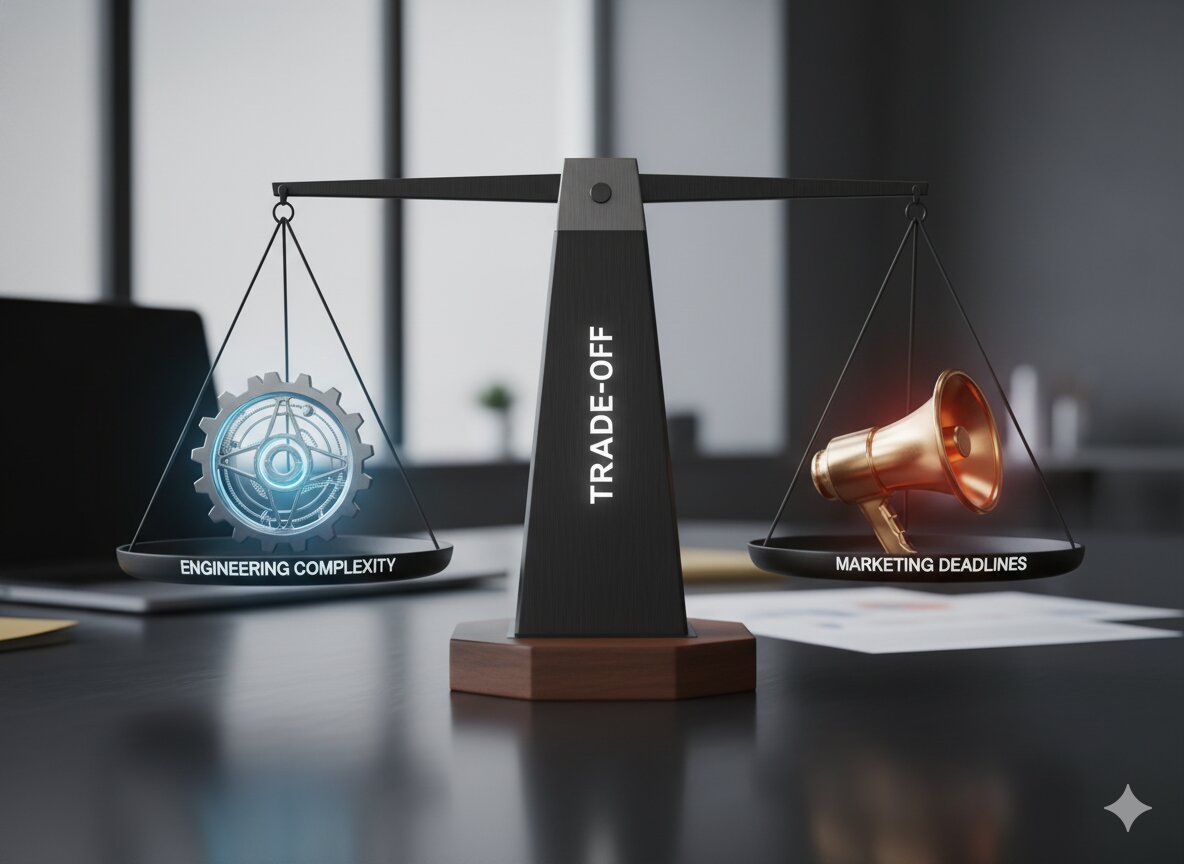
This is the most important part. Show you understand that every technical choice has a cost.

  • Database Choice: "For our User Service, user data is structured and needs to be consistent. A SQL database (like Postgres) makes sense. For the Feed Generation Service, we're dealing with massive scale and speed. We need to store billions of rows of data on which video to serve to which user. A NoSQL database like Cassandra or DynamoDB is built for this."
  • Video Storage: "We can't store 1 Million new videos a day on our servers. We must use a blob storage solution like Amazon S3 or Google Cloud Storage."
  • Feed Latency (Caching): "The 'For You' feed has to be instant. We can't query the database every time a user opens the app. We must pre-calculate the feed and store it in a very fast, in-memory cache like Redis. When a user opens the app, we're just reading from this cache."
  • Global Speed (CDN): "A user in Tokyo shouldn't be streaming a video from a server in Virginia. We'll use a Content Delivery Network (CDN) to cache videos at edge locations around the world, ensuring low latency for everyone."

Step 5: Identify Bottlenecks and Scale

You've built your system. Now, show the interviewer how you'd scale it and keep it reliable.

  • Bottlenecks: "The two biggest bottlenecks will be the Video Ingestion (processing 1M videos is slow) and the Feed Generation (calculating a unique feed for 100M users)."
  • Scaling: "To fix this, we'll use message queues (like Kafka) to manage the uploads. The user gets a fast 'Upload Complete' message, and the video is processed in the background. For the feed, we will scale horizontally by adding more servers to our feed generation service, not just making one server bigger."

You Don't Need to Be an Engineer. You Need to Be a Leader.

This framework proves you can speak the language of engineering. It builds trust and shows you can lead a technical team.

Mastering this skill is non-negotiable, and our interview prep kits are designed to get you there.

  • For TPMs: Our Art of Program Execution (TPM) Kit has an entire module on System Design Fundamentals. We teach you the core principles of Scalability, Reliability, Availability, and Maintainability so you can lead architectural discussions with confidence .
  • For PMs: Our Mastering Product Management Guide has a "Technical Questions" module that demystifies the jargon. We explain APIs, data structures, and system architecture in plain English, so you can sound like the most technically savvy PM in the room .

Both guides come with the option for 1:1 mock interviews with FAANG hiring managers who will put you through a realistic system design test and give you a real score .

👉 Get the PM Prep Guide or Get the TPM Prep Kit today and turn your biggest interview fear into your greatest strength.

FAQs

Q1: Do I really need to know this as a non-technical PM?Yes. You don't need to write the code , but you must understand the concepts. When an engineer tells you a feature will take six months, you need to be able to ask, "Is that because of a database limitation or an API dependency?" This understanding is how you build trust and make better product decisions.

Q2: What's the biggest mistake candidates make?Failing to discuss trade-offs. There is no "perfect" answer in system design. It's always a series of trade-offs. (e.g., "We can make it faster, but it will be more expensive," or "We can make it more consistent, but it will be slower."). A senior candidate lives in the world of trade-offs.

Q3: How is this interview different for a PM vs. a TPM?The framework is the same, but the depth is different.

  • A PM is expected to be very strong on Step 1 (Requirements), connecting user needs to technical choices.
  • A TPM is expected to be very strong on Steps 4 & 5 (Trade-offs & Scale), going deeper into database choices, reliability patterns, and how to mitigate bottlenecks .
Read more blogs

How to Manage a High-Stakes Project Slip: The "SCOPE-ALIGNED" Mitigation Framework
How to Handle an AI Model Regression: The "MODEL-VALIDATE" Diagnostic Framework
Tell Me About a Time You Failed: The "BOUNCE-BACK" Behavioral Framework
How to Handle a Dropping Metric: The "ROOT-CAUSE" Analytical Framework
How to Architect a Globally Scalable Notification Engine: The "FAN-OUT" Priority Delivery Framework
How to Architect an Enterprise-Grade Vector Search Engine: The "VECTOR-SHARD" Data Framework
How to Architect a High-Concurrency API Gateway: The "GATE-KEEPER" Edge Routing Framework
How to Architect a Distributed Telemetry & Logging System: The "TRACE-STREAM" Observability Framework
How to Architect an Enterprise LLM Deployment: The "RAG-OPS" Production Scale Framework
How to Handle a Dropping Metric: The "METRIC-TRIAGE" System Design Framework
How to Architect a Globally Scalable Financial Ledger System: The PM & TPM "LEDGER-BALANCE" Framework
How to Architect a Globally Scalable Real-Time Ad Bidding & Ad Tech Exchange: The PM & TPM "RTB-AUCTION" Framework
How to Architect a Globally Scalable Real-Time Recommendation Engine: The PM & TPM "RECO-MATRIX" Framework
How to Architect an Enterprise LLM Evaluation & Monitoring Pipeline: The PM & TPM "GUARD-RAIL" Framework
How to Design an Enterprise Agentic AI Workflow: The PM & TPM "ORCHESTRATE-AGENT" Framework
How to Architect an Enterprise Retrieval-Augmented Generation (RAG) Architecture: The PM & TPM "KNOWLEDGE-CORE" Framework

How to Architect a Globally Scalable Event-Driven Architecture: The PM & TPM "STREAM-FLOW" Framework
How to Manage Cache Invalidation and Consistency: The PM & TPM "CACHE-CLEAR" Framework
How to Manage Data Privacy and Cross-Border Transfers: The PM & TPM "DATA-BOUNDARY" Framework
How to Design an Enterprise AI Orchestration Layer: The PM & TPM "GATEWAY-AI" Framework
How to Architect a High-Throughput API Gateway: The PM & TPM "GATE-KEEPER" Framework
How to Diagnose and Fix a Dropping Metric: The PM & TPM "METRIC-TRIAGE" Framework
How to Optimize Cloud Infrastructure Unit Economics: The PM & TPM "FIN-SCALE" Framework
How to Manage Technical Debt and Refactoring Backlogs: The PM & TPM "PAY-DOWN" Framework
How to Coordinate Multi-Region Cloud Failovers: The PM & TPM "ZONE-DEFENSE" Framework
How to Orchestrate Massive API Deprecations Without Breaking Ecosystems: The PM & TPM "DECOUPLE-FLOW" Framework
How to Lead Large-Scale Corporate AI Transformations: The PM & TPM "CORE-INTEGRATE" Framework
How to Scale Infrastructure Upgrades Without Downtime: The PM & TPM "LIVE-MIGRATE" Framework
How to Architect an AI-Powered Quality Assurance & Release Engine: The PM & TPM "BUG-SHIELD" Framework
How to Formulate the Ultimate "Product-to-Engineering" Spec Engine: The PM & TPM "TECH-TRANSLATE" Framework
How to Leverage AI for Cross-Functional Product Alignment: The PM & TPM "SYNCHRONIZE" Framework
How to Build a Complete AI-Powered Agile Workflow: The PM & TPM "CORE-VELOCITY" Framework
How to Automate High-Friction Dependency Mapping and Jira Tracking: The "AUTO-TRACK" TPM Workflow
How to Handle a Critical API Rate Limiting and Service Degradation Crisis: The "THROTTLE-GUARD" Resilience Framework
How to Handle a High-Scale Database Crash During Peak Traffic: The "FAILOVER-SHIELD" Recovery Framework
How to Handle an Algorithmic Model Bias Crisis: The "ETHICAL-AUDIT" ML Governance Framework
How to Handle a Major Cloud Migration Failure: The "CLOUD-SAFETY" Rollback Framework
How to Handle a Major Technical Program Delay: The "RE-BASELINE" Schedule Recovery Framework
How to Handle a Database Sharding Migration: The "DATA-BALANCE" Scale Framework
How to Handle a Critical Third-Party API Sunset: The "DEPENDENCY-BUFFER" Integration Framework
How to Handle a Pricing Tier Change: The "PRICING-SHIELD" Revenue Framework
next How to Handle a Post-Launch Crisis: The "ROLL-BACK" Incident Management Framework
How to Handle a Critical API Migration: The "DECOUPLE-SAFE" Architecture Framework
How to Handle a Major System Outage: The "TRIAGE-SCALE" Technical Execution Framework
How to Resolve Cross-Functional Gridlock: The "BRIDGE-ALIGN" Trade-off Framework
How to Handle a Dropping Metric: The "DIG-DEEP" Root Cause Framework
How to Master the Behavioral Interview: The "STAR-GROWTH" Method
How to Lead a Product Launch: The "GTM-VELOCITY" Framework
How to Design a Product for the Next Billion Users: The "ADAPT-LIGHT" Framework
How to Negotiate Your Senior Tech Offer: The "VALUE-ANCHOR" Method
How to Master the Behavioral Interview: The "STAR-GROWTH" Method
How to Lead a Product Launch: The "GTM-VELOCITY" Framework
How to Design a Product from Scratch: The "EMPATHY-SCALE" Framework
How to Prioritize Features: The "RICE-VALUE" Framework
How to Design for the Next Billion Users: The "ADAPT-LIGHT" Framework
How to Build an AI-First Feature: The "RAG-EVAL" Framework
Move from a Monolith to Microservices: The "STRANGLE-SHIELD" Framework
How Do You Decide When to Build vs. Buy?: The "MOAT-LEVER" Framework
How Do You Handle a Conflict Between Engineering and Design?: The "TRIANGLE-TRADE" Framework
How Do You Manage a Delayed Project?: The "REALIGN-RECOVER" Framework
How Do You Design an API?: The "CONTRACT-FIRST" Framework
How Do You Prioritise a Roadmap?: The "ROI-ALIGN" Framework
How to Answer "Tell Me About a Time You Failed": The "PIVOT-OWN" Framework
How to Handle a Dropping Metric: The "SEGMENT-DRILL" Framework
The "Incentive-Alignment" Framework: Building in Web3
The "Value-Tradeoff" Framework: Mastering the Art of "No"
The "Cycle-Velocity" Framework: Building Viral Loops
The "Agentic-Utility" Framework: Building AI-First Features
The "Proxy-Experience" Framework: Mastering the Career Pivot
The "Throughput-Engine" Framework: Elite Productivity
The "Pause-Pivot" Framework: Leading the Room
The "Curated-Authority" Framework: Building Your Tech Brand
The "Throughput-First" Framework: Managing the Sprint
The "Segment-Drill" Framework: Winning with Data
The "Identity-Loop" Framework: Building the Community Moat
The "TTV" Framework: Mastering the First 5 Minutes
The "Red-Team" Framework: Building Ethical AI
The "Extensibility-First" Framework: Building the Ecosystem
The "Glocalization" Framework: Scaling Across Borders
The "PQL-Conversion" Framework: From User to Revenue
The "Phased-Velocity" Framework: Mastering the GTM
The "Win-Loss" Framework: Closing the Product-Market Gap
The "Post-Mortem" Framework: Institutionalizing Failure
The "Cognitive-Utility" Framework: Building AI-First
The "Product Health-Check" Framework: The First 30 Days
The "Moat-Mapping" Framework: Defending the Castle
The "Growth-Loop" Framework: Beyond the Marketing Funnel
The "Radical Clarity" Framework: Managing Underperformance
The "Proof of Work" Framework: Building a Career Magnet
The "Insight-Mining" Framework: High-Impact User Interviews
The "Executive-Pulse" Framework: High-Stakes Communication
The "Technical-Empathy" Framework: The Art of the 1:1
The "Elastic-Scale" Framework: Scaling from 1 to 100
The "Venture-Validation" Framework: Building from 0 to 1
The "Anchor & Lever" Framework: Negotiating $400k+ Total Comp (TC)
The "Asynchronous-First" Framework: Leading Distributed Teams
The "Value-Bridge" Framework: From Specialist to Strategist
The "Value-First AI" Framework: Integrating Intelligence Without the Gimmicks
The FAANG Interview Mastery Checklist: 10 Frameworks to Rule the Loop
The "Blueprint" Framework: Designing Scalable Systems

Transform Your Career with Our Complete Learning Solutions

Discover our diverse offerings, including expert-led courses, free training sessions, and personalized consultation services designed to help you master project management and advance your career with confidence.

FREE Training

Crack your next TPM Interview

From unravelling the intricacies of TPM/PM interview structures to mastering system design to discover the keys to navigating cross-functional collaboration, decoding top interview questions, and fine-tuning your resume and LinkedIn profile, including negotiation frameworks, networking strategies, and much more!

Register Now

Trusted by over 9,600 students

Course

30-Day TPM Masterclass

Expect early technical assessments, followed by a focus on strategic thinking, leadership capabilities, and a thorough evaluation of program management proficiency. From engaging self-guided exercises to comprehensive guides, frameworks, and sample answers, our TPM interview preparation covers it all, including practice lessons, updated content, and mock interviews.

Learn More

Trusted by over 9,600 students

Interview Prep Kit

Ultimate TPM Interview Prep Kit

Master TPM interview skills with this comprehensive guide covering system design, program management, and cross-functional collaboration.

Includes real-world scenarios, sample questions, and expert tips for success.

Learn More

Trusted by over 9,600 students

Interview Prep Guide

Complete PM Interview Guide

Master product design, strategy, and leadership with this all-in-one guide for Product Management interviews.

Gain confidence with actionable advice, real-world examples, and tailored mock questions to secure your next PM role.

Learn More

Trusted by over 9,600 students

Consulting

1-on-1 Interview Prep

1-on-1 Interview PreparationGet personalized guidance to ace your next interview with confidence. Our 1-on-1 interview preparation sessions focus on your unique strengths and areas for improvement. From tailored practice questions and feedback to mastering behavioral and technical responses, we ensure you're fully prepared to impress and secure your dream role.

Book a call

Trusted by over 9,600 students

Free Training

Unlock  Free Training

Get access to free training that reveals "How To crack your next TPM INTERVIEW In Just 30 Days!"

Gain exclusive access to expert-led training sessions designed to equip you with the skills, strategies, and confidence to excel in Technical Program Management.

Enroll now

Trusted by over 9,600 students