"Should Amazon Enter the Food Delivery Market?": A 7-Step Framework for Acing Product Strategy
Introduction
You're in a Product Manager interview. You've aced the "design a product" and "fix a metric" questions. Then, the interviewer gives you a massive, ambiguous business problem:
- "Should Amazon enter the food delivery business?"
- "What's your growth strategy for a product with stagnant usage?"
This is a Product Strategy question . It's not a test of your design or execution skills; it's a test of your business acumen, market analysis, and long-term vision . How you answer this question shows if you're a feature owner or a business leader.
The Difference: Product Design vs. Product Strategy
Many candidates confuse these two, but they test very different skills.
- Product Design is bottom-up. It starts with a user problem and asks you to create a solution. (e.g., "Design a better gas station.")
- Product Strategy is top-down. It starts with a business goal or opportunity and asks you to create a plan. (e.g., "Should we enter this new market?")
Failing to see this difference is an immediate red flag. A candidate who answers "Should Amazon enter food delivery?" by "designing a cool app" has failed the test.
A 7-Step Framework for Strategic Analysis
When you get a big strategy question, don't just list pros and cons. Use a structured framework to walk the interviewer through your analysis. This 7-step process is what hiring managers are trained to look for.
Step 1: Clarify the Problem and the GoalNever assume anything. The question is intentionally ambiguous. Your first job is to add constraints .
- "When you say 'enter the food delivery market,' are we talking about competing with DoorDash on restaurant delivery, or with Instacart on grocery delivery?"
- "What is the primary goal? Is it to drive new revenue, increase Prime membership value, or to enter a new market?"
- "Are there any constraints I should assume, like timeline or budget?"
Step 2: Define the Landscape (Market & Competition)Now, analyze the external world. What is the state of this market?
- Market: "The restaurant delivery market is mature, highly competitive, and has notoriously low margins."
- Competitors: "The main competitors (e.g., DoorDash, Uber Eats) already have a massive network of restaurants and drivers. Their key strength is logistics and brand recognition."
- Gaps: "Are there gaps? Maybe. The B2B catering market is underserved, or perhaps a subscription model for families hasn't been perfected."
Step 3: Analyze the Company's Core StrengthsLook inward. Why is this company (e.g., Amazon) uniquely positioned to win?
- Strengths: "Amazon's strengths are its massive existing customer base (Prime members), its unparalleled logistics and delivery network, and its existing user data."
- Weaknesses: "Its weakness is a lack of existing relationships with local restaurants."
Step 4: Establish an Option Set (Brainstorm Strategies)Now, brainstorm 2-3 potential strategies, or "options," for how to enter the market .
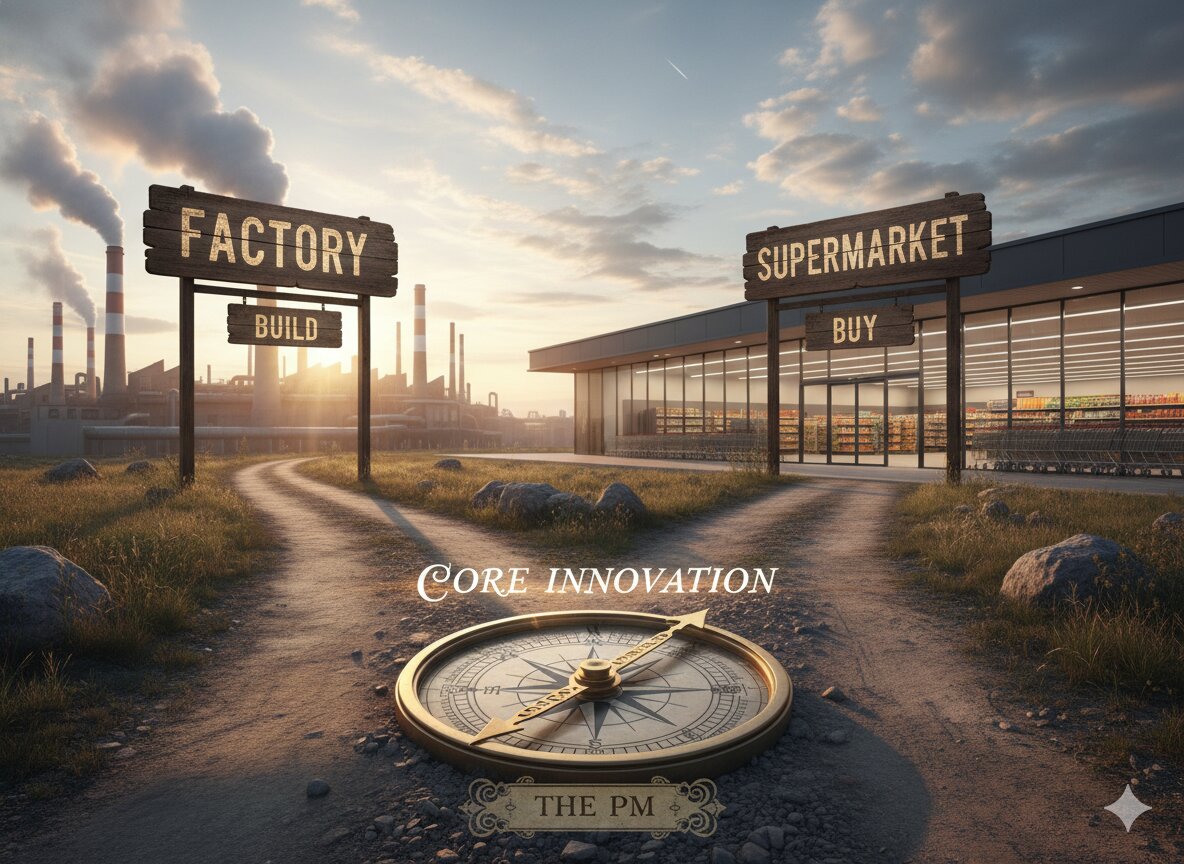
- Option 1: Build from Scratch. "Amazon could build its own restaurant network. (High cost, slow, but full control)."
- Option 2: Buy a Competitor. "Amazon could acquire a smaller player like DoorDash. (High cost, fast, but integration is complex)."
- Option 3: Partner. "Amazon could partner with existing players, perhaps offering 'food delivery' as a new Prime Perk."
- Option 4: Find a Niche. "Amazon could ignore restaurants and focus on a niche it understands, like 'fresh grocery' or 'meal kit' delivery, leveraging Whole Foods."
Step 5: Define Guiding Principles (Prioritization)How will you decide which option is best? State your principles.
- "To make this decision, I would prioritize:
- Alignment with Prime Value: Does this make Prime membership more 'sticky'?
- Path to Profitability: We need to avoid a low-margin money pit.
- Speed to Market: How fast can we offer this value to users?"
Step 6: Make Your Decision (And Argue For It)This is the moment of truth. Pick an option and defend it, using your principles from Step 5 .
- "Based on these principles, I would not choose to compete directly with DoorDash (Option 1). It's a low-margin, high-cost battle. I would recommend Option 4: Find a Niche. Amazon should leverage its Whole Foods acquisition and logistics network to dominate the 'premium grocery and meal kit' delivery space. This aligns with its strengths, has higher margins, and enhances the value of Prime for its existing affluent user base."
Step 7: Evaluate and Recap (Define Success)Finally, how would you know if your strategy is working? Define your success metrics .
- "To measure success for this new grocery/meal kit service, I would track:
- Adoption Rate: Percentage of Prime members who try the service.
- Retention/Churn Rate: How many users order a second time.
- Unit Economics: Is our average order value higher than our cost-to-deliver?"
From "Product" to "Portfolio": Why TPMs Also Need Strategy
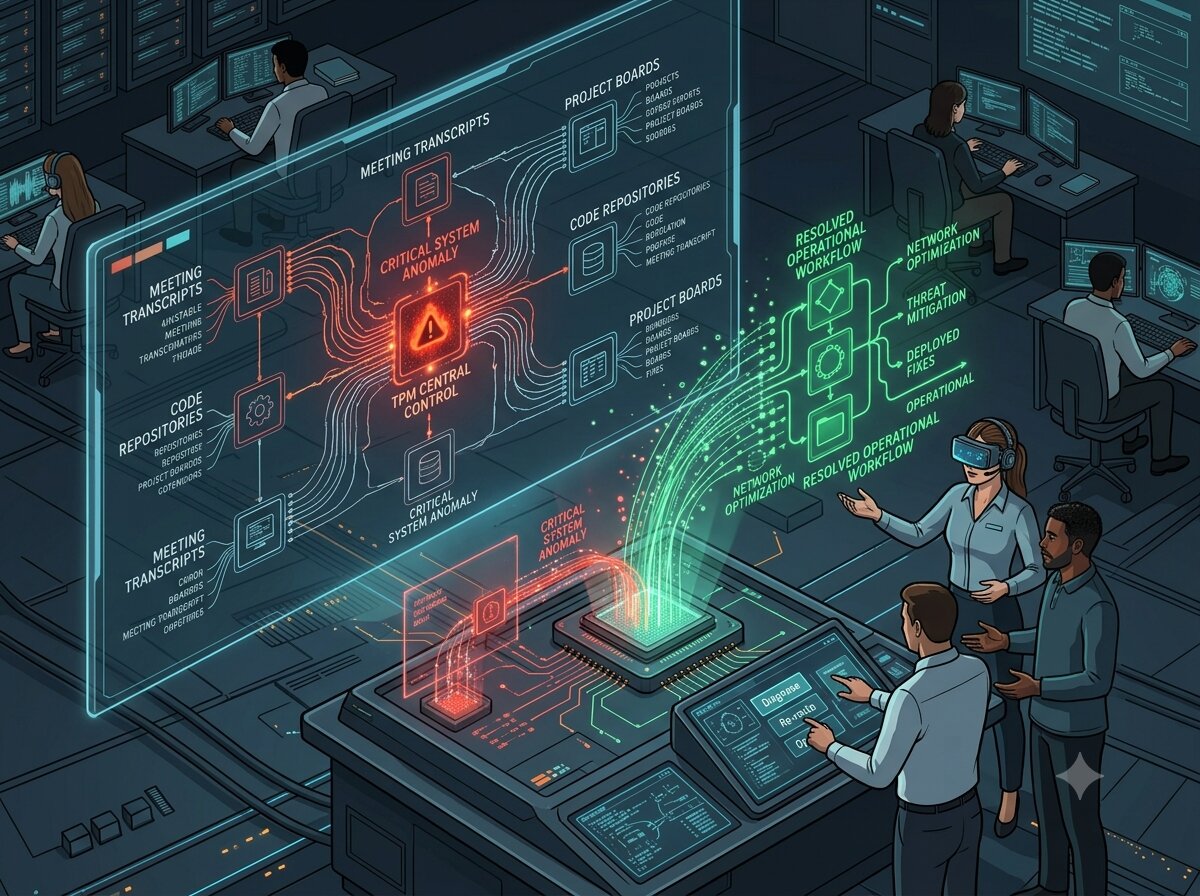
While strategy questions are a cornerstone of the PM interview, they are increasingly vital for Technical Program Managers (TPMs), especially at senior levels.
A TPM doesn't just execute one project; they manage a portfolio of programs . You need strategic vision to:
- Manage Dependencies: Which programs align with the company's long-term goals?
- Mitigate Risks: Which potential technical failure poses the biggest business risk?
- Lead Cross-Functional Teams: How do you convince a legal or finance stakeholder to support your program? You must speak their language—the language of business strategy .
Don't Just Have an Opinion. Have a Framework.
Knowing how to break down a massive, ambiguous business problem is a teachable skill. You just need the right frameworks.
The Mastering Product Management Guide and Art of Program Execution (TPM) Kit are built by FAANG hiring managers who have asked these exact questions hundreds of times.
Instead of just "tips," you get the full frameworks for every type of strategy question:
- Growth Strategy
- Go-to-Market (GTM) Strategy
- Pricing & Monetization Strategy
- Market Entry Strategy
Stop "winging it" on the most important questions of your interview.
👉 Get the PM Prep Guide or Get the TPM Prep Kit today and learn to think like a business leader.
FAQs
Q1: What's the biggest mistake candidates make on strategy questions?They jump straight to a single solution (Step 6) without doing any of the analysis (Steps 1-5). They give an opinion, not a framework. An opinion is weak; a framework is defensible.
Q2: How is this different from an "Estimation" question?An Estimation question asks "How many?" (e.g., "How many gas stations are in the US?") . It tests your logic and math. A Strategy question asks "Should you?" or "How would you?" (e.g., "Should we build a gas station app?"). It tests your business judgment.
Q3: Does a TPM really need to know this?Yes. A senior TPM doesn't just run the projects they are given. They help decide which projects to run. They provide the critical "is this feasible?" and "what are the technical risks?" data that informs the company's entire strategy






















.jpg)